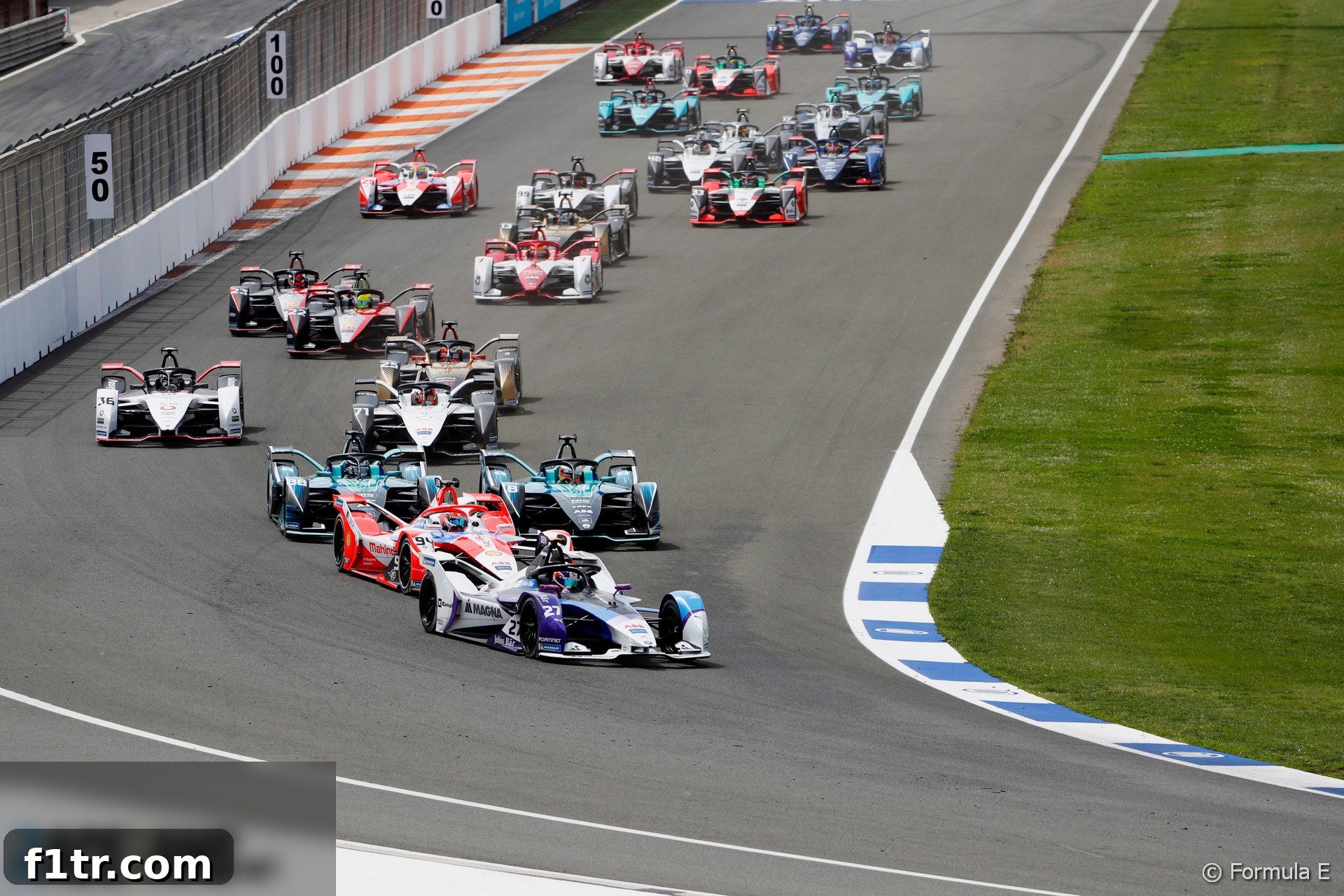
The electrifying world of Formula E witnessed a masterful performance at the Ricardo Tormo circuit in Valencia, as Jake Dennis secured his maiden victory with a dominant lights-to-flag drive. This second race of the Valencia E-Prix double-header unfolded as a stark contrast to the chaotic events of the previous day, offering a more streamlined, yet equally compelling, display of strategic racing and energy management in the all-electric series.
Unlike the first race, which was heavily influenced by multiple Safety Car interventions and led to an unprecedented energy crisis for many drivers, Sunday’s event was a much more straightforward affair. The absence of such interruptions allowed teams and drivers to adhere more closely to their carefully planned energy consumption strategies, making the race a true test of pace, efficiency, and tactical acumen. This shift in dynamics presented a fresh challenge and opportunity for the field, particularly for those looking to rebound from Saturday’s misfortunes.
Qualifying Drama and Dennis’s Dominance
The day’s proceedings kicked off with a wet track, a condition that gradually improved throughout the qualifying sessions. This evolving track state played a crucial role, creating a significant advantage for the later groups. Group four, comprising drivers at the bottom of the championship standings, found themselves on a considerably drier circuit compared to those who ran earlier. They capitalized on these optimal conditions, swiftly claiming the coveted Super Pole positions.
Among them, Jake Dennis of BMW i Andretti Motorsport emerged as the undeniable front-runner. Having demonstrated exceptional pace by topping his group, Dennis was the last driver out for Super Pole. Under immense pressure, he delivered a phenomenal lap, securing pole position by an impressive margin. This commanding performance not only highlighted his raw speed but also set the stage for what would be a career-defining race for the young Briton. His ability to extract maximum performance from the drying track while maintaining composure was a testament to his burgeoning talent in the highly competitive Formula E championship.
The Strategic Chess Match Begins: Slipstreaming and Energy Management
As the cars lined up on the grid, a palpable tension filled the air. A key strategic question loomed large: would any driver dare to lead from the outset? In Formula E, slipstreaming behind a competitor can offer a significant energy advantage, potentially saving as much as 0.7kWh per lap. This unique aspect of electric racing often leads to a tactical game of ‘cat and mouse,’ where no one wants to be the first to break the tow and expend precious energy.
Alex Lynn, starting from second place for Mahindra Racing, was in a prime position to leverage this strategy. He aimed to replicate the patient, ‘lying-in-wait’ game that Nyck de Vries had successfully executed just 24 hours prior. The goal was simple: stick close to the leader, harvest energy, and strike when the time was right. This pre-race chess match underscored the intricate blend of raw speed and intellectual strategy that defines Formula E.
Lights Out: A Clean Start and Early Dynamics
With the track sufficiently dry, Formula E saw its first standing start since the Diriyah E-Prix, adding an extra layer of excitement and unpredictability. When the lights went out, Jake Dennis executed a flawless getaway, decisively maintaining his lead into Turn 1. Behind him, Alex Lynn tucked in closely, expertly avoiding any situation that would force him ahead of Dennis. Lynn diligently utilized Dennis’s slipstream, meticulously conserving energy as the rest of the pack followed, bunched tightly into less than half a kilometre of track. The initial laps saw intense but clean racing, with drivers carefully positioning themselves, aware of the long game ahead and the critical role of energy conservation.
Mid-Race Drama: Nato’s Charge and Controversial Contact
As the race settled into a rhythm, Norman Nato of Venturi Racing began to make his presence felt. Starting from fifth on the grid, Nato demonstrated impressive race craft, swiftly dispatching both NIO 333 cars, which had surprisingly qualified higher than usual, locking out the second row. Nato’s charge brought him into close contention with Alex Lynn, forming a formidable pairing behind the leading Jake Dennis. For much of the race, Nato shadowed Lynn, meticulously studying his lines and waiting for an opportunity.
However, the pivotal moment of their battle arrived when Nato misjudged his braking distance into the reprofiled Turn 6. In a move that would later be scrutinized, he clipped the back of Lynn’s Mahindra. The contact sent Lynn’s car spinning off the track, an incident that infuriated the British driver and severely hampered his race, dropping him back to seventh position. This clash dramatically altered the podium landscape and set the stage for a tense investigation by the race stewards.
The Battle for the Podium: Recovery and Redemption
Following the incident, Nato closed the gap to Dennis, but the damage to his reputation, and potentially his race result, was already done. Despite his improved track position, he wasn’t in a position to genuinely challenge Dennis for the lead, who had meticulously managed his energy throughout. Meanwhile, Alex Lynn, demonstrating remarkable resilience and determination, began his arduous recovery. He skillfully managed his remaining energy, taking advantage of slipstreams from cars ahead as they started to run low, clawing his way back through the field.
Amidst this unfolding drama, Andre Lotterer, driving for Porsche, delivered a stellar performance. Having endured a frustrating Saturday with two penalties for collisions and finishing point-less in the first five races of the season, Lotterer was on a mission for redemption. He masterfully navigated his way up the order, showcasing his veteran experience to move into an on-track third position. Lynn, in his recovery efforts, then wisely utilized Lotterer’s slipstream, precisely handling the energy he had expended during his fight back, further illustrating the critical role of strategic energy management in Formula E.
The Chequered Flag and a Reshuffled Podium
The turning point in the battle for podium places came when Norman Nato was handed a five-second time penalty for his contact with Alex Lynn. This crucial decision meant that even if Nato crossed the line in second, his ultimate position would be demoted. Aware of the unfolding situation behind him, Jake Dennis continued to control the race with impeccable precision. He maintained a comfortable energy margin, crossing the finish line to take a historic maiden victory in Formula E, a truly dominant lights-to-flag performance.
With Nato’s penalty applied, the podium was reshuffled. Andre Lotterer and Alex Lynn, who had managed to stay close enough behind Nato, were elevated to second and third positions, respectively. Lotterer’s hard-fought climb secured him a well-deserved runner-up spot, a testament to his experience and ability to bounce back. Lynn’s recovery drive after the incident with Nato was equally impressive, earning him a place on the podium that initially seemed out of reach. This dramatic conclusion underscored the unpredictable and tactical nature of Formula E racing, where every second and every move can alter the final standings.
Championship Implications and Monaco Awaits
Only one car failed to finish the race in Valencia, that of Stoffel Vandoorne. The Mercedes-EQ driver, who was second in the championship standings, retired after an unfortunate and clumsy knock into the barriers following contact with Sebastien Buemi. This DNF was a significant blow to Vandoorne’s championship aspirations, preventing him from adding crucial points to his tally.
Despite the thrilling action and strategic battles, the sixth race of the 15-race season did little to alter the very top of the championship order. Intriguingly, none of the top five drivers in the standings managed to add to their points tallies in Valencia Race 2. Consequently, the Mercedes-EQ pair of Nyck de Vries and Stoffel Vandoorne will continue to lead the championship standings as the series heads to the iconic streets of Monaco for the next exhilarating E-Prix. The stage is now set for another electrifying showdown, where every point will be fiercely contested in the pursuit of the Formula E title.
Race Result: Valencia E-Prix Race 2
| Position | Driver | Team |
|---|---|---|
| 1 | Jake Dennis | BMW Andretti |
| 2 | Andre Lotterer | Porsche |
| 3 | Alex Lynn | Mahindra |
| 4 | Oliver Rowland | Nissan e.Dams |
| 5 | Norman Nato | Venturi |
| 6 | Rene Rast | Audi |
| 7 | Jean-Éric Vergne | DS Techeetah |
| 8 | Oliver Turvey | NIO 333 |
| 9 | Edoardo Mortara | Venturi |
| 10 | Lucas di Grassi | Audi |
| 11 | Sebastien Buemi | Nissan e.Dams |
| 12 | Max Guenther | BMW Andretti |
| 13 | Nick Cassidy | Virgin |
| 14 | Sam Bird | Jaguar |
| 15 | Mitch Evans | Jaguar |
| 16 | Nyck de Vries | Mercedes |
| 17 | Tom Blomqvist | NIO 333 |
| 18 | Pascal Wehrlein | Porsche |
| 19 | Robin Frijns | Virgin | 20 | Nico Mueller | Dragon Penske |
| 21 | Sergio Sette Camara | Dragon Penske |
| 22 | Antonio Felix da Costa | DS Techeetah |
| 23 | Alex Sims | Mahindra |
| DNF | Stoffel Vandoorne | Mercedes |
More Formula E Content
- McLaren to quit Formula E at end of season
- Wehrlein beats Jaguar pair to title in dramatic Formula E finale
- Wehrlein’s London win sets up thrilling three-way title showdown in finale
- Da Costa takes hat-trick of wins in chaotic second Portland race
- Da Costa inherits Portland win from Evans after Cassidy spins lead away
Browse all Formula E articles