F1 Insights: Lando Norris on ‘Dirty Air,’ 2021 Regulations, and Key Motorsport Updates
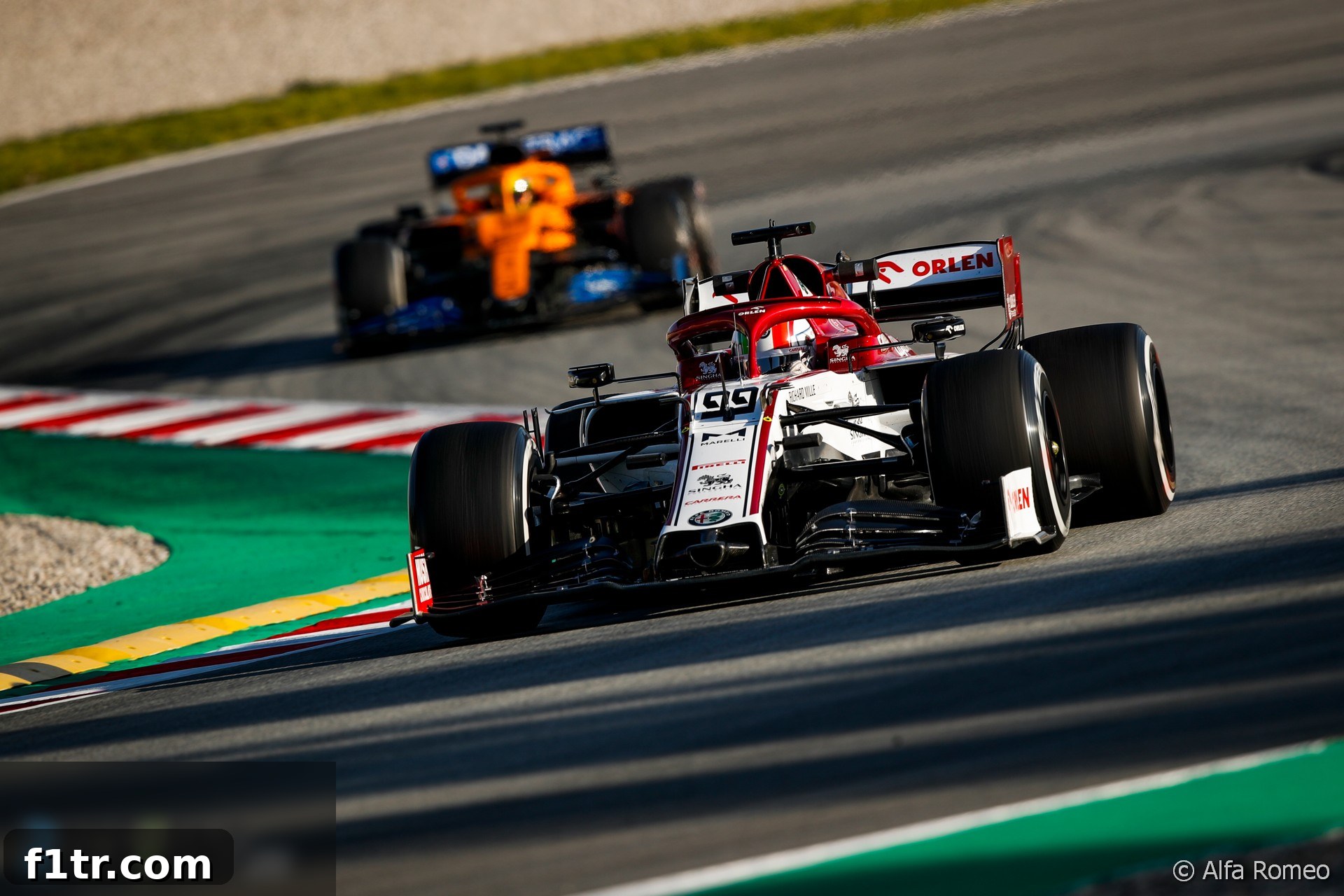
In this comprehensive round-up of Formula 1 insights and breaking news, we delve into the critical issue of aerodynamic turbulence, often referred to as ‘dirty air,’ which significantly impacts close-quarters racing. McLaren driver Lando Norris recently shared his candid frustrations regarding how sensitive the 2020 F1 cars remain when running in disturbed air, a pervasive challenge that the sport is actively seeking to address with its upcoming rule changes.
The Persistent Challenge of ‘Dirty Air’: Lando Norris Speaks Out
The quest for closer, more exciting racing has been a driving force behind the development of the new regulations for the 2021 F1 season. These groundbreaking rules are specifically aimed at drastically reducing the cars’ sensitivity to turbulent air, a phenomenon that has long been a bane for drivers attempting to follow rivals closely. Norris articulated just how severe this problem is with the current generation of F1 machinery, echoing the sentiments of many within the paddock:
“I don’t think I was ever following a car for more than half a lap. The only thing I learned was how much downforce you still lose in Formula 1 when you get within even three seconds, four seconds of a car.
I’m on my long run, a guy pulls out of the pits and I can hardly see him. I go around turn three and turn nine and the car’s all over the place because of dirty air. So that still feels pretty awful.
It isn’t kind of a nice thing knowing that again, you always want to be able to race close and everything, but as soon as I came up behind anyone, the F1 car just feels terrible in dirty air.”
Norris’s comments highlight a fundamental aerodynamic characteristic of modern F1 cars: their reliance on pristine airflow to generate optimal downforce. When a following car enters the turbulent wake of the car ahead, its carefully designed aerodynamic surfaces – particularly the front wing and bargeboards – are starved of clean air. This leads to a significant and often unpredictable loss of downforce, making the car unstable, prone to understeer or oversteer, and incredibly challenging to control at high speeds. For a driver, this translates into a constant battle to maintain grip, manage tire degradation, and find a consistent rhythm, severely limiting their ability to launch overtakes or engage in wheel-to-wheel duels. The feeling of the car being “all over the place” is a direct consequence of this unpredictable loss of grip, eroding driver confidence and making sustained close racing a high-risk, low-reward endeavor.
Understanding the Aerodynamic Impact on Racing
The intricate aerodynamics of current Formula 1 cars are designed to maximize downforce, pushing the car into the track for immense grip through corners. However, this sophisticated design, which creates a large “dirty air” bubble or turbulent wake behind each car, is precisely what makes following another car so difficult. The goal of the 2021 regulations is to fundamentally alter this dynamic by shifting towards a ground-effect philosophy, combined with simplified front wings and less complex bodywork. The aim is for cars to generate downforce more efficiently from their underbodies, thus creating a much cleaner wake that allows following cars to retain a higher percentage of their downforce. This anticipated change is expected to enable more aggressive and sustained attacks, fostering the closer racing that fans and drivers alike have longed for, and moving away from a scenario where overtakes often rely solely on DRS or significant tire degradation differences.
The frustration expressed by drivers like Norris is a critical indicator of the current state of racing. While F1 cars are the fastest on the planet, their performance in isolation often comes at the cost of genuine on-track battles. The 2020 season, like many before it, showcased moments of brilliant driving, but also periods where cars were strung out due to the inability to get close enough to challenge. The forthcoming regulations represent a significant gamble and a hopeful step towards resolving this long-standing issue, aiming to make moments like Norris describes – where even being “three seconds, four seconds” behind a car makes it feel “terrible” – a relic of the past.
Quotes courtesy of Dieter Rencken
Advert | Become a RaceFans supporter andgo ad-free
Motorsport World on Social Media: Key Updates & Insights
Stay connected with the pulse of Formula 1 and junior categories through notable posts from Twitter, Instagram, and other social platforms, offering a snapshot of current events and sentiments:
🇷🇺@sirotkin_sergey сядет за руль болида @ARTGP на предсезонных тестах Формулы 2, которые состоятся 1-3 марта в Бахрейне
—
🇬🇧@sirotkin_sergey will drive for the @ARTGP at the pre-season tests of the @FIA_F2, which will be held on March 1-3 in Bahrain#SMPRacing #F2 #Formula2 pic.twitter.com/qXVE2EJjP3— SMP Racing (@SMP_Racing) February 29, 2020
Former Formula 1 driver Sergey Sirotkin’s participation in the Formula 2 pre-season tests with ART Grand Prix in Bahrain signals an interesting development in his career path. F2 serves as a crucial proving ground for aspiring F1 talent, and for a driver like Sirotkin, it represents an opportunity to maintain his competitive edge and potentially explore future racing opportunities, whether returning to F1 as a test or reserve driver, or pursuing other top-tier motorsport series. These pre-season tests are vital for teams and drivers to fine-tune their machinery, adapt to new regulations, and gather essential data before the competitive season kicks off. For Sirotkin, a driver with F1 experience, it’s a chance to demonstrate his continued speed and relevance in the high-stakes world of motorsport, possibly opening doors to endurance racing or a renewed push for a role in an F1 team.
Goodies reqd to enjoy #GPFrance landed on my desk during @f1 testing, courtesy of my good friends @eboullier & @PGuyonnetD, both working hard to make the event a success. Thanx for the LaSummerRaceBox, mates! pic.twitter.com/bvCkl8ThZd
— Fritz-Dieter Rencken (@RacingLines) February 29, 2020
Motorsport journalist Fritz-Dieter Rencken shared a glimpse into the collaborative efforts behind the scenes of a Grand Prix, receiving promotional “goodies” for the French Grand Prix from key organizers. This interaction underscores the immense planning and coordination required to host a Formula 1 event. From circuit management and logistics to fan engagement and media relations, figures like Éric Boullier and Pierre Guyonnet-Duperrat play pivotal roles in ensuring a smooth and successful race weekend. Such behind-the-scenes efforts are essential for generating excitement and a positive experience for both attendees and the global F1 audience. The successful execution of a Grand Prix relies heavily on a complex network of professionals, showcasing the dedication and intricate planning involved in bringing the spectacle of Formula 1 to life for millions around the world.
- For a comprehensive list of official F1 accounts, teams, and key motorsport personalities to follow, consult our detailed F1 Twitter Directory.
Beyond the Track: Essential Motorsport Headlines and Developments
A curated selection of significant motor racing links and news items that have recently captured attention, providing crucial updates from across the globe:
Advert | Become a Supporter & go ad-free
F1 Grand Prix Vietnam Faces Delay Over Covid-19 Concerns (Vietnam Plus)
The highly anticipated inaugural Formula 1 Vietnam Grand Prix faced significant uncertainty and potential postponement due to mounting concerns over the escalating global COVID-19 pandemic. Nguyen Duc Chung, Chairman of the Hanoi People’s Committee, articulated the city’s diligent preparations for the race, but also acknowledged the severe implications should the public health situation remain complicated. This news highlighted the early stages of what would become a global crisis impacting sports, travel, and major events worldwide. The prospect of a delayed or cancelled race not only affects fan experience but also has substantial financial repercussions for local economies, promoters, and the sport’s commercial rights holders. The 2020 season ultimately saw unprecedented changes, with numerous races postponed or cancelled, underscoring the complex logistical and public health challenges that Formula 1, and indeed all international sports, had to navigate, leading to innovative solutions for a revised calendar and stringent operational protocols.
Ferrari Engine Investigation Sparks ‘Anger’ From Rivals (BBC)
A contentious investigation into Ferrari’s power unit, following suspicions of technical irregularities in the previous season, generated considerable ‘anger’ and frustration among rival Formula 1 teams. The BBC reported that while no teams were willing to comment on the record, many expressed strong views anonymously, signaling deep-seated unease within the paddock. This situation revolved around the FIA’s technical directives and the interpretations of engine regulations, particularly concerning fuel flow and energy recovery systems. The controversy underscored the intense competitive environment in F1, where any perceived advantage, especially concerning engine performance, is meticulously scrutinized. Such investigations often lead to heightened tensions between teams, challenging the spirit of fair play and prompting rigorous enforcement by the sport’s governing body to maintain a level playing field. The implications of such a probe can extend beyond immediate sporting penalties, potentially affecting team reputation, team morale, and internal dynamics for the entire season.
We always endeavour to credit original sources. If you have a tip for a link to feature in the next RaceFans round-up, please send it in via the contact form. Your contributions help keep our community informed!
Fan Focus: Ferrari’s Pre-Season Pace and Strategic Intentions
A compelling question often arises during pre-season testing, sparking debate among fans and pundits: does Ferrari’s observed pace genuinely reflect their true performance potential, or have they strategically learned from past lessons to manage expectations?
“I just think Ferrari learned points aren’t scored pre-season.
Mercedes has been sandbagging for years and always turned out to be fast in Melbourne. Ferrari was fast in testing and then let the hypetrain derail immediately. In 2016, they didn’t even win a race, in 2017 and 2018 they fell away over the season, and in 2019 they weren’t that competitive either. I’m expecting them to show their true pace in Australia.”
— Dutchguy (@Justarandomdutchguy)
The phenomenon of “sandbagging” during pre-season testing is a long-standing tradition in Formula 1, a strategic art form mastered by the sport’s most astute teams. Teams deliberately underplay their car’s true performance, running conservative engine modes, carrying higher fuel loads than typical race conditions, or using harder tire compounds to mask their ultimate speed. This strategic obfuscation serves multiple purposes: it keeps rivals guessing about their true competitive standing, avoids setting unrealistic public or internal expectations, and allows teams to focus purely on data gathering, reliability testing, and understanding the car’s behavior without the external pressure of chasing headline lap times. As Dutchguy aptly points out, Mercedes has arguably perfected this art, often appearing understated in testing only to unleash blistering, race-winning pace at the opening Grand Prix in Melbourne.
Ferrari’s Testing History vs. Race Reality
Conversely, Ferrari has, at times, shown incredibly promising early form in testing, only to see their “hype train” derail as the season progressed. This historical pattern creates a cautious optimism among fans and pundits, who understand that testing lap times are rarely a true indicator of the definitive pecking order. Ferrari’s recent history, as highlighted by the commenter, shows a tendency to start strong but struggle with development or sustained performance throughout a season. From failing to win a single race in 2016 despite early hopes, to falling behind Mercedes in the latter halves of 2017 and 2018, and facing competitive struggles throughout much of 2019, the Scuderia has often faced an uphill battle after the initial races. This track record naturally leads to skepticism about their pre-season glory runs.
The real test of a car’s competitiveness comes only when the lights go out for the first race, under full attack conditions, where every team reveals their true intentions and capabilities. Fans and analysts alike will be keenly watching the Australian Grand Prix to see if Ferrari has truly found a significant step forward in performance and consistency, or if, once again, the early promise will fade under the intense glare of genuine competition and the relentless development race that defines a Formula 1 season. The strategic game played during testing is as much about psychological advantage as it is about technical preparation.
There’s still time to join in this weekend’s Caption Competition – enter here now for a chance to showcase your wit and F1 knowledge:
- Caption Competition 167: Raikkonen, Kubica and Giovinazzi
Advert | Become a RaceFans supporter andgo ad-free
Community Corner: Happy Birthday!
A big shout-out and Happy Birthday wishes to Jose Arellano, Becca Blue, Robert, and Penny! We hope you all have a fantastic day celebrating and wish you all the best.
If you’d like to receive a birthday shout-out in our future round-ups, please don’t hesitate to inform us of your special day via the contact form or by adding your details to our dedicated list here. We love celebrating with our vibrant motorsport community!
This Day in F1 History: Memorable Moments & Milestones
- Exactly 40 years ago today, the legendary French driver René Arnoux seized the championship lead for Renault with a commanding victory at the South African Grand Prix. This significant race also marked the debut of the Italian constructor Osella in Formula 1, while simultaneously seeing Shadow, a team with a distinctive history, make their final appearance in the sport. This day truly encapsulates the ebb and flow of teams and drivers in F1’s rich and ever-evolving narrative, closing one chapter while opening another for future legends.