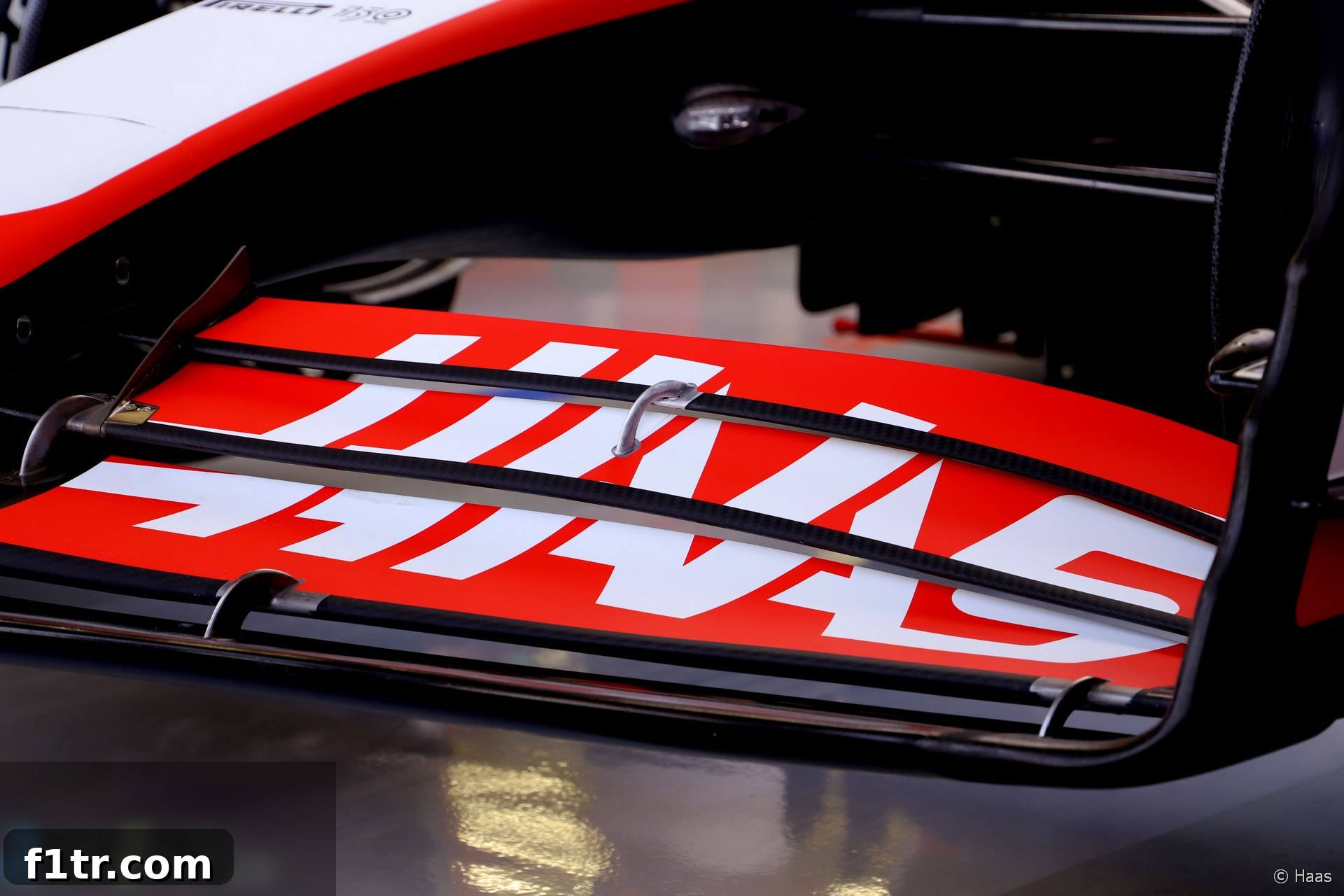
The highly anticipated 2022 Formula 1 pre-season testing in Bahrain commenced with an unexpected challenge, sparking a heated debate among team principals. Haas F1, one of the smaller but determined outfits on the grid, found itself in a precarious position, unable to participate in the opening sessions due to an unforeseen logistical hurdle. A significant delay in transporting their essential freight meant the team could not set up their garage and prepare their new VF-22 car on schedule. This unfortunate setback ignited a contentious discussion within the paddock: should Haas be granted additional testing time to compensate for their lost hours, or must the sport adhere strictly to its established regulations?
Haas’s Unfortunate Start: Missed Opportunities in Bahrain Testing
Pre-season testing is a critical phase for any Formula 1 team, serving as the sole opportunity to fine-tune their new challenger before the competitive season begins. For the 2022 season, this was even more crucial due to radical new technical regulations, which introduced ground-effect aerodynamics and 18-inch tires, effectively rendering previous car designs obsolete. Every minute on track translates into invaluable data, allowing engineers to understand the car’s behavior, identify potential issues, and optimize its performance. Drivers also rely on this time to acclimate to the new machinery and provide essential feedback.
However, for Haas F1, the commencement of the Bahrain testing was marred by significant logistical issues. The team had indicated earlier in the week that a delay involving a cargo plane carrying their essential equipment and spares would prevent them from being ready on time. As the Bahrain International Circuit opened its gates for testing on Thursday morning, Haas’s garage remained eerily quiet, a stark contrast to the bustling activity of their rivals.
It wasn’t until after the lunch break that Pietro Fittipaldi was finally able to take the VF-22 out for its inaugural run. By that point, the team had already missed over four crucial hours of track time. Their competitors, meanwhile, had been diligently racking up laps, with many completing upwards of 70 laps each, accumulating a wealth of data and conducting essential systems checks. This disparity in track time put Haas at a considerable disadvantage, especially for a team looking to bounce back from a challenging previous season and make significant progress under the new regulations.
The Argument for Fairness: Supporting Haas’s Request for Extra Time
The plight of Haas F1 quickly became a central topic of discussion among the sport’s key figures. Several team principals voiced their support for granting Haas an extension to their testing schedule, advocating for a pragmatic approach rooted in fairness and the overall health of the sport. Among the most vocal proponents was Mattia Binotto, the team principal of Ferrari, Haas’s engine supplier. Binotto emphasized the importance of ensuring all teams have an equitable opportunity to prepare, especially when circumstances are beyond their control.
“We are supportive of Haas being given an extra chance to run after the test concludes on Saturday,” Binotto stated, highlighting the collaborative spirit that sometimes transcends competitive rivalries within the paddock. His sentiment was echoed by Williams CEO Jost Capito, who firmly believed in leveling the playing field. “I think if the team cannot do half a day because of reasons that were not their fault, I think it is fair to give them the same conditions,” Capito articulated, pointing to the ‘force majeure’ nature of the freight delay. He argued that penalizing a team for an incident outside their control goes against the spirit of fair competition.
The core of this argument rests on the principle of equity. Proponents believe that the primary objective of pre-season testing is to allow all teams a fair opportunity to prepare for the upcoming season. When unforeseen logistical issues disrupt this process, especially when they are not due to negligence or a breach of regulations by the team, some flexibility should be considered. Granting Haas additional time, they argued, would not only support a fellow competitor but also contribute to a more competitive grid, ultimately benefiting the fans and the spectacle of Formula 1.
Upholding Sporting Integrity: The Case for Strict Adherence to Regulations
While sympathy for Haas was widespread, other prominent figures within the sport expressed caution, emphasizing the importance of consistently applying the established rules and regulations. Aston Martin team principal Mike Krack was among those who stressed the need for impartiality and strict adherence to the existing framework. “If Haas should get a concession or not, I think this is not for us to comment,” Krack began, before making a crucial point. “They lost a day here. The rules are the same for everybody.”
Krack’s stance highlighted a fundamental aspect of sporting competition: the principle that rules apply universally and exceptions, no matter how well-intentioned, can set a dangerous precedent. While acknowledging that it would be in the “interest of the sport” for Haas to be running alongside their rivals, he implied that this should not come at the expense of bending established protocols. The concern here is that making an exception for Haas, even for a justifiable reason like a freight delay, could open the door for similar requests in the future, potentially leading to inconsistencies and undermining the integrity of the regulatory framework.
This perspective underscores the delicate balance between flexibility and consistency. Formula 1 operates under a stringent set of rules designed to ensure a level playing field and prevent any single team from gaining an unfair advantage. Introducing subjective interpretations or making ad-hoc adjustments, even for seemingly benign reasons, could be perceived as undermining this carefully constructed system. The argument is that while the situation is unfortunate for Haas, the rules are in place precisely to avoid such dilemmas by providing a clear, uniform standard for all participants.
Mercedes’ Nuance: Acknowledging Complexity in the Decision
Adding another layer of complexity to the debate, Mercedes team principal Toto Wolff offered a more nuanced perspective. While expressing sympathy for Haas’s predicament, Wolff underscored that the decision was far from straightforward and involved deeper considerations regarding the sport’s regulatory framework. “I think you need to get the values right,” he remarked, indicating that the matter touched upon fundamental principles of F1 governance.
“The regulations are the regulations and if you start to open it for whatever, even force majeure situations, then it becomes tricky,” Wolff continued, echoing some of the concerns raised by Krack about the potential for a “slippery slope.” He acknowledged the human element, stating, “All my sympathies are with Haas that they are getting half a day,” but quickly reiterated the need for a rigorous evaluation. This viewpoint suggests that while individual circumstances might evoke empathy, the long-term stability and fairness of the sport depend on a consistent application of its rules, even in challenging situations.
Wolff’s comments also explicitly placed the ultimate responsibility for such a decision squarely with the governing body. “It’s not our decision but the FIA to give direction here,” he affirmed. This highlights the critical role of the Fédération Internationale de l’Automobile (FIA) as the independent arbiter of the sport. Their decision would not only impact Haas but also set a precedent for how similar logistical disruptions or ‘force majeure’ events might be handled in future pre-season tests or even during race weekends.
The FIA’s Mandate: Weighing Precedent, Fairness, and Sporting Integrity
The responsibility for determining whether Haas F1 should receive additional testing time ultimately rests with the FIA. As the sport’s governing body, the FIA must meticulously evaluate all arguments, considering the immediate impact on Haas, the broader implications for sporting integrity, and any potential precedents that might be set. Their decision would need to balance the principles of fairness and compassion with the necessity of upholding a consistent and unambiguous regulatory framework.
In making their assessment, the FIA would likely consider several key factors. Firstly, the exact nature of the freight delay: was it genuinely an unavoidable ‘force majeure’ event, or could it have been mitigated? Secondly, the potential competitive disadvantage suffered by Haas: how significant is the loss of four hours compared to the total testing window, and what impact could it have on their season? Thirdly, the views of all competing teams: while not a democratic vote, widespread dissent or approval could influence the atmosphere surrounding the decision. Finally, and perhaps most importantly, the precedent this decision would establish for future incidents, ensuring that any resolution is fair, justifiable, and sustainable.
This situation underscores the intricate challenges of governing a global sport like Formula 1, where competitive pressures are immense, and logistics are incredibly complex. The FIA’s ruling on Haas’s request would not only shape the American team’s immediate future but also serve as a benchmark for how Formula 1 addresses unforeseen operational disruptions, reinforcing its commitment to both fair competition and consistent regulation.
Conclusion: A Crucial Decision for Haas and F1’s Future
The debate surrounding Haas F1’s missed testing time in Bahrain encapsulates a recurring tension within Formula 1: the conflict between compassionate flexibility and unwavering adherence to rules. While the circumstances surrounding Haas’s freight delay were clearly beyond their control, the potential ramifications of granting an exception are complex and far-reaching. The FIA faces a critical decision that will undoubtedly influence Haas’s preparations for the 2022 season, a year of significant technical upheaval and renewed hope for all teams.
Regardless of the outcome, this incident serves as a poignant reminder of the logistical tightrope that Formula 1 teams walk, especially during the demanding pre-season period. Every minute on track is invaluable, and unforeseen disruptions can have a profound impact on a team’s competitiveness. The FIA’s final ruling will not only determine Haas’s immediate fate but also provide a crucial insight into the sport’s philosophy concerning fairness, precedent, and the unyielding pursuit of sporting integrity.