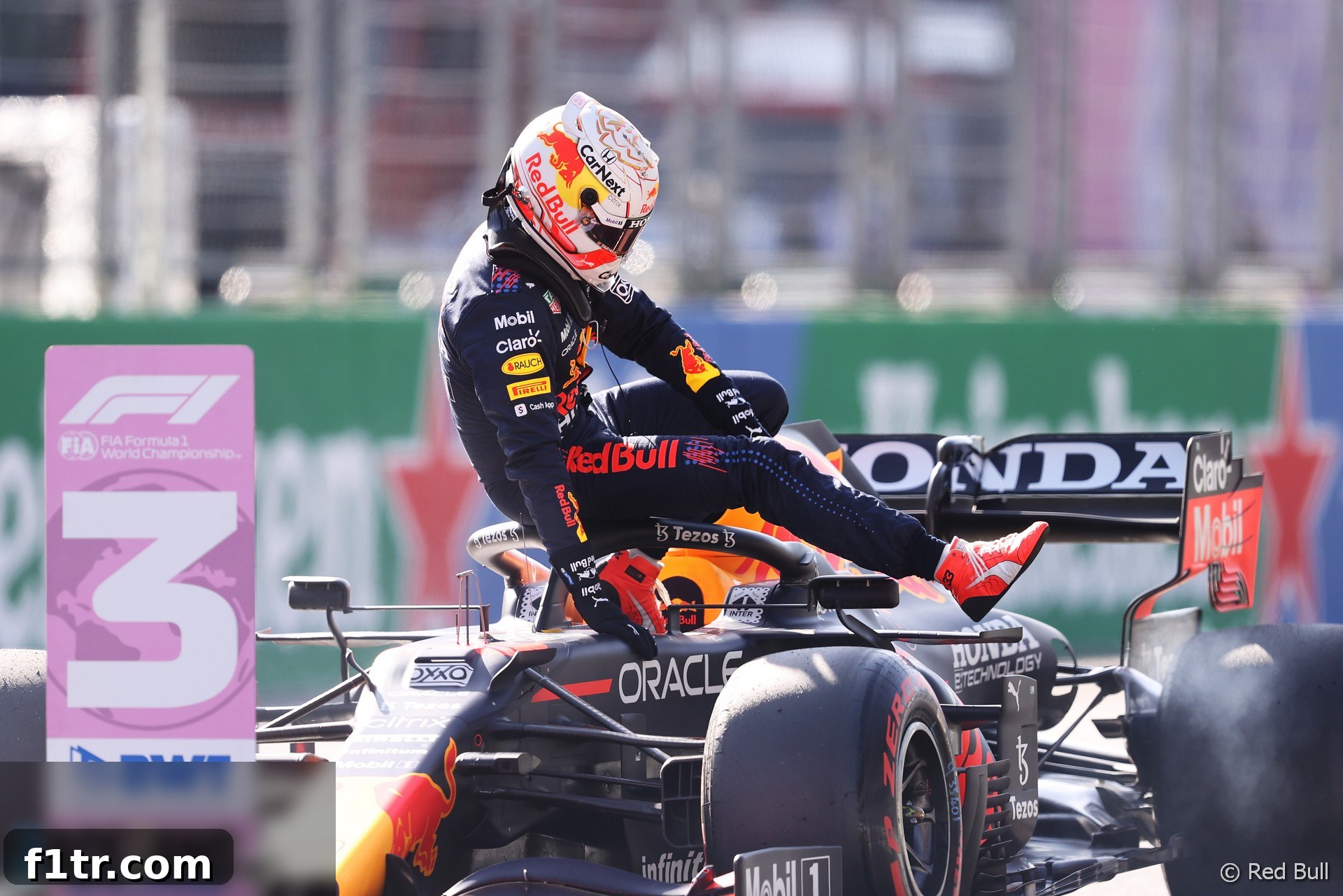
The 2021 Formula 1 season delivered unparalleled drama and excitement, with the Mexico City Grand Prix qualifying session serving as yet another captivating chapter. As the championship battle between Lewis Hamilton and Max Verstappen intensified, every pole position and strategic advantage became crucial. It was in this high-stakes environment that Valtteri Bottas of Mercedes-AMG Petronas F1 Team secured a sensational pole position, a result that surprised many, especially following Red Bull Racing’s dominant performance in the final practice session.
However, the qualifying session was not without its controversy, centering on the Red Bull drivers, Max Verstappen and Sergio Perez, who were forced to abandon their crucial final flying laps in Q3. This came after encountering AlphaTauri driver Yuki Tsunoda at Turn 11, an incident that ignited a heated debate and left Red Bull team principal Christian Horner expressing his frustration, famously stating his drivers had been “Tsunoda’d.”
Advert | Become a Supporter & go ad-free
Mercedes team principal Toto Wolff, however, cast significant doubt on Red Bull’s ability to challenge Bottas’s pole time even if their laps had not been interrupted. His assessment, based on early sector times, suggested that the Mercedes W12 had found a surprising turn of pace when it mattered most, ultimately outperforming its rivals.
Bottas’s Surprise Pole: A Boost for Mercedes
Valtteri Bottas’s pole position for the Mexico City Grand Prix was a meticulously executed performance that underscored the unpredictable nature of Formula 1. While the Finn has consistently shown flashes of brilliance throughout his career, this particular pole carried immense significance. It was a crucial psychological victory for Mercedes, disrupting Red Bull’s anticipated dominance on a circuit that was widely expected to favour their car’s aerodynamic characteristics and power unit performance at altitude.
Bottas’s ability to extract the maximum from his Mercedes W12 on the soft compound tires during Q3 was exemplary. His lap was clean, precise, and demonstrated a perfect synergy between driver and machine, especially when tire management on the challenging Autodromo Hermanos Rodriguez circuit proved difficult for many. This unexpected performance provided a much-needed morale boost for the Mercedes team and, more importantly, put their car in the prime starting position for a race where track position is often paramount.
The “Tsunoda’d” Incident: Red Bull’s Q3 Frustration
The concluding moments of Q3 were marred by an incident involving Yuki Tsunoda that had a direct impact on Red Bull’s championship aspirations. As Max Verstappen and Sergio Perez embarked on their final, critical qualifying laps, they encountered Tsunoda, who had gone off track at Turn 11. Although Tsunoda was off the racing line, his presence on the run-off area and the potential for yellow flags, or simply a perceived distraction, led both Red Bull drivers to back off their attempts. This effectively ended their chances of improving their times and challenging Bottas for pole.
Christian Horner’s immediate reaction was one of palpable frustration. The Red Bull team principal did not mince words, lamenting that his drivers had been “Tsunoda’d,” a remark that quickly became a talking point in the F1 paddock. The implication was clear: a potentially dominant qualifying performance by Red Bull had been undone by an unfortunate, albeit perhaps unavoidable, encounter with their sister team’s driver. This incident highlighted the fine margins in Formula 1 qualifying, where a fraction of a second or an unexpected obstruction can make the difference between pole position and a row two start.
Toto Wolff’s Rebuttal: Mercedes’ Unexpected Pace
While Red Bull pointed fingers at the Tsunoda incident, Toto Wolff presented a starkly different narrative. According to the Mercedes boss, even without the interruption, neither Max Verstappen nor Sergio Perez were on course to usurp Valtteri Bottas’s pole position. Wolff’s analysis, based on live telemetry and sector times, indicated that Red Bull was behind Mercedes’ pace in the initial sectors of their aborted laps.
“I think at that stage, sector one and sector two, they were behind,” Wolff elaborated after qualifying. “I think it was something like two tenths, or two and a half tenths.” This assertion challenged the perception that Red Bull had a definitive advantage, especially after their strong showing in FP3. Wolff’s comments suggested that Mercedes had unlocked significant performance from their W12 in Q3, finding a sweet spot with tire temperatures and car balance that Red Bull seemingly struggled to match. This turn of events was particularly satisfying for Mercedes, given the preceding race in Austin where Red Bull had held the upper hand.
From FP3 Dominance to Qualifying Defeat: The Red Bull Puzzle
The contrast between Red Bull’s performance in Free Practice 3 and qualifying was stark and perplexing. In FP3, Max Verstappen had comfortably topped the timesheets, demonstrating a commanding six-tenths-of-a-second lead over his nearest rivals. This led to widespread expectations that pole position would be a mere formality for Red Bull, particularly for Verstappen, who was keen to maximize his advantage in the championship fight.
“We were all surprised,” Wolff admitted, reflecting on the qualifying outcome. “It was pretty obvious that Max would take pole, and that it would be a fight between us and Checo for the other positions.” This sentiment was echoed across the paddock. However, as qualifying progressed, Mercedes found an unexpected surge in performance. Wolff noted, “Then we could see that qualifying really came towards us. On the medium [tyres] we started really to outperform them. And at no point in Q3 they had they had a lead, on none of the laps. Also I believe that in the last lap they were behind.”
This dramatic swing in performance from one session to the next is what makes Formula 1 so captivating. Factors such as track evolution, ambient temperature changes, wind direction, and subtle adjustments to car setup or tire management strategies can have a profound impact. While Red Bull seemingly struggled to find the optimal balance on the soft tires during Q3, Mercedes capitalized on their ability to switch on their tires effectively, especially on the medium compound in earlier segments, carrying that momentum into the final shootout.
Max Verstappen’s Unfinished Business: A Champion’s Resolve
Despite Toto Wolff’s assertions, Max Verstappen remained convinced that he could have challenged Valtteri Bottas’s pole time had he been able to complete his final Q3 lap. Verstappen’s qualifying session was a rollercoaster, marked by initial struggles to get his tires into the optimal working window.
“Before that, we were struggling somehow with just getting the tyres to work,” Verstappen explained. “On the mediums it wasn’t too bad but then on the softs going into Q3, it just didn’t click in the first run. It just was a terrible lap, just no grip.” This first Q3 run was unusually off the pace for the Dutchman, underscoring the challenges of the circuit and tire management.
However, Verstappen’s characteristic determination meant he was not ready to concede defeat. He believed improvements were made for his final attempt. “So I knew, of course, there was a lot more in it if we could find a better balance with the tyres. And it was a little bit better in the final run and it was definitely on for a good lap and challenge Valtteri’s time.” This belief in his potential to secure pole, despite the data presented by Mercedes, highlights the competitive spirit of a championship contender and the eternal ‘what if’ scenarios that often define crucial qualifying sessions.
Sergio Perez and the Home Race Pressure
For Sergio Perez, the Mexico City Grand Prix was his home race, a massively significant event where the support from his passionate local fans was immense. The pressure to perform was therefore amplified, making his aborted Q3 lap even more disheartening. Like Verstappen, Perez was denied the opportunity to complete his final flying lap due to the Tsunoda incident, an unfortunate turn of events that prevented him from potentially securing a coveted front-row start in front of his adoring home crowd. While his performance earlier in qualifying showed promise, the missed opportunity in Q3 was a bitter pill to swallow for the Mexican driver and his team.
Advert | Become a RaceFans supporter andgo ad-free
Championship Implications and Strategic Battle Ahead
The qualifying result in Mexico City had significant implications for the intensely fought 2021 Formula 1 Drivers’ and Constructors’ Championships. Bottas’s pole, coupled with Hamilton starting third, put Mercedes in a strong strategic position against Verstappen starting third. The initial grid order created a fascinating dynamic for the race, especially concerning the long run down to Turn 1, where slipstream and braking prowess would be critical.
Mercedes’ unexpected turn of pace in qualifying allowed them to mitigate Red Bull’s anticipated dominance, ensuring that the championship battle remained fiercely contested. The stage was set for a strategic chess match, with tire management, pit stop timing, and on-track overtakes all playing pivotal roles in determining the outcome of the Mexico City Grand Prix and its broader impact on the season’s title race. The qualifying session was a perfect microcosm of the 2021 season: unpredictable, high-stakes, and filled with drama from start to finish.
More on the 2021 Mexico City Grand Prix
- Hamilton’s Pursuit: Can Anyone Catch Verstappen in 2021?
- Alfa Romeo’s Strategic Blunder: Giovinazzi’s Ironic Gratitude
- “Nice Catch”: Verstappen’s Clever Move to Outmaneuver Bottas
- Highlighting the Top Performers of the 2021 Mexico City Grand Prix
- Wolff Expresses Astonishment at Ricciardo-Bottas Collision Non-Investigation
- Full Race Report: Unpacking the Drama of the 2021 Mexico City GP
- Qualifying Analysis: The Fine Margins in Mexico City
Browse all 2021 Mexico City Grand Prix articles