F1 2023 Car Design: Will Rivals Converge on Red Bull’s Dominant RB18 Philosophy?
As the Formula 1 paddock gears up for the highly anticipated 2023 F1 season, a significant question looms over the technical landscape: will competitor teams universally adopt design cues from Red Bull Racing’s remarkably successful RB18? Despite the increasingly stringent technical regulations aimed at promoting closer racing and limiting developmental freedom, opinions within the sport remain sharply divided on whether outright design convergence is an inevitable outcome or if distinct philosophies will continue to shape the grid.
The 2022 season unequivocally established the Red Bull RB18 as the benchmark car, a masterclass in adapting to the sport’s radical new ground effect aerodynamics regulations. This formidable machine propelled Max Verstappen to a record-breaking 15 Grand Prix victories, shattering previous benchmarks for wins in a single season. His teammate, Sergio Perez, also contributed significantly with two additional wins, cementing Red Bull’s comprehensive dominance and securing both the Drivers’ and Constructors’ Championships with considerable ease. The RB18’s innovative chassis, sophisticated floor design, and efficient aerodynamic package allowed it to excel across diverse circuits, demonstrating superior straight-line speed, exceptional cornering stability, and remarkable tyre management. Its consistent performance left rivals scrambling to understand and replicate its inherent strengths, particularly its ability to manage porpoising and deliver stable downforce.
This overwhelming success naturally leads to speculation that other teams, seeking to close the performance gap, will inevitably gravitate towards the RB18’s conceptual framework. Historically, Formula 1 has seen periods where a dominant car’s design becomes the blueprint for the rest of the grid, as engineers reverse-engineer and adapt successful elements to their own packages. However, the current regulatory environment, coupled with financial constraints, adds layers of complexity to this traditional “copycat” dynamic.
Divergent Paths? Paul Monaghan’s Perspective on 2023 F1 Car Designs
Despite the RB18’s undeniable supremacy, Red Bull’s Chief Engineer, Paul Monaghan, harbors doubts that the entire grid will simply produce carbon copies of their championship-winning design for the upcoming season. Monaghan acknowledges that the current design rules are “a little constrained,” leading to cars that are “quite similar” and where “freedoms are curtailed compared with previous years.” This sentiment reflects the FIA’s efforts to standardize certain areas of car design, particularly in critical aerodynamic zones, to reduce performance disparities and promote tighter competition. However, Monaghan firmly believes that this does not automatically translate into identical-looking cars across the board.
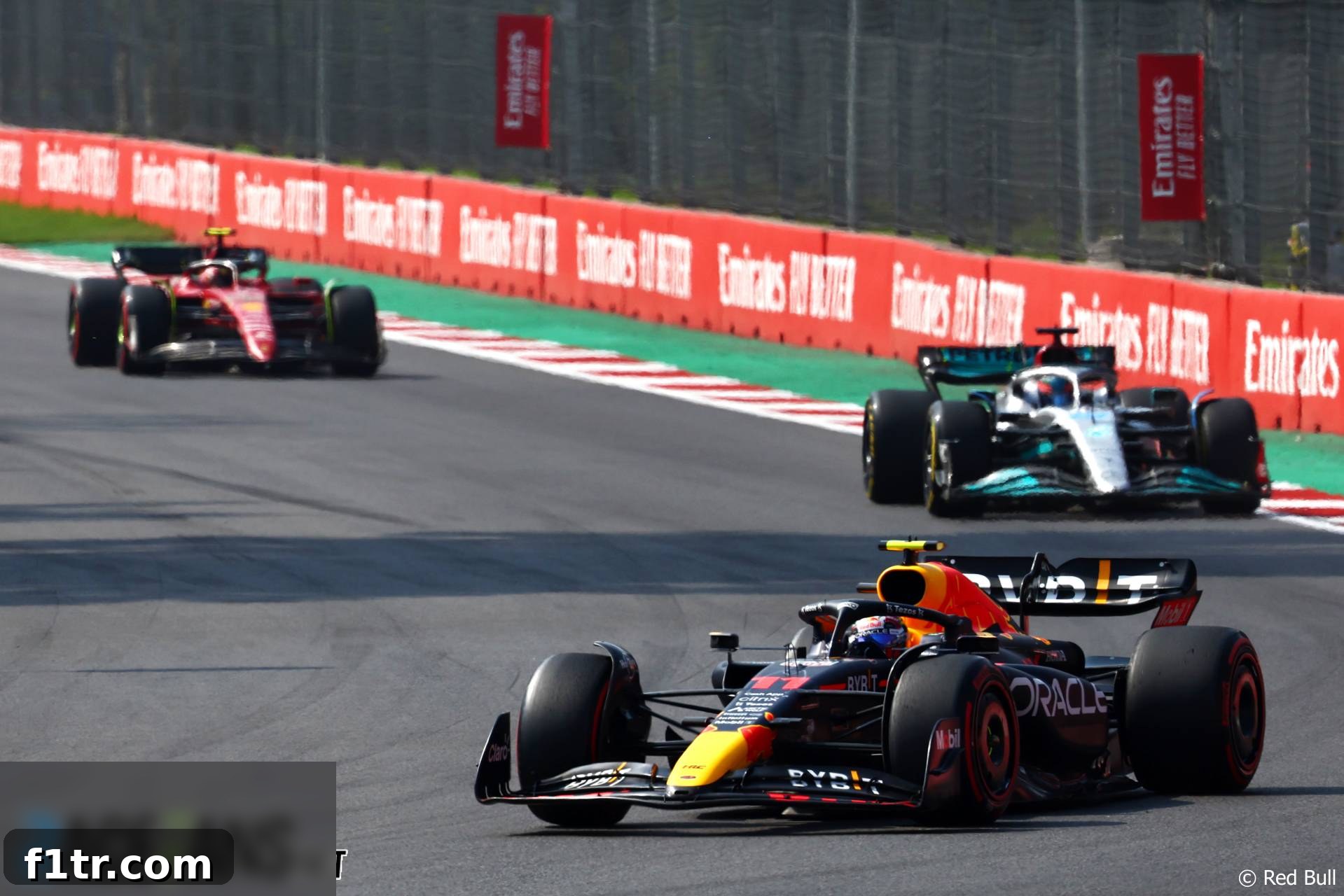
“Simply put, no, I don’t think the cars will have an identical appearance,” Monaghan asserted. He emphasized that while regulations dictate overall shapes more closely than in past eras, significant scope for individual interpretation and innovation remains. He pointed to the visual and conceptual distinctions between the 2022 cars of Mercedes, Ferrari, and Red Bull as compelling evidence. Ferrari’s F1-75, for instance, featured unique sidepod concepts and a distinctive nose, while Mercedes’ W13 famously introduced its ‘zeropod’ design, a radical departure from conventional thinking. These examples highlight that even within a restrictive framework, engineering teams can explore diverse solutions to achieve performance, leveraging their unique methodologies and computational fluid dynamics (CFD) expertise.
The Nuances of F1 Technical Regulations and Persistent Differences
Monaghan’s perspective underscores a fundamental truth in Formula 1: even minor differences in design philosophy can yield substantial performance variations. The “freedoms curtailed” refer to prescriptive elements within the regulations, such as standardized components, restrictions on wing dimensions, and detailed specifications for floor geometry. However, engineering ingenuity often thrives within constraints. Teams exploit every millimeter and every allowance to generate marginal gains, leading to subtle but critical aerodynamic distinctions. These differences might manifest in areas like cooling solutions, brake duct designs, suspension kinematics, or internal airflow management, all of which contribute to the car’s overall efficiency and handling characteristics.
Furthermore, the 2023 season will introduce its own set of minor regulatory adjustments, particularly affecting areas such as floor dimensions, which were modified to combat the persistent porpoising phenomenon experienced by many teams in 2022. Monaghan expressed skepticism that these changes would lead to an immediate convergence on a single dominant solution. “There are regulation changes coming along for next year,” he noted. “Are we all going to have the same solution at race one? I doubt it, that doesn’t seem to be the way of our sport.” This outlook suggests that teams will continue to interpret and optimize around these new rules in their own unique ways, leading to an evolutionary rather than revolutionary convergence, if any at all.
The Inevitable Copycat? Francois-Xavier Demaison’s Contrasting View
In stark contrast to Monaghan’s cautious optimism for design diversity, Williams’ Technical Director, Francois-Xavier Demaison, offered a more pragmatic and arguably cynical view on the future of F1 car design. Demaison, whose own team had already incorporated elements inspired by Red Bull’s successful concepts during the 2022 season, believes that convergence towards the RB18’s philosophy is not just likely but inevitable. His perspective reflects a long-standing adage in motorsport: “if you can’t beat them, copy them.”
“Well, when you see the speed of the blue car, I’m quite sure [teams will converge],” Demaison stated, referring to the Red Bull. “Already I think so many cars try to go that direction. So I’ll be surprised if there are not more and more cars heading in the same direction. You can’t avoid it, it’s motorsport, you always copy the fastest car and that’s F1.” Demaison’s argument is rooted in the competitive nature of Formula 1. When one team unlocks a significant performance advantage, especially one as profound as Red Bull’s in 2022, rivals are compelled to investigate, understand, and, where possible, integrate similar concepts into their own designs. The pressure to perform and close the gap often overrides the desire for unique innovation, particularly when a clear path to success has been demonstrated.
The “Fastest Car” Principle in Motorsport History
Demaison’s viewpoint is well-supported by Formula 1 history. Eras of dominant car designs often see other teams adopting similar architectural principles. Examples include the high-rake philosophy pioneered by Red Bull in the late 2000s, the double diffuser introduced by Brawn GP in 2009, or Mercedes’ long-standing low-rake concept during their turbo-hybrid dominance. While direct, identical copies are rarely possible due to intellectual property, differing manufacturing processes, and distinct car geometries, the conceptual adoption of a successful aerodynamic or mechanical solution is common. Teams spend significant resources on photographic analysis, CFD simulations, and wind tunnel testing to decipher the secrets of their fastest rivals. The challenge lies in integrating these concepts effectively into a pre-existing package, which is often a more complex task than simply starting from scratch.
For a team like Williams, which has struggled for competitiveness in recent seasons, looking to the pacesetters for inspiration is a logical strategy. By incorporating proven design elements, they hope to accelerate their own development curve and move closer to the midfield, even if it means sacrificing some degree of unique identity. This pragmatic approach highlights the differing pressures on teams at various points in the grid; those chasing performance often prioritize efficacy over novelty.
Cost Cap’s Influence: Tom McCullough on Innovation and Early Season Diversity
Adding another layer of complexity to the convergence debate is the impact of Formula 1’s financial regulations, specifically the budget cap. Aston Martin’s Performance Director, Tom McCullough, offered a nuanced perspective, suggesting that while the cost cap might discourage extensive in-season experimentation with multiple development paths, it could paradoxically lead to more diverse designs appearing at the very start of the season.
McCullough’s team experienced this firsthand in 2022 when their revised car, introduced at the Spanish Grand Prix, bore a striking resemblance to the Red Bull RB18, earning it the moniker of a ‘green Red Bull.’ This incident highlighted the practical realities of F1 development under tight financial controls. Teams cannot afford to chase every promising avenue; instead, they must commit resources to what they believe will be the most effective solution. This commitment, however, often involves significant research and development during the off-season.
“I think the cost cap will mean that people have been working away on ideas that they’ve not been able to bring to the track that people haven’t seen,” McCullough explained. “And therefore, [we’ll see] maybe a few differences at the start of next year.” This implies that teams might have had various conceptual designs on their drawing boards or in their virtual simulations throughout 2022, but the budget cap prevented them from manufacturing and testing these alternative solutions during the season. Instead, these ideas are refined and saved for the following year’s car, potentially leading to a richer variety of initial concepts at pre-season testing events.
The cost cap thus forces teams to be strategic with their spending, prioritizing significant upgrades rather than continuous, minor iterations. This might mean that if a team has identified a radically different yet potentially successful approach, they will save it for the launch of their new car rather than introducing it mid-season as an expensive, untested gamble. Consequently, while mid-season development might see convergence on successful ideas, the opening races of the 2023 season could still present an intriguing array of distinct interpretations of the regulations, showcasing the diverse engineering talents within the sport.
The Dynamic Balance of Design: Convergence, Innovation, and Performance
The debate surrounding F1 car design convergence for 2023 encapsulates the perpetual tension within Formula 1: the push for competitive parity versus the celebration of engineering innovation. On one hand, strict regulations and the immense performance advantage of a car like the RB18 naturally exert pressure on teams to adopt similar solutions, promising closer racing through homogeny. On the other, the inherent creativity of F1 engineers, coupled with the strategic implications of the budget cap, encourages the exploration of unique paths, at least in the initial phases of a new season.
The sport’s governing body, the FIA, continuously strives to strike a balance, designing regulations that promote spectacle while allowing for genuine technical differentiation. The 2023 season, therefore, stands as a fascinating test case. Will the brilliance of the RB18 prove too compelling to ignore, leading to a largely uniform grid? Or will teams like Mercedes and Ferrari, along with others, unveil their own distinct interpretations, fueled by off-season development and a desire to forge their unique competitive edge? The answer will undoubtedly shape the competitive landscape, influence fan engagement, and define the technical narrative of the upcoming championship.
Anticipating the 2023 F1 Grid: A Blend of Familiarity and Novelty
As the curtains rise on the 2023 F1 season, it is likely we will witness a fascinating blend of design familiarity and novelty. While the underlying principles of ground effect aerodynamics will unite all cars, the subtle yet significant differences in their execution will be where the true engineering battles are fought and won. Red Bull’s RB18 set a high bar, offering a proven pathway to success. However, the ingenuity of rival teams, constrained yet challenged by the regulations and the cost cap, may yet surprise us with innovative solutions that deviate from the established norm. The excitement will build from pre-season testing, where the initial designs are unveiled, through to the first races, as the true pecking order and design philosophies become clear. One thing is certain: the evolution of F1 car design remains a thrilling spectacle.
Related F1 Season Insights
- Mercedes told me “you’re wrong” about 2022 car’s problems – Hamilton
- FIA confirms all 10 F1 teams complied with 2022 cost cap
- Steiner “not ashamed” of panning “slow” Schumacher in Drive to Survive
- Albon believes year out of F1 improved him as a driver
- Hamilton sees diversity gains in F1 years on from his ‘traumatising’ experience of racism
Browse all 2022 F1 season articles