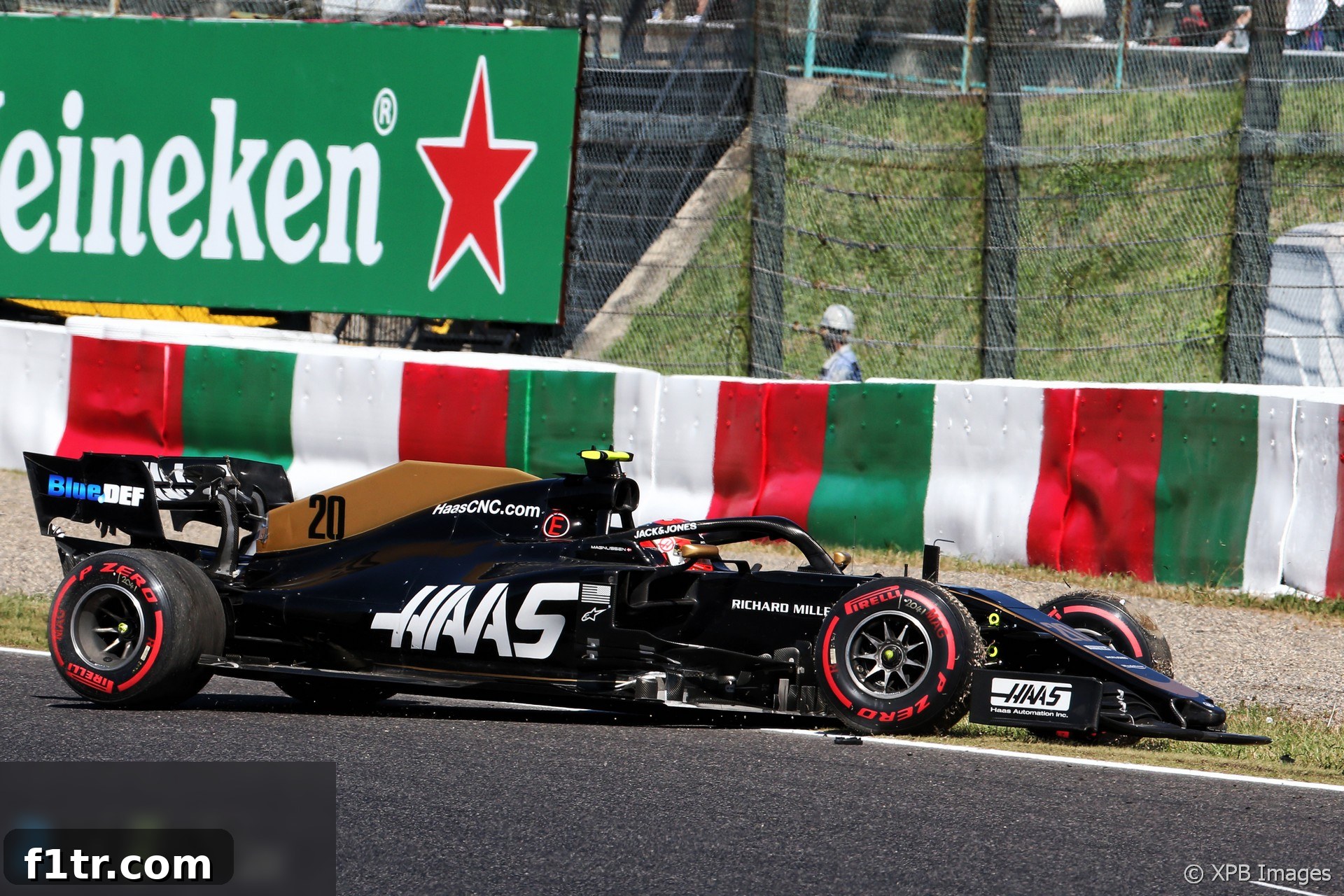
Kevin Magnussen Laments “Embarrassing” Japanese GP Qualifying Crash and Missed Points Opportunity
Haas F1 driver Kevin Magnussen has openly described his qualifying crash at the Japanese Grand Prix as “embarrassing,” expressing deep frustration that the incident significantly hampered his prospects for a stronger race result. The Danish driver’s hopes for a competitive weekend were derailed early when a gust of wind caught him out during his initial run in Q1, sending his car into the barrier and relegating him to a lowly 19th position on the starting grid.
The Qualifying Calamity: A Moment of Misfortune
The Suzuka International Racing Course is renowned for its high-speed corners, technical challenges, and unforgiving nature, making qualifying an intense battle where precision and confidence are paramount. Magnussen’s Q1 session, however, took an unexpected and unwelcome turn. As he pushed his Haas VF-19 to the limits, an unforeseen environmental factor intervened.
A Gust of Wind, A Moment’s Misjudgment
“I went on power and I had full throttle,” Magnussen recounted, detailing the moment of impact. “And then suddenly I got wheelspin and spun around which was unfortunate and quite embarrassing really, but shit happens.” This candid admission highlights the fine margins in Formula 1, where external elements like wind gusts, especially at a circuit as aerodynamically demanding as Suzuka, can have catastrophic consequences. For a driver of Magnussen’s experience and caliber, such an unforced error, even if triggered by external conditions, is a bitter pill to swallow. The immediate aftermath saw the Haas team scrambling, and the incident left Magnussen with a compromised starting position, transforming his race weekend from a potential points challenge into an uphill battle.
The incident wasn’t just a physical setback for the car; it was a psychological blow for Magnussen and the team. Starting from the penultimate row of the grid at Suzuka, a track where overtaking is notoriously difficult and track position is king, immediately placed them on the back foot. The pressure on a driver in such circumstances is immense, tasked with recovering lost ground against a field of equally determined competitors. The “embarrassing” label Magnussen attributed to the crash underscored his personal disappointment, reflecting the high standards he holds for himself and his performance.
Race Day Realities: Fighting from the Back
Following the disheartening qualifying session, Magnussen lined up 19th for the main event, knowing that a points finish would require an extraordinary performance, coupled with a stroke of luck or significant strategic masterstroke. He ultimately concluded the race in 17th position, managing to finish ahead of only the two Williams drivers, who were struggling at the back of the grid throughout the season. While a marginal improvement from his starting slot, it was far from the top-ten finish Magnussen believed was achievable.
Strategy Struggles and Midfield Battles
Reflecting on his race performance, Magnussen admitted, “I just really didn’t hook it up today with pit stops and strategy.” This honest assessment points to the multi-faceted challenges faced by Formula 1 teams, where not only raw pace but also flawless execution of race strategy and efficient pit stops are critical determinants of success. He further elaborated, “It wasn’t terrible in terms of tyres and pace. Not like previous races where we’ve been hopeless because of whatever, it’s not like previous races.” This statement provided a sliver of optimism, indicating that the car’s underlying performance in race trim was not as dire as in some earlier rounds of the championship. It suggests that while the pace might have been sufficient to contend in the midfield, the operational aspects of the race day, particularly strategy calls and pit lane efficiency, fell short of what was required to convert that potential into a tangible result.
The midfield battle in Formula 1 is incredibly fierce, with multiple teams often separated by mere tenths of a second. Every strategic decision, every pit stop timing, and every lap of tire management can mean the difference between scoring a point or finishing outside the top ten. For a team like Haas, operating with a smaller budget compared to the front-runners, maximizing every opportunity is crucial for their championship standing. The inability to “hook it up” in terms of strategy and pit stops therefore represented a significant missed chance, compounding the frustration already stemming from the qualifying incident.
The Weight of Missed Opportunities
Despite the disappointing outcome, Magnussen firmly believes that the Haas VF-19 possessed the inherent capability for a much better result at Suzuka, highlighting the ‘what if’ scenario that often plagues drivers after a challenging weekend. “If we had hooked everything up, if I started up where I should have and got as good a start as I did get then I would have been in a much better position,” he asserted. His strong start in the race, despite his compromised grid position, demonstrated his ability to gain ground in the initial laps – a crucial skill in F1. However, the damage from qualifying was already done.
The Haas Perspective: Chasing Crucial Points
The core of Magnussen’s frustration stemmed from the strong conviction that points were on the table. “Then probably with a better pit stop and strategy I could have scored points. So it’s frustrating.” This sentiment is particularly poignant for teams battling in the midfield, where every single point can make a substantial difference in the Constructors’ Championship standings. For Haas, a team that often punches above its weight, converting potential into points is vital for their long-term stability and competitive aspirations. The Japanese Grand Prix therefore became a symbol of unfulfilled potential, a weekend where external factors and internal execution issues converged to deny them a valuable return. Magnussen’s frustration is understandable; F1 drivers operate at the pinnacle of motorsport, where perfection is strived for, and any deviation from that path, whether self-inflicted or due to circumstances, can be incredibly disheartening.
The incident at Suzuka serves as a stark reminder of the relentless challenges in Formula 1, where a momentary lapse or an unexpected element like a gust of wind can dramatically alter a driver’s weekend trajectory. For Kevin Magnussen and Haas, the Japanese Grand Prix of that year was a lesson in missed opportunities, a testament to the fine margins that define success and failure in the world’s fastest sport. Learning from such experiences and ensuring better execution in the future remains a constant pursuit for every team and driver on the grid.
Beyond Suzuka: Lessons Learned and Future Hopes
Every Formula 1 race, regardless of the outcome, offers invaluable data and lessons for teams and drivers. Magnussen’s “embarrassing” moment in qualifying at Suzuka, while undoubtedly a low point, provided crucial insights into the car’s behavior in specific conditions and highlighted areas for improvement in strategy execution. The candor with which he addressed the incident reflects his professional approach and commitment to continuous improvement. For Haas, understanding how such events unfold and developing contingencies for unpredictable weather patterns or track conditions is part of the ongoing development cycle.
The F1 calendar is unforgiving, and there is always another race on the horizon. Moving past the disappointment of Suzuka, the focus for Magnussen and the Haas F1 team would have quickly shifted to analyzing the data, identifying the root causes of their strategic missteps, and preparing for the next challenge. The resilience of F1 drivers is legendary, and Magnussen’s ability to honestly evaluate his performance, even when it involves admitting mistakes, is a hallmark of a true competitor. While the points may have eluded them in Japan, the experience served as a potent reminder of the importance of perfect execution at every stage of a Grand Prix weekend.
Stay Connected with RaceFans
Never miss a moment of the action. Follow RaceFans on social media for the latest updates, news, and insights from the world of Formula 1:
- Join RaceFans on Facebook
- Follow RaceFans on Twitter
- Get daily email updates from RaceFans
More from the 2019 F1 Season
Dive deeper into the memorable moments and stories from the 2019 Formula 1 season with these related articles:
- Ocon Reflects on “Career Low” During 2019 Australian Grand Prix
- McLaren Racing Announces Reduced £71 Million Loss for 2019 Fiscal Year
- Kvyat Hails 2019 Hockenheim Podium as “Biggest Achievement” to Date
- FIA’s New Encrypted Fuel Flow Meter Targets Suspected Ferrari ‘Aliasing’ Trick
- “He Smashed My Office Door”: Unforgettable Moments from ‘Drive to Survive’ Season Two
- Verstappen Claims First Pole Position in Brazil Amidst Ferrari Drama
- Hamilton Crowned Six-Time World Champion at United States Grand Prix
- Leclerc Masters Singapore Grand Prix for Third Straight Victory
- Vettel Ends Winless Streak with Resurgent Performance at Belgian Grand Prix
- Bottas Victorious in Hungary, Extending Mercedes’ Impressive Run
Browse all 2019 F1 season articles