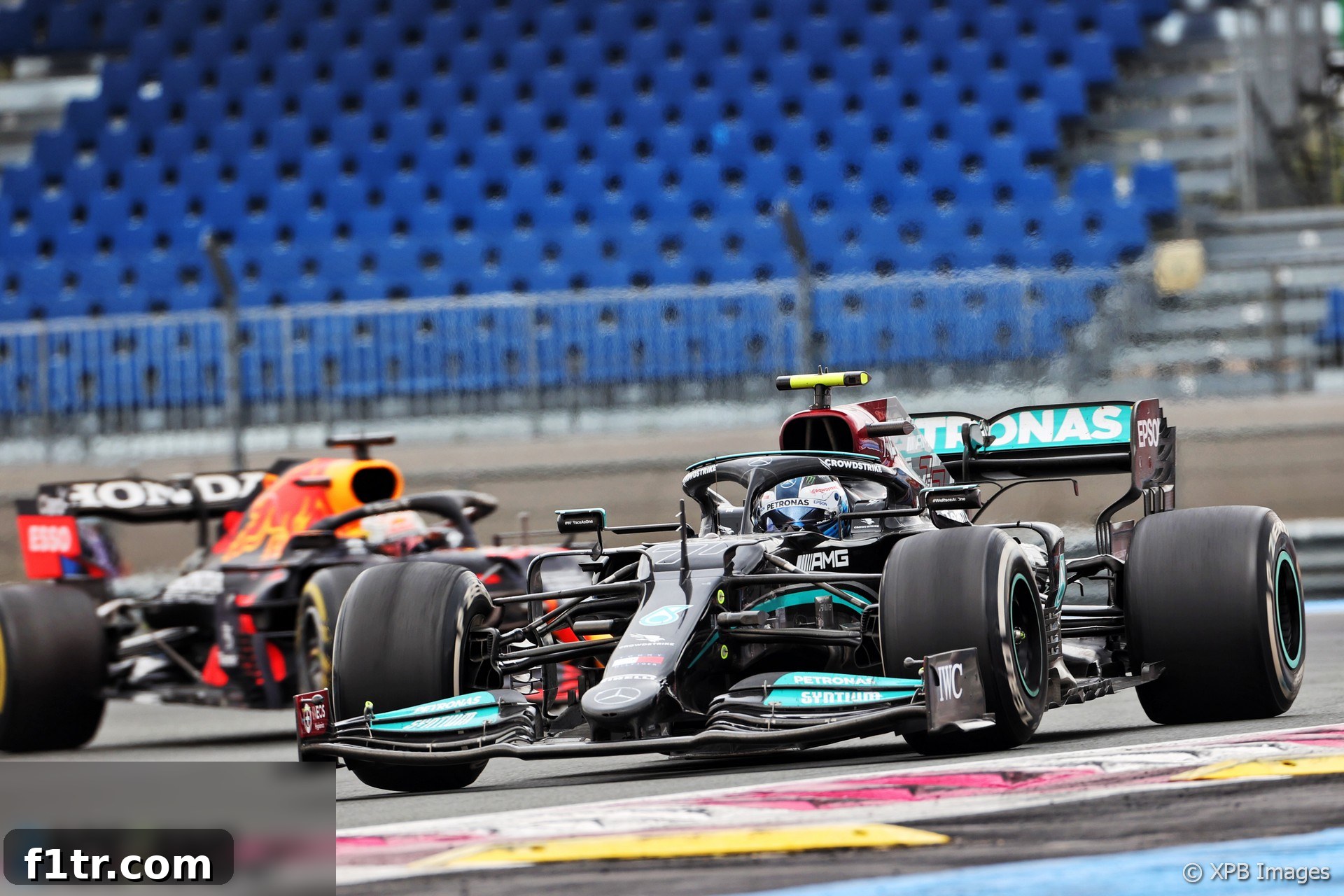
Valtteri Bottas Dispels Rumors of Strained Relationship with Mercedes After French Grand Prix Strategy Debate
Formula 1 driver Valtteri Bottas has strongly refuted suggestions that recent terse radio exchanges with his Mercedes-AMG Petronas F1 Team during the French Grand Prix indicate any tension or breakdown in their relationship. The Finnish driver clarified the situation, emphasizing that direct communication is a normal and necessary part of operating at the pinnacle of motorsport, especially when critical strategic decisions are being made under immense pressure.
The incident in question, which immediately captured media attention and sparked widespread speculation, occurred at the Circuit Paul Ricard. Bottas found himself embroiled in a challenging strategic battle during the race. Following an early first pit stop, he unexpectedly slipped from a strong podium position, leading to vociferous complaints over the team radio. Bottas expressed his frustration, asserting that the team had failed to act on his recommendation for a second tyre change – a tactical move he believed was crucial for optimizing his race performance and securing a better result. This public display of disagreement between driver and pit wall subsequently fueled narratives of a potentially strained relationship within the championship-winning team.
French Grand Prix Strategy: A Critical Point of Contention
The 2021 French Grand Prix proved to be a pivotal and contentious race, particularly for Valtteri Bottas and the Mercedes team. Bottas started the race from third on the grid, positioning him ideally to challenge for a podium finish, or even a victory, alongside his teammate Lewis Hamilton and Red Bull’s Max Verstappen. However, an early pit stop to switch to hard compound tyres saw him lose valuable track position. As the race unfolded, Bottas’s tyres began to degrade more rapidly than anticipated, making him increasingly vulnerable to competitors who were either on fresher rubber or managing their tyre life more effectively.
It was during this period that Bottas’s concerns escalated, leading to his direct radio communications. His insistent calls for a second pit stop, which he genuinely believed would have provided him with the necessary grip and pace to reclaim a podium spot, were ultimately not heeded by the Mercedes pit wall. This strategic divergence resulted in Bottas finishing the race in fourth place, a result that he clearly felt was below his potential and the car’s capability.
“When you’re physically in the car, experiencing the conditions firsthand, you inevitably have a somewhat limited view of the overall race situation unfolding around you,” Bottas explained during a mandatory post-race debrief. “It’s simply impossible for a driver to possess all the real-time data and broader strategic perspectives that the team has access to at the pit wall. Because of this inherent limitation, it was absolutely vital for us to go through every single aspect of the race in detail, as we diligently do after every Grand Prix, to understand all variables.”
Following comprehensive and transparent discussions with the team, Bottas stated that he now “understands more things” about the rationale and complex considerations that underpinned their strategic decisions during the race. However, despite gaining a clearer and more comprehensive insight into the team’s perspective and their data-driven choices, he remains firm in his conviction that there was significant room for improvement in their tactical approach. “I do understand the situation much better now, having reviewed all the data and listened to the team’s reasoning,” he affirmed. “But the fact remains, in the context of my tyre condition and the competitive landscape at that specific point in the race, the strategy that was ultimately executed was suboptimal for my individual performance. We can’t turn back time to alter the outcome, but what we can and must always do is learn profoundly from these experiences to prevent similar occurrences in the future.”
Bottas further underscored the paramount importance of honest, open, and sometimes challenging dialogue in such a high-stakes and performance-driven environment. “The most crucial aspect when there’s disappointment, or when either a driver or the team feels unhappy or believes an error was made, is to address it head-on with complete transparency. The only effective solution is always to go through everything very honestly, dissect the situation, and extract concrete lessons from those moments, ensuring we collectively improve for every subsequent race.”
Dispelling Relationship Strain Narratives: “Completely False Perception”
Amidst the swirling rumors and various media interpretations of the radio communication, which many outlets characterized as “terse” or indicative of a ‘fractured relationship,’ Valtteri Bottas vehemently denied any suggestion that his bond with Mercedes had deteriorated. The Finnish driver is currently operating under a one-year contract, and his future with the team beyond the current season is a subject of intense and relentless media scrutiny, particularly with highly-rated Mercedes junior driver George Russell frequently linked to his coveted seat.
“That perception is entirely false and misleading,” Bottas declared unequivocally, addressing the speculation directly. “We maintain a strong, professional, and healthy relationship with the team, and I can assure you there are absolutely no underlying issues or tensions between us. These kinds of situations – where a driver expresses strong feelings, offers real-time insights, or suggests a different strategic approach – are not only completely normal but are also an essential part of effective communication in Formula 1. It’s a fast-paced environment where clarity and directness are prized.”
He further elaborated on the long-standing nature of their internal communication ethos: “I’m confident that throughout our entire journey together, what has consistently brought us this far as a highly successful team has always been our commitment to directness and unwavering honesty regarding our feelings and perceptions. This is especially true if any individual perceives an area for improvement, whether it’s car performance, race strategy, or team operations. This isn’t a new development or a sign of trouble; it’s how we operate. Everything is genuinely good and functional within the team. My fundamental desire is always to push for the absolute best possible outcome, and sometimes that inherently involves expressing a different viewpoint or offering a passionate suggestion from the cockpit.”
The intensity of Formula 1, with its demands for split-second decisions, monumental financial stakes, and global media scrutiny, often amplifies what might otherwise be considered standard operational discussions within any competitive organization. Drivers, with their unique and intimate perspective from inside the cockpit, frequently possess a granular and intuitive understanding of tyre performance, track evolution, and the subtle nuances of vehicle dynamics that even the most sophisticated data analytics might not fully convey. Bottas’s comments highlight the delicate and critical balance between trusting the overarching team strategy and advocating fiercely for one’s own real-time sensory feedback and experiential knowledge.
Mercedes’ Commitment to Enhanced Listening and Learning
According to Bottas, the Mercedes team, renowned for its meticulous approach to engineering and operational excellence, has acknowledged the profound importance of his feedback and indicated a clear willingness to take his insights even more seriously in the future. This commitment from the team leadership suggests a proactive and ongoing approach to refining their internal communication channels and optimizing their strategic decision-making processes moving forward.
“As a driver, when it comes to effective communication, providing crucial feedback, and making specific requests during a race, we are all continuously learning and evolving,” Bottas reflected thoughtfully. “Perhaps, on my part, we collectively need to be even more direct and concise in our communication from the cockpit to ensure maximum clarity and impact. However, I genuinely feel that the team understood my perspective perfectly and explicitly acknowledged that, yes, they absolutely should listen even more attentively to direct driver input, particularly when it pertains to real-time track conditions and tyre behavior.”
This sentiment underscores a key and fundamental dynamic in top-tier motorsport: the symbiotic and interdependent relationship between the driver and the entire engineering and strategic team. The driver provides invaluable real-time data, subjective feel, and instinctive reactions from the heart of the action, while the team offers a panoramic strategic overview, sophisticated computational analysis, and a wealth of historical data. Achieving effective synergy and flawless communication between these two critical components is paramount for consistent success in Formula 1.
“We live and we learn from every experience, both good and challenging,” Bottas concluded with a discernible sense of optimism for the future. “I am genuinely confident that in the future, our processes, our understanding, and our communication will only improve, ultimately leading to even better outcomes on track and further strengthening our collective performance.”
The Broader Context: Bottas’s Future and Team Dynamics in F1
The animated discussions surrounding the French Grand Prix strategy, while specific to that race, cannot be entirely separated from the overarching and ongoing narrative about Valtteri Bottas’s long-term future at Mercedes. With his current contract set to expire at the conclusion of the 2021 season, speculation about his potential replacement has been rampant and persistent throughout the paddock. The name most frequently and prominently mentioned as a possible successor is that of Williams driver George Russell, a highly-rated Mercedes junior talent who famously impressed when standing in for an unwell Lewis Hamilton at the 2020 Sakhir Grand Prix, performing exceptionally well despite the unfamiliar machinery.
This ever-present backdrop of contract speculation places Bottas under immense and continuous pressure to perform consistently at the highest level and unequivocally demonstrate his indispensable value to the team. Any publicly perceived discord or strategic disagreement, even if quickly clarified internally, can regrettably fuel the existing narrative about his precarious position. His strong and clear denials of a strained relationship are therefore not merely about defending his current standing, but also about projecting an image of confidence, stability, and unwavering commitment in his role as a crucial and integrated part of the formidable Mercedes effort. For Mercedes, maintaining unquestionable team harmony and a unified front is equally vital, especially as they navigate an intensely competitive and challenging championship season against their main rivals, Red Bull Racing, who are pushing them to their limits.
The incident also sheds crucial light on the inherent and formidable challenges of real-time strategy in Formula 1. While teams rely on vast amounts of sophisticated data, complex predictive models, and expert human analysis, the unpredictable nature of tyre degradation across different compounds, the dynamic evolution of track conditions, and the ever-changing actions of competitor cars mean that truly “perfect” decisions are exceptionally rare. The driver’s unique ‘feel’ for the car and the specific behavior of the tyres can sometimes offer a crucial, nuanced piece of the strategic puzzle that is exceedingly difficult to quantify purely through telemetry data alone. The learning process, as Bottas himself highlights, is thus continuous and iterative for both the driver and the dedicated engineering team back at the factory and on the pit wall.
Conclusion: Moving Forward with Renewed Focus and Unity
Valtteri Bottas’s comprehensive clarification regarding the radio messages from the French Grand Prix serves to vividly underscore the intense pressures, the demanding meticulous operational standards, and the deeply personal nature of competition at the pinnacle of Formula 1. While a divergence in strategic opinion and a moment of frustration did undoubtedly occur during the heat of battle, Bottas emphatically insists that it was a healthy, albeit direct, exchange aimed purely at performance improvement rather than an indicator of a fractured or deteriorating relationship within the team. His stated confidence in the team’s commitment to actively listening, openly discussing, and continuously learning from every experience bodes well for future communication clarity and strategic execution.
As the demanding 2021 Formula 1 season progresses, all eyes will naturally remain firmly on Bottas, not only for his critical on-track performance in challenging for race wins and contributing to the Constructors’ Championship but also for how effectively he and Mercedes continue to navigate strategic challenges and further refine their operational synergy. His ability to perform consistently at the front and contribute decisively to Mercedes’ championship aspirations will be paramount, regardless of persistent external speculation, as he aims to solidify and secure his place with the team for years to come. The emphasis for both driver and team evidently remains on continuous improvement, learning from every single race, and ensuring that their communication channels are as robust, reliable, and effective as the technologically advanced Formula 1 cars themselves.
2021 Styrian Grand Prix
- Sainz Praises Ferrari “Teamwork” with Mercedes After Unlapping Himself From Hamilton
- W Series Boss Says It Will Not Become a “Billionaire Girls’ Club”
- Mercedes Has More Than Just Aerodynamic Upgrades Coming for 2021 Car
- Alonso: F1 Rule to ‘Improve the Show’ Helps the Big Teams
- Is Stamping Out ‘Burn-Out’ Celebrations a Killjoy Over-Reaction?
Browse All 2021 Styrian Grand Prix Articles