The intense battle at the pinnacle of motorsport extends beyond the track, often boiling over into technical and political skirmishes between teams. A prime example of this ongoing drama unfolded around the sensitive subject of car floor flexibility, igniting a fresh debate between two of Formula 1’s most prominent figures: Red Bull team principal Christian Horner and Mercedes counterpart Toto Wolff.
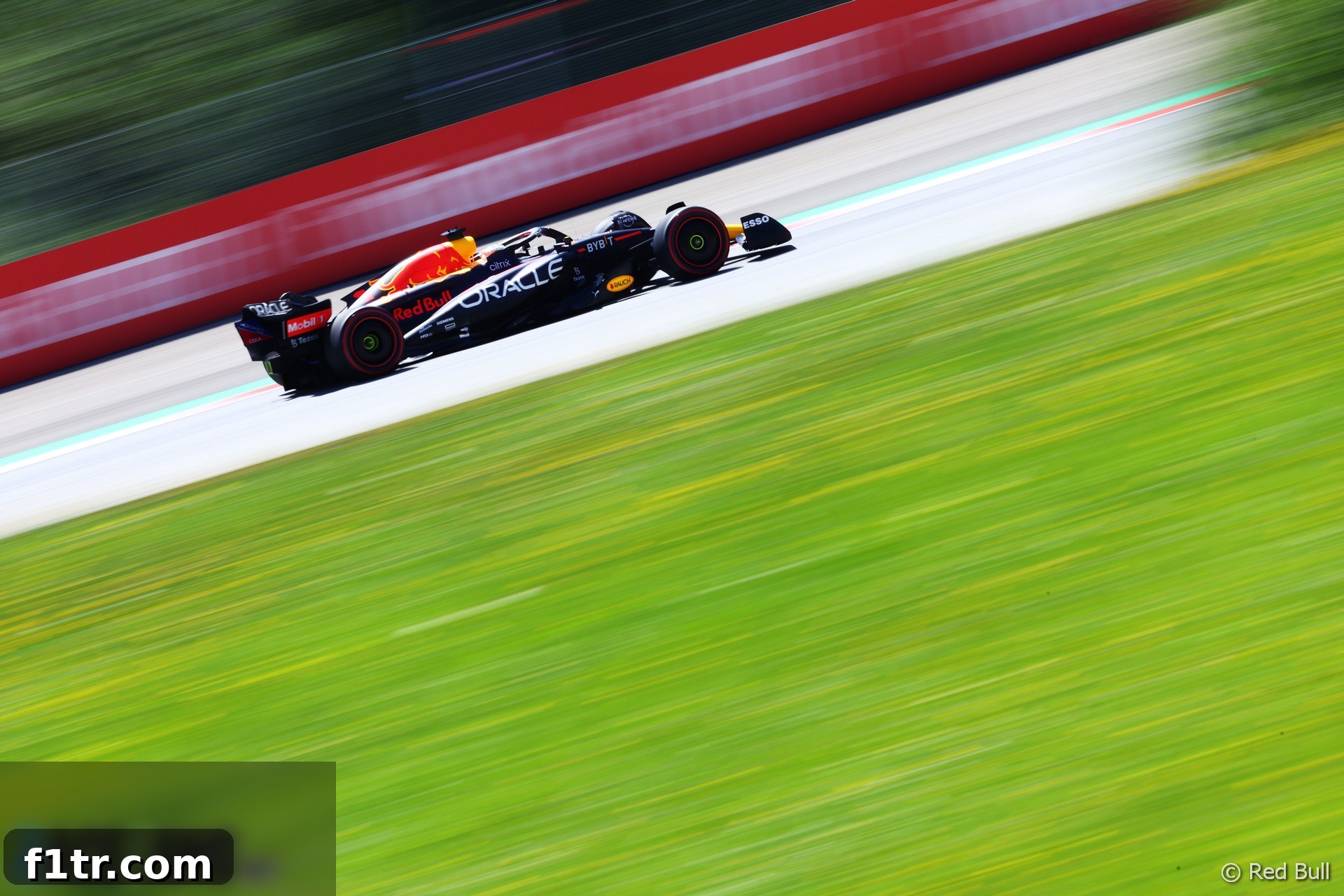
Following a technical directive issued by the FIA to clarify regulations surrounding car floors and their movement, Christian Horner vehemently denied any suggestion that Red Bull’s formidable RB18 chassis was benefiting from excessive floor flexing. This statement came as a direct response to pointed remarks from Toto Wolff, who had previously described the FIA’s clarification as a “shocker” during the British Grand Prix weekend, hinting that some teams might have been operating in a grey area of the rules.
Advert | Become a Supporter & go ad-free
The Porpoising Phenomenon and FIA’s Intervention
The controversy is deeply rooted in the widespread phenomenon of ‘porpoising’ – the violent, high-frequency bouncing experienced by many cars, particularly under the new ground effect regulations introduced for the 2022 season. While aesthetically jarring, porpoising also presented significant safety concerns for drivers, leading to calls for intervention from various quarters, most notably from Mercedes, who struggled profoundly with the issue in the early part of the season.
The FIA, Formula 1’s governing body, responded to these concerns by issuing a technical directive aimed at curbing the severity of porpoising. This directive outlined new metrics for measuring vertical oscillations and clarified the permissible limits of floor deflection, intending to ensure that all teams adhered strictly to the regulations and to mitigate potential long-term health impacts on drivers. The initial announcement of these measures, ahead of the Canadian Grand Prix, already sparked considerable debate among the teams, with some welcoming the safety focus and others, like Red Bull, questioning the necessity of mid-season rule adjustments.
Wolff’s Allegations and Horner’s Defiance
It was against this backdrop that Toto Wolff’s comments during the British Grand Prix weekend gained significant traction. Wolff’s assertion that he “believe[d] that some teams have been stretching that maybe too much and that’s going to change before Paul Ricard” was widely interpreted as a thinly veiled accusation against Red Bull and potentially other front-running teams. The implication was that a more flexible floor could provide a performance advantage by allowing the car to run lower and create a better seal with the track, thereby generating more consistent downforce and perhaps even dampening the effects of porpoising more effectively than a stiffer floor.
However, the FIA later confirmed that the full enforcement of the new technical directive, particularly regarding the stricter floor regulations, would be delayed. Instead of being implemented at the French Grand Prix at Circuit Paul Ricard, the changes were postponed until the Belgian Grand Prix after the summer break. This delay provided teams with additional time to adapt their designs and interpretations, acknowledging the significant engineering challenges that some might face to comply with the stricter measurements.
Christian Horner, speaking to Sky Sports, wasted no time in refuting Wolff’s insinuations, dismissing them as “total rubbish.” He firmly asserted that Red Bull had no concerns whatsoever regarding the compliance of their car’s floor with existing or upcoming regulations. Horner’s comments highlighted the differing approaches and competitive tension between the two championship-contending teams. He went on to suggest, with a hint of irony, that Wolff might be “referring to the cars that are around him at the moment,” a subtle jab at Mercedes’ own struggles to match the pace of Red Bull and Ferrari.
The Debate: Safety, Competition, and Responsibility
Horner further elaborated on Red Bull’s position, suggesting that the entire porpoising issue was being disproportionately amplified by teams that were experiencing it more acutely. He pointed out that at Silverstone, a much smoother circuit compared to some previous venues like Baku or Miami, the porpoising problem had significantly lessened for most cars. This observation underpinned Horner’s argument that track characteristics played a crucial role and that the problem wasn’t universal.
The Red Bull team principal articulated a philosophical point about the responsibility for car safety and performance: “The technical directive is obviously focussed on this bouncing or the porpoising which only certain cars have struggled with. I think it’s due for further discussion in the technical working group, which is the correct forum for it.” He then posed a fundamental question that resonated with many within the paddock: “Obviously as we saw at Silverstone, no cars were really affected by it. So the argument being, is it the duty of the competitor to make sure their car is safe or is it the duty of the FIA to ensure that the competitive runs their car safely?”
This question encapsulates the core of the debate. On one hand, many believe that it is the inherent responsibility of each team to design and operate a safe car, especially when significant technical regulation changes are implemented. Teams are expected to innovate within the rules, and if their design leads to safety issues like severe porpoising, they should resolve it themselves without relying on the governing body to alter rules mid-season, which could inadvertently penalise teams that have successfully managed the challenge.
On the other hand, the FIA’s mandate includes ensuring overall safety across the grid. If a phenomenon like porpoising poses a genuine, widespread health risk to drivers, regardless of which teams are most affected, then intervention might be deemed necessary. The challenge for the FIA lies in balancing safety imperatives with maintaining the competitive integrity of the sport, avoiding actions that could be perceived as unfairly levelling the playing field or favouring certain teams.
Implications for the 2022 Season and Beyond
The delay in the full enforcement of the technical directive until the Belgian Grand Prix provided a temporary reprieve for teams facing significant design alterations. This decision allowed for further dialogue within the Technical Working Group (TWG), where engineering experts from all teams could discuss the practical implications, measurement methodologies, and potential solutions in a collaborative environment. Such discussions are crucial for ensuring that new regulations are both effective and fair, preventing unintended consequences that could impact the competitive balance of the championship.
The entire saga underscores the high stakes in modern Formula 1, where marginal gains can be decisive, and technical interpretations are constantly pushed to their limits. While the immediate focus was on floor flexing and porpoising, this incident also highlights the broader political landscape of F1, where team principals often engage in verbal jousting, using media platforms to advocate for their team’s interests or to subtly apply pressure on rivals and the governing body. The deferral of the new regulations means that the competitive order, particularly between Red Bull and Mercedes, will continue under the current interpretation for a few more races, intensifying the build-up to Spa-Francorchamps, where the stricter rules will finally come into effect, potentially shaking up the competitive landscape once more.
As the 2022 season progressed, the narrative surrounding porpoising and floor regulations remained a key talking point. The ongoing discussions and the eventual implementation of the FIA’s clarified rules underscore the complex interplay between technical innovation, sporting regulations, and driver safety in Formula 1. Teams will undoubtedly continue to push the boundaries of design, and the FIA will remain vigilant in its role of ensuring fair play and driver welfare.
Advert | Become a RaceFans supporter andgo ad-free
Related: 2022 Austrian Grand Prix
- FIA affirms three sprint races on 2023 Formula 1 calendar
- “Oh, so unlucky!” How Alonso’s cursed Austrian Grand Prix unfolded on his radio
- Ferrari believe their performance deficit to Red Bull is now “negligible”
- Another fan’s experience of harassment last weekend – and why F1 must act
- AlphaTauri “desperately” need upgrades after “disaster” weekend, urges Gasly
Browse all 2022 Austrian Grand Prix articles