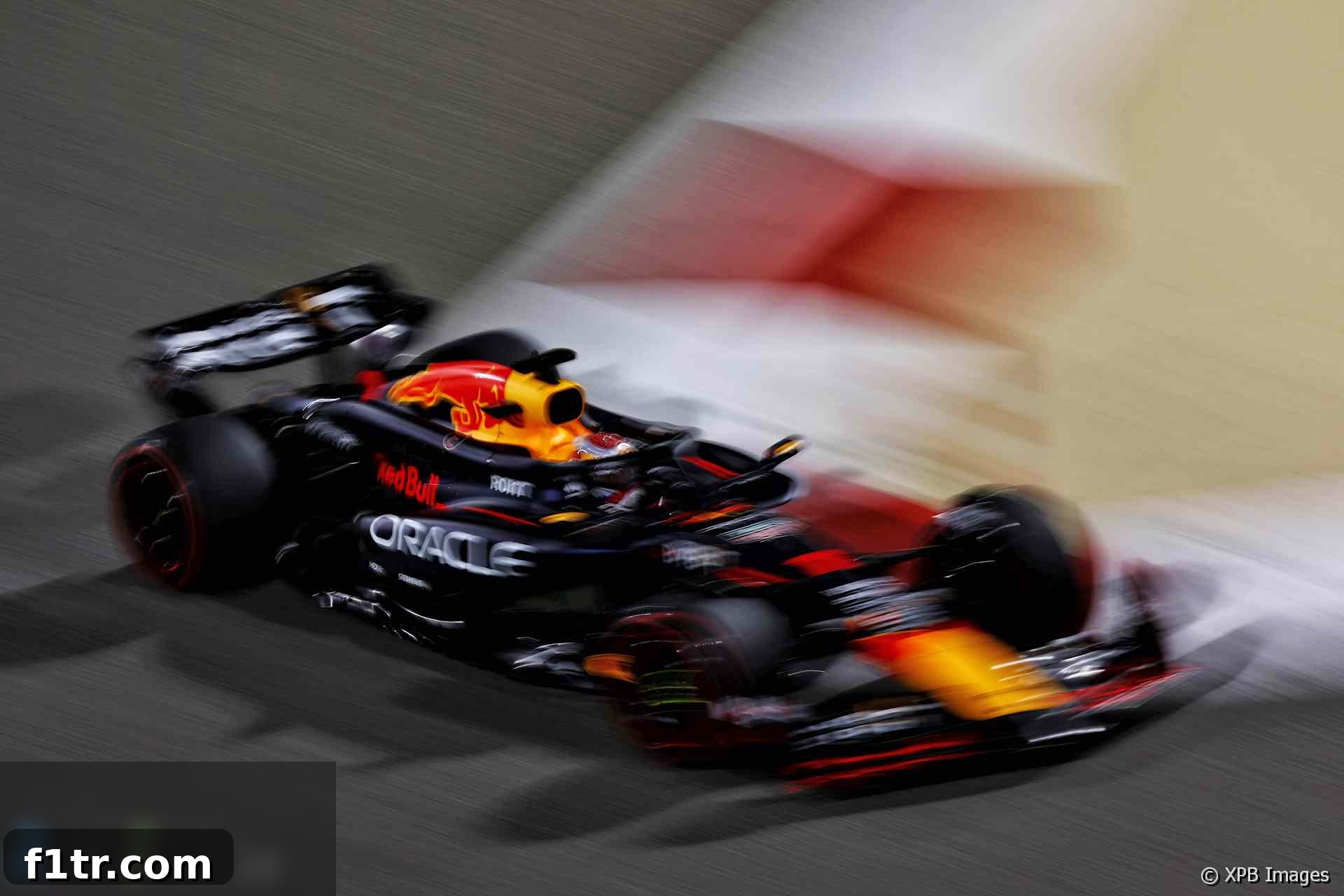
The dawn of a new Formula 1 season always ignites a unique blend of anticipation and speculation. As the cars hit the track for the first free practice sessions of the 2024 Bahrain Grand Prix, all eyes were on the reigning champion, Max Verstappen, and his formidable Red Bull Racing team. Despite ending the opening day’s running in sixth position, trailing both Mercedes drivers significantly, Verstappen exuded a calm confidence that has become his trademark. His initial assessment suggested that the seemingly slower pace was part of Red Bull’s meticulously planned approach, rather than a genuine struggle with their new RB20 challenger.
For many, seeing Lewis Hamilton and George Russell topping the timing sheets on Friday might have sent ripples of concern through the Red Bull camp, or at least sparked questions among pundits and fans. However, Verstappen, with his characteristic composure, remained entirely unperturbed. Finishing just under half a second adrift of Hamilton’s quickest time in the second practice session, he offered a strategic perspective on the day’s events. This measured reaction hinted at a deeper understanding of the team’s testing philosophy, where ultimate lap times in practice are often secondary to gathering crucial data and refining the car’s setup for the more critical sessions ahead.
Verstappen’s Unfazed Outlook: Decoding the Practice Pace
Max Verstappen’s seemingly nonchalant attitude after placing P6 was a key talking point, but for seasoned Formula 1 observers, it was far from surprising. “I think it was not too bad,” Verstappen conveyed to the official F1 channel, immediately downplaying any notion of alarm. He emphasized the tight margins at the top, stating, “I think it’s very close.” This closeness, he suggested, was potentially masked by varying engine modes and testing programs among the teams. It’s a common practice in F1 for some teams to ‘turn up’ their power units for a single fast lap during practice, showcasing a burst of performance that may not be sustainable or reflective of their race pace.
Verstappen explicitly highlighted this possibility, noting, “Maybe some people around us already turned up the engine a bit, in terms of top speed. But we just focused on ourselves.” This statement offers a crucial insight into Red Bull’s strategy: prioritizing their own development and understanding of the RB20 rather than engaging in a power-unit arms race during non-competitive sessions. Their focus during practice is typically on long runs, understanding tire degradation, and fine-tuning the car’s balance across a full fuel load, all of which are vital for Sunday’s Grand Prix. The champion’s comments indicated that Red Bull was not yet showing its full hand, preferring to keep their cards close to their chest while meticulously working through their test program.
Navigating the RB20’s Balance: The Quest for the Sweet Spot
While Verstappen expressed no major concerns, he did acknowledge minor areas for improvement with the RB20. “I think today, there were a few little balance issues from front to rear, but nothing big,” he explained. Achieving perfect balance in a Formula 1 car is an intricate dance, especially at a demanding circuit like Bahrain International Circuit. The track’s abrasive tarmac is notorious for inducing high tire degradation, and finding the optimal front-to-rear aerodynamic and mechanical balance is paramount for consistent lap times and managing tire wear over a race stint. Issues like understeer (where the front of the car doesn’t turn enough) or oversteer (where the rear slides out) can severely impact driver confidence and tire life.
Verstappen’s quest for the “sweet spot” is a fundamental aspect of race weekend preparation. “It’s just about trying to find that sweet spot. Especially around here, with the rough Tarmac, once you get it into that sweet spot you just pick up time. That’s what we’ll try to focus on a little bit more for tomorrow,” he elaborated. This sweet spot refers to the precise setup where the car feels perfectly harmonious, responding predictably to driver inputs and extracting maximum performance from the tires without excessive wear. Small adjustments to suspension, wing angles, and differential settings can make a significant difference, and Red Bull’s engineers will undoubtedly be pouring over the data to provide Verstappen with a car that feels intuitive and fast.
Mercedes’ Early Pace: A Genuine Threat or Practice Performance?
The standout performance of Mercedes on the opening day certainly captured headlines, with both Lewis Hamilton and George Russell demonstrating impressive pace. Hamilton’s quickest lap firmly placed the W15 at the top of the timesheets, offering a glimmer of hope to fans and the team alike after two challenging seasons. Mercedes has been vocal about addressing the fundamental issues that plagued their previous ground-effect cars, and the W15 features a significantly revised concept. Their strong showing in practice could signify a genuine step forward, suggesting that their efforts to understand and optimize the new regulations might finally be bearing fruit.
However, as Verstappen’s comments suggest, it’s crucial not to read too much into Friday’s practice times. Teams often run different fuel loads, tire compounds, and engine mappings as they conduct their own individual test programs. Mercedes might have been pushing their car harder to gather performance data or to send a psychological message to their rivals. Conversely, Red Bull might have been running heavier fuel loads or more conservative engine settings, focusing entirely on understanding the RB20’s long-run characteristics. The true measure of Mercedes’ progress, and indeed Red Bull’s potential, will only become clear in Saturday’s qualifying session and Sunday’s demanding race.
The Race-Day Priority: Optimizing for Long Runs
Despite some complaints over team radio about the car’s characteristics, such as its gearshifts, Verstappen maintained that he is very close to unlocking the full potential of his RB20. “It’s not too far away, it’s just trying to get into it and feel a little bit happier with the car,” he affirmed. This sentiment underscores the iterative process of car development and setup refinement during a race weekend. What truly mattered to Verstappen, and by extension Red Bull, was the car’s performance over extended periods.
“But at the end of the day, you also just want to focus a bit on the long runs, because that’s where the car really needs to work,” he stressed. This focus on race pace over qualifying pace is a strategic decision that has often served Red Bull well, particularly given the high tire degradation prevalent at the Bahrain International Circuit. A car that is fast over one lap but destroys its tires over a race stint will struggle to convert pole position into victory. Conversely, a car with strong, consistent long-run performance can overcome a slightly lower grid slot. Verstappen’s contentment with his long-run performance suggests that Red Bull is confident in their ability to manage tires and maintain pace throughout the Grand Prix, which is ultimately where championship points are won.
Red Bull’s Methodical Approach and RB20 Expectations
Red Bull Racing, under the technical brilliance of Adrian Newey, has consistently delivered cars that are not only fast but also incredibly adaptable. The RB20, with its daring design philosophy, represents another bold step in their pursuit of excellence. Even for a team as dominant as Red Bull, the opening practice sessions of a new season are crucial for validating simulations and understanding real-world performance. Their methodical approach involves a systematic evaluation of various setup configurations, aerodynamic packages, and power unit mappings, often without aiming for outright fastest times on Friday.
The team’s confidence in their process, mirrored by Verstappen’s calm demeanor, speaks volumes. They know that a championship is won over many races, and laying a solid foundation for consistent race pace in Bahrain is far more valuable than a fleeting practice glory. The RB20 is expected to be another class-leading machine, and while initial tweaks are always necessary, the underlying potential is undoubtedly there. Red Bull’s strategy is about maximizing their potential for Sunday’s main event, ensuring the car is in optimal shape for the toughest test of the weekend. Their ability to quickly identify and address balance issues, combined with Verstappen’s unparalleled driving skill, makes them a formidable force even when not topping the immediate charts.
Anticipating a Thrilling Bahrain Grand Prix Weekend
As the Bahrain Grand Prix weekend progresses, the narrative promises to evolve rapidly. Verstappen’s assertion that qualifying “is going to be very close” sets the stage for a tense battle for pole position. While Red Bull focuses on the intricacies of long-run performance, their rivals will certainly be pushing hard to make a statement in qualifying. The short run pace, fueled by low fuel and fresh tires, will be a true test of each car’s raw speed and the drivers’ ability to extract every millisecond.
Ultimately, the true competitive order of the 2024 Formula 1 season will begin to reveal itself in the coming days. Will Mercedes’ practice pace translate into genuine contention? Can Ferrari or other teams challenge the established hierarchy? For Red Bull and Max Verstappen, the message is clear: Friday’s results are merely data points. The focus remains squarely on perfecting the RB20 for the race, confident that their strategic approach and the underlying strength of their package will shine through when it truly counts. The Bahrain Grand Prix promises to deliver an exciting opening chapter to what could be another enthralling F1 season, with Verstappen poised to defend his crown with characteristic intensity and precision.
Related Articles: 2024 Bahrain Grand Prix
- Tsunoda accepts he got “a bit heated” in team orders dispute with Ricciardo
- “We’re fighting with one arm behind our back”: Hamilton and Russell’s race radio
- Red Bull say RB20 draws inspiration from rivals in less obvious areas
- All cars finish two consecutive F1 races for first time ever
- “I don’t know what the car’s going to do every time I brake”: Leclerc’s race radio
Browse all 2024 Bahrain Grand Prix articles