Reinventing the Prancing Horse: Benedetto Vigna’s Vision for Ferrari’s Electric Future and F1 Destiny
The appointment of Benedetto Vigna as the new CEO of Ferrari sent ripples of surprise throughout the automotive world. The 52-year-old technologist, previously a top executive at STMicroelectronics, stepped into the formidable shoes left vacant by Louis C. Camilleri, who resigned in December, shortly after a battle with Covid. The most striking aspect of Vigna’s recruitment was not merely that he came from outside the automotive sector – a not entirely unprecedented move for Ferrari – but rather the extensive six-month period it took to finalize his selection. For a globally listed company, especially one as high-profile as Ferrari, to operate for nine months without a permanent CEO, particularly during a period of global crisis and transformative industry shifts, underscored significant leadership challenges.
Advert | Become a Supporter & go ad-free
This prolonged search period highlighted what many observers perceived as a glaring lack of robust succession planning within the hallowed halls of Maranello. This oversight was particularly concerning given that Camilleri himself had been a transitional CEO, parachuted in following the unexpected passing of Sergio Marchionne in 2018. Adding to the complexity, Ferrari chairman John Elkann, the influential Agnelli scion entrusted with steering the family’s vast investments, had his attention heavily divided. His primary focus during much of this period was the intricate and monumental task of finalizing the merger between Fiat Chrysler Automobiles and Peugeot, a deal that would ultimately forge the automotive giant known as Stellantis.
Following Camilleri’s departure, a flurry of speculation surrounded potential candidates for the coveted role. Esteemed figures such as Porsche Italia CEO Pietro Innocenti were rumored to be in contention, alongside high-fashion moguls Marco Bizzarri and Stefano Sassi, the respective CEOs of Gucci and Valentino. However, Elkann and his discerning board ultimately opted for a decidedly different profile: an electronics visionary with a notable portfolio of microchip patents and an exemplary track record from his tenure at the leading semiconductor business, STMicroelectronics. This choice signaled a profound strategic pivot, indicating a clear direction for the future of the iconic Prancing Horse.

The Unconventional Leader: A New Era for Ferrari
While Vigna’s background might appear to diverge sharply from Ferrari’s traditional automotive roots, it is crucial to consider the context of previous leadership appointments. Louis Camilleri’s most recent position before assuming the helm at Ferrari was with tobacco giant Philip Morris, and prior to that, he led consumer goods conglomerate Kraft Foods. Viewed against such a diverse leadership lineage, a physics graduate boasting deep expertise in microchips and cutting-edge electronics arguably possesses a lineage more inherently aligned with the technological prowess and innovation that define modern high-performance automotive engineering. Vigna’s appointment, therefore, is not just a change in leadership; it’s a statement about Ferrari’s evolving identity and its commitment to future-forward technology.
Vigna’s recruitment is profoundly significant, primarily on two critical fronts. Firstly, his technological acumen clearly positions him as the ideal leader to guide Ferrari, a brand historically renowned for its mechanical engineering mastery, into an increasingly electrified future. The automotive landscape is undergoing a revolutionary transformation, with electrification at its core, and Ferrari, like all luxury performance manufacturers, must adapt swiftly and decisively. Secondly, and equally telling, is the conspicuous absence of any motorsport involvement or expressed interest in Vigna’s extensive CV. This suggests a strategic decision: Vigna is likely to focus predominantly on the core business matters of the road car division – budgets, revenues, and return on investment – rather than becoming deeply immersed in the day-to-day operations of the storied Formula 1 team, the Scuderia. This indicates a potential shift in the symbiotic relationship between Ferrari’s road car business and its racing endeavors.
Accelerating Towards Electrification: Ferrari’s Strategic Imperative
The imperative for Ferrari to embrace an electric future is undeniable and a clear sign of the times. The rapid advancements in battery technology and electric powertrains have enabled four-door electric “execmobiles” from formidable competitors like Porsche, Audi, and most notably, Tesla, to deliver astonishing performance, often outperforming traditional internal combustion engine vehicles in straight-line acceleration. Beyond these established players, a new wave of ambitious startups worldwide is aggressively promising to build hyper-performance battery supercars, pushing the boundaries of what’s possible. In this fiercely competitive and rapidly evolving environment, Ferrari cannot afford to linger; it must wholeheartedly embrace these transformative technologies sooner rather than later.

Evidence of this strategic shift is already palpable. The highly anticipated Purosangue, Ferrari’s first-ever SUV, is set to arrive as a hybrid model, representing a significant departure from the brand’s traditional two-door sports car offerings. This hybrid Prancing Horse SUV is more than just a new model; it is a clear harbinger of what is to come. The next generation of Ferrari vehicles could very well include an all-electric “draft horse,” a powerful, performance-oriented electric model designed to capture a new segment of the luxury market while adhering to the brand’s core values of speed, innovation, and exclusivity. Vigna’s expertise in semiconductors and integrated circuits, which are foundational to advanced electric powertrains, battery management systems, and sophisticated in-car electronics, makes him an invaluable asset in navigating this complex transition.
When RaceFans interviewed Scuderia Ferrari CEO and team principal Mattia Binotto in Monaco prior to Vigna’s official announcement, he was acutely aware that a significant leadership appointment was imminent, though regulatory restrictions prevented him from commenting on specifics. Nevertheless, Binotto expressed strong confidence that the sporting division, the Gestione Sportiva, would retain its crucial autonomy within the broader Ferrari organizational structures. This sentiment reflects a long-standing tradition at Ferrari, where the racing arm often operates with a degree of independence, a practice rooted in Enzo Ferrari’s original vision.
“I have got the full autonomy and daily delegations of power,” Binotto stated, reassuringly. “If I need their support I have got their support as I had it as in the past. I don’t think much has changed. John Elkann is fully aware, fully involved and coming to some races; it’s a very positive and constructive collaboration that we’ve got.” He further elaborated on his reporting structure: “[Elkann] is chairman and CEO, so I report to him whatever we are doing and the main [decisions]. I’m convinced that because Ferrari is a unique family there will always be good, positive collaboration. He is very fully committed to the Ferrari project.” While Binotto’s confidence in ongoing collaboration is understandable, the arrival of a new CEO with a distinct, tech-focused vision could inevitably reshape dynamics, even if the formal structures of autonomy remain intact.
The Enigma of F1 Involvement: A Diverging Path?
Advert | Become a RaceFans supporter andgo ad-free
Such assurances of autonomy for the Scuderia are certainly welcome, but they raise pertinent questions about the long-term direction of Ferrari’s motorsport involvement. Should Benedetto Vigna definitively steer Ferrari down a purely electric route for its road cars – a path that aligns perfectly with his technological expertise – what then becomes of the venerable Scuderia and its intertwined destiny with Formula 1? F1 has historically served as Ferrari’s foremost global marketing platform, an unparalleled arena where the brand ostentatiously “struts its stuff” on racetracks across the globe, effectively substituting traditional advertising programs with the thrill of competition and the allure of victory. However, the championship itself is currently expected to remain committed to hybrid powertrains for the foreseeable future, a significant divergence from the fully electric future Vigna appears poised to champion for Ferrari’s consumer vehicles.
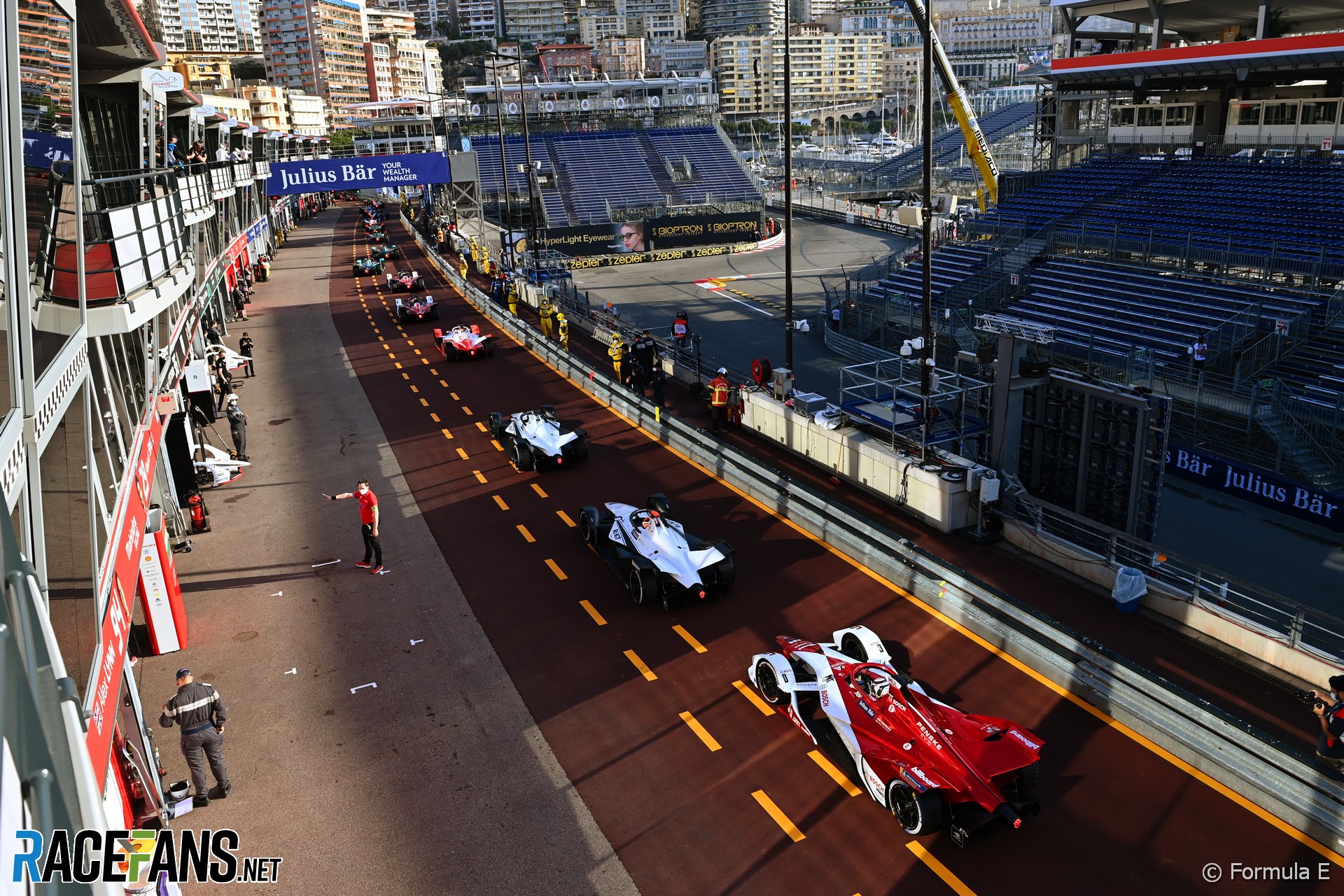
Could this growing technological schism leave the Scuderia isolated, operating on a different wavelength from the parent company’s overarching strategic vision? Could the previously unthinkable scenario materialize, where Ferrari eventually reassesses its commitment to Formula 1 and potentially shifts its focus to a fully electric series like Formula E? Such a radical departure is not entirely beyond the bounds of possibility, especially considering that the current Concorde Agreement, which governs Ferrari’s participation in F1, is set to expire at the end of 2025. This timeline aligns perfectly with the window for significant strategic realignments. By definition, DNA is about evolution, and Ferrari’s corporate DNA has consistently adapted and transformed. From its genesis as a maker of exclusive sports cars existing primarily to finance its founder’s racing ambitions, it has evolved into a fully-fledged, albeit limited-volume, high-technology luxury brand. The crucial question now is: could electricity be Ferrari’s next evolutionary helix strand, fundamentally altering its identity and priorities?
Evolution of the Ferrari DNA: Beyond the Racetrack
The transformation of Ferrari’s brand identity extends far beyond powertrain choices. The company has already embarked on strategic partnerships that underscore its evolution into a comprehensive luxury lifestyle brand. A prominent fashion branding deal with Armani, for instance, solidifies Ferrari’s position in the high-end luxury sector, leveraging its inherent prestige and design excellence. Furthermore, Ferrari is on the cusp of relaunching its revered Il Cavallino restaurant, strategically situated directly opposite the hallowed gates of the Maranello factory. This culinary venture is in conjunction with Michelin-starred chef Massimo Bottura, a master of his craft who has successfully established similar joint ventures with other elite luxury brands. These initiatives represent a significant departure from the company’s original ethos – one rooted in a handful of cars produced annually, meticulously crafted by hand in what resembled an ancient blacksmith’s forge. Such diversification vividly illustrates how far Ferrari has moved from its initial, purist ‘DNA’ towards a broader, more diversified luxury empire.
Advert | Become a RaceFans supporter andgo ad-free
Shareholder Mandate and the Scuderia’s Fate
Ultimately, Ferrari, as a publicly traded entity, is accountable not to the passionate tifosi or even to the rich history of Formula 1, but primarily to its shareholders. This fundamental reality dictates that strategic decisions will increasingly be driven by profitability and long-term shareholder value. If pursuing an aggressive electrification strategy for its road cars, and potentially its racing division, can enhance its bottom line while simultaneously maintaining its irreplaceable aura of mystique, luxury, and performance, then John Elkann and Benedetto Vigna will undoubtedly not hesitate to embark upon that path. Any deviation from the optimal route to sustained profitability and growth will simply not align with the best interests of its investors.
In this high-stakes corporate environment, the venerable Scuderia, as we have known it – a sacred entity almost inseparable from the Ferrari brand – could, regrettably, become collateral damage. This does not necessarily mean an outright abandonment of Formula 1, but it could manifest as a recalibration of resources, a shift in strategic priority, or even a re-evaluation of its role within the wider Ferrari ecosystem. The era of pure passion dictating every facet of Ferrari’s existence is gradually giving way to a new chapter, one where technological leadership, market relevance, and robust financial performance will define the future of the Prancing Horse, guided by the vision of its new, tech-savvy CEO.
News Focus
- No happy ending for Ricciardo’s made-for-Netflix redemption arc
- No ‘two alphas’ for Red Bull as team forms its longest-running driver line-up
- Will Mercedes come to the rescue of Ocon’s career a third time?
- How the midfield’s hottest team mate rivalry boiled over
- Petty officialdom or deserved decisions? Five drivers stripped of wins in 2024
Browse all News Focus articles