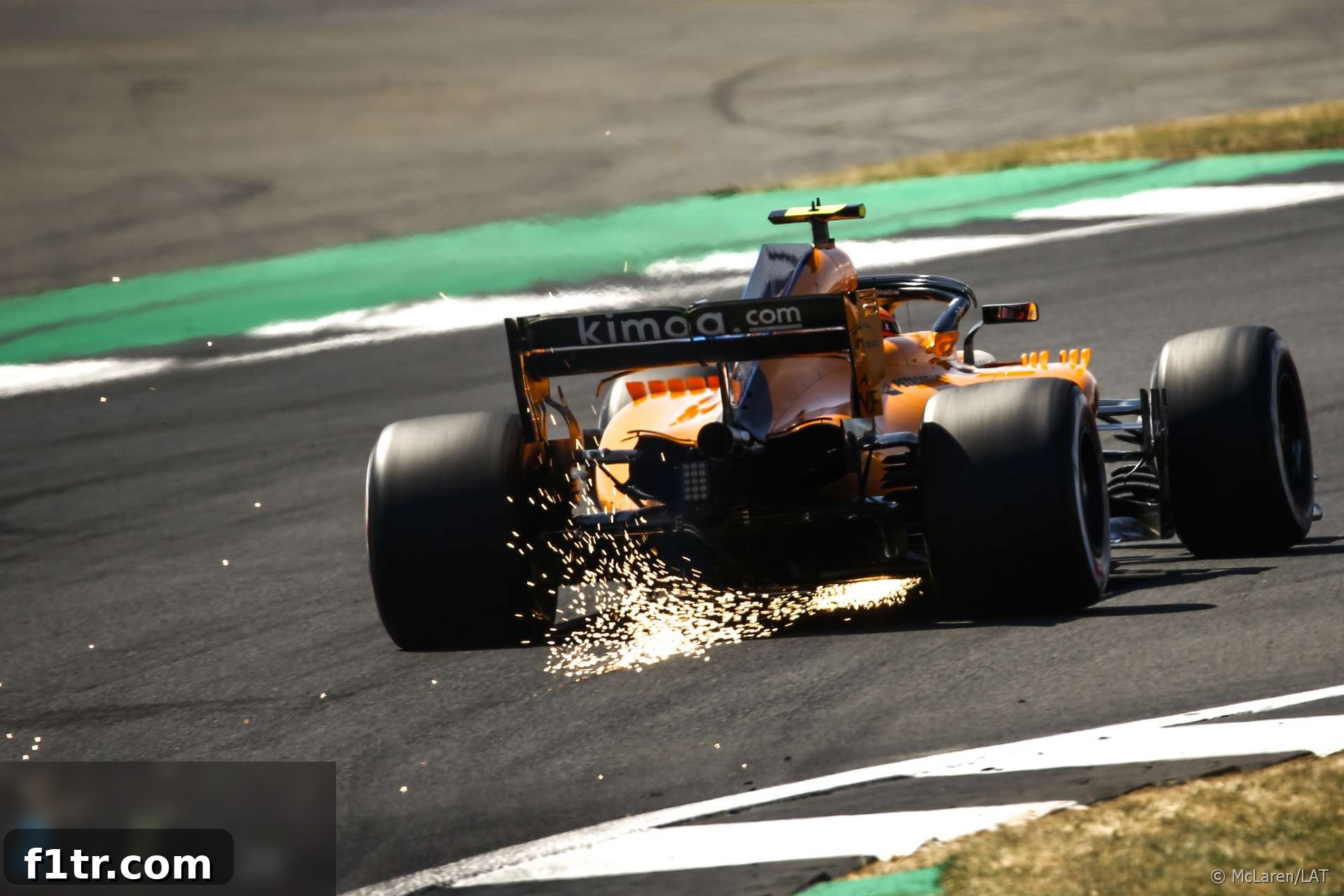
Silverstone, the historic home of British motorsport, found itself at the center of a significant controversy following the recent British Grand Prix. The circuit, renowned for its challenging high-speed corners and storied past, faced widespread criticism from numerous Formula 1 drivers regarding the condition of its newly laid surface. Despite a substantial resurfacing effort undertaken specifically to address concerns from MotoGP riders, many F1 competitors described the track as excessively bumpy, potentially jeopardizing both performance and safety.
The decision to resurface Silverstone was not taken lightly. Prior to the 2018 season, MotoGP riders had vociferously complained about the deteriorating condition of the tarmac, citing numerous bumps and an uneven surface that made high-speed two-wheeled racing particularly treacherous. In response, circuit management invested heavily in a comprehensive resurfacing project, aiming to create a smoother, safer, and more consistent racing environment for all disciplines. However, the outcome for Formula 1 proved to be dramatically different from the intended improvement, sparking an immediate and intense debate within the paddock.
Advert | Become a Supporter & go ad-free
Drivers’ Perspectives: A Divided Paddock on Silverstone’s Bumps
The severity of the issue became apparent early in the British Grand Prix weekend, with drivers voicing strong opinions after their initial practice sessions. Among the most vocal critics was home hero Lewis Hamilton, who did not mince words. Following his Friday driving sessions, Hamilton declared that “the people they hired did the worst job ever,” drawing a stark comparison between Silverstone’s new surface and the legendary, notoriously bumpy Nürburgring Nordschleife. This comparison underscored the depth of his concern, as the Nordschleife, while an iconic track, is not typically associated with the smooth, high-precision surfaces demanded by modern Formula 1 cars.
While Hamilton’s assessment was particularly scathing, not all drivers shared the exact same degree of alarm. Fernando Alonso, for instance, offered a more tempered view, suggesting that the track was “no worse than last year,” implying that some level of unevenness was to be expected at Silverstone or that the changes hadn’t significantly exacerbated pre-existing conditions. However, Alonso’s perspective was largely an outlier. The overwhelming consensus among the majority of drivers was that the new surface presented a significant challenge, with numerous reports of the cars bottoming out and chassis being severely jolted, particularly at high speeds through the circuit’s iconic corners like Copse and Stowe.
These bumps are not merely an inconvenience; they have a profound impact on an F1 car’s performance and driver comfort. Modern Formula 1 cars generate immense downforce, pushing them firmly onto the track surface. This design philosophy, while crucial for cornering speeds, also makes them exquisitely sensitive to any imperfections in the track. Bumps can disrupt the delicate aerodynamic balance, cause the car’s underbody to hit the ground (known as ‘bottoming out’), and even lead to structural damage to critical components. For drivers, constant jarring over bumps leads to increased fatigue, reduces their ability to accurately feel the car’s limits, and can even contribute to physical discomfort and injury over a race distance. The pursuit of marginal gains in F1 means that even small, seemingly insignificant bumps can have a cumulative effect on lap times and race strategy.
FIA’s Scrutiny and the Technicalities of Track Smoothness
The concerns raised by the drivers quickly reached the highest echelons of motorsport governance. FIA race director Charlie Whiting, a key figure responsible for track safety and compliance, confirmed that he had received the drivers’ remarks and passed them on to Silverstone circuit management. Whiting acknowledged the “unusual” nature of the new surface, noting that it might indeed require further attention. His observations during the Grand Prix weekend corroborated the drivers’ claims, particularly on long, high-speed sections of the track.
“You can see lots of little patches on the Hangar straight, for example, where you can see cars have been bottoming. It’s quite unusual. They’re small, they seem like micro-bumps, almost, but there are lots of them,” Whiting explained. These “micro-bumps,” while individually minor, collectively present a significant challenge. The sheer number and distribution of these imperfections mean that F1 cars are constantly unsettled, compromising their stability and the drivers’ confidence, especially when traveling at speeds exceeding 300 km/h.
The sensitivity of F1 cars to track imperfections is a direct consequence of their sophisticated design and the physics of high-downforce aerodynamics. The cars are engineered to operate within extremely narrow ride height windows to maximize aerodynamic efficiency. Any deviation from this optimal ride height, caused by bumps, can lead to a sudden loss of downforce or unexpected changes in handling characteristics. This inherent sensitivity is why the FIA has stringent rules governing track smoothness. According to FIA regulations, any bumps on a racing circuit must not exceed a maximum deviation of 3mm over a 4-meter section of track. This standard is meticulously monitored to ensure equitable and safe racing conditions across all venues.
In light of the concerns, Whiting confirmed that Silverstone’s surface would undergo another thorough inspection before Formula 1’s next scheduled event at the circuit. “It needs to be checked to see exactly what the situation is,” said Whiting. “If it needs doing then it will have to be resurfaced I would think. But then it’s up to the circuit to do that.” This statement underscored the FIA’s commitment to maintaining high safety standards and the ultimate responsibility of the circuit to provide a suitable racing surface.
The F1 vs. MotoGP Surface Dilemma: A Balancing Act
A crucial aspect of this resurfacing saga lies in the differing requirements of Formula 1 cars and MotoGP motorcycles. The initial decision to lay a new surface at Silverstone was primarily driven by complaints from MotoGP riders. Motorcycles, with their two wheels and reliance on lean angles, react very differently to track imperfections compared to four-wheeled F1 cars. Bumps that might cause an F1 car to bottom out could potentially destabilize a motorcycle mid-corner, leading to a dangerous high-side crash. MotoGP bikes also use different tire compounds and have distinct suspension setups designed to absorb undulations in a way that F1 suspensions, which are much stiffer and designed for minimal travel, cannot.
Curiously, Charlie Whiting noted that prior to the British Grand Prix weekend, other racers, including a prominent MotoGP rider, had reported no issues with the new surface. “Everyone that’s driven on the track, according to the guys here at Silverstone, has said the surface appears to be fine. One of the Moto GP riders rode on it, Cal Crutchlow I believe, [and] he said it was much better than it was before. Bearing in mind that it was done for Moto GP because they didn’t want to race here again if it wasn’t resurfaced.” This contrast highlights the fundamental challenge of creating a single track surface that perfectly suits the extreme demands of both Formula 1 and MotoGP. What improves conditions for one discipline may inadvertently create new problems for the other.
The differing feedback underscores the complexity of track maintenance and the science of asphalt. Factors such as the aggregate mix, binder type, laying temperature, and compaction methods all contribute to the final characteristics of the surface. A surface designed to offer specific grip levels for motorcycle tires might have properties that cause it to wear or settle differently under the immense vertical loads and lateral forces exerted by F1 cars. Moreover, the British climate, with its propensity for cold, wet weather, can further impact the curing and longevity of asphalt, potentially contributing to unexpected undulations or deterioration over time. The upcoming MotoGP race at Silverstone, scheduled for August 26th, will provide another critical test of the new surface from a two-wheeled perspective, adding another layer to the ongoing evaluation.
Silverstone’s Enduring Legacy and the Road Ahead
Silverstone’s status as a premier motorsport venue is undeniable. It holds a cherished place in the history of Formula 1, having hosted the very first World Championship Grand Prix in 1950. Its fast, flowing layout is loved by drivers and fans alike, and its evolution over the decades has seen it adapt to the ever-increasing speeds and technical demands of motorsport. However, this recent resurfacing issue serves as a stark reminder of the continuous challenges faced by circuits in maintaining world-class facilities. The investment required for such projects is substantial, and getting it right is paramount for the circuit’s reputation and its ability to attract and retain top-tier racing events.
The prospect of yet another resurfacing project would entail significant financial outlay and logistical challenges for Silverstone. Such an undertaking requires careful planning, specialized contractors, and ideal weather conditions for successful execution. Furthermore, it raises questions about the expertise involved in the initial resurfacing and the need for improved consultation between track operators, asphalt specialists, and governing bodies like the FIA and FIM (motorcycling’s governing body) to ensure a more holistic solution that caters to the diverse needs of modern motorsport. The incident highlights the intricate balance between safety, performance, and the economic realities of operating a major international circuit.
Ultimately, the saga at Silverstone is a testament to the relentless pursuit of perfection in Formula 1 and the critical role of track infrastructure. As F1 cars continue to evolve, pushing the boundaries of speed and technology, the demand for impeccably smooth and consistent racing surfaces will only intensify. The outcome of the FIA’s impending inspection and Silverstone’s subsequent actions will be closely watched, not just by the F1 community but by motorsport stakeholders worldwide, as they navigate the complex demands of modern circuit design and maintenance.
Advert | Become a RaceFans supporter andgo ad-free
2018 F1 season
- F1 feared “death knell” for Drive to Survive after Ferrari and Mercedes snub
- McLaren staff told us we were “totally crazy” to take Honda engines in 2018 – Tost
- ‘It doesn’t matter if we start last’: How Red Bull’s junior team aided Honda’s leap forward
- Honda’s jet division helped F1 engineers solve power unit problem
- McLaren Racing losses rise after Honda split
Browse all 2018 F1 season articles