The hallowed grounds of Monza, historically a battleground for motorsport titans, braced itself for the 2020 Formula 1 Italian Grand Prix. In previous visits, the legendary circuit has witnessed nail-biting duels between powerhouses like Mercedes and Ferrari. However, as the lights prepared to go out for Sunday’s race, a starkly different narrative emerged. Mercedes-AMG Petronas F1 Team, in a class of their own, seemed destined for a relatively unchallenged run at the front, solidifying their unprecedented dominance in the season.
Advert | Become a Supporter & go ad-free
The much-discussed ‘quali mode’ ban, implemented to ostensibly rein in Mercedes’ qualifying advantage, proved largely ineffective, failing to curb their overwhelming pace. The Silver Arrows effortlessly swept the front row of the grid, a staggering eight-tenths of a second clear of their nearest rival. This commanding performance underscored the German outfit’s superior package and operational excellence, leaving competitors to ponder how to bridge such a significant gap. Conversely, for Scuderia Ferrari, this first of three home races on the 2020 F1 calendar presented a somber picture. The Prancing Horse, a symbol of Italian racing pride, found themselves languishing in an unfamiliar 13th and 17th place, a stark reminder of their current struggles and the chasm separating them from the front-runners. The tifosi, renowned for their passionate support, could only watch as their beloved team faced a monumental challenge on home turf.
Mercedes’ Unassailable Pace and Ferrari’s Home Struggles
Monza, often dubbed the “Temple of Speed,” demands peak engine performance and aerodynamic efficiency, particularly in its high-speed sections and iconic straights. Mercedes’ W11 chassis, coupled with its class-leading power unit, proved perfectly suited to these characteristics. The team’s ability to maintain a significant advantage, even with the new technical directives regarding engine modes, highlighted their engineering prowess. This dominance casts a long shadow over the aspirations of any team hoping to challenge for victory at this prestigious event.
For Ferrari, the Italian Grand Prix was a brutal assessment of their 2020 season. After years of being Mercedes’ fiercest competitors at Monza, including thrilling victories and pole positions, their current performance was a bitter pill to swallow. Factors such as a less potent power unit and an aerodynamically challenging chassis have combined to strip the Scuderia of their traditional strength at high-speed tracks. The challenge for Ferrari now extends beyond winning races; it is about demonstrating progress and giving their passionate fans some glimmer of hope amidst a difficult campaign. Securing any points at all would be seen as a small victory, a testament to resilience in the face of overwhelming odds.
McLaren Leads the Midfield Charge
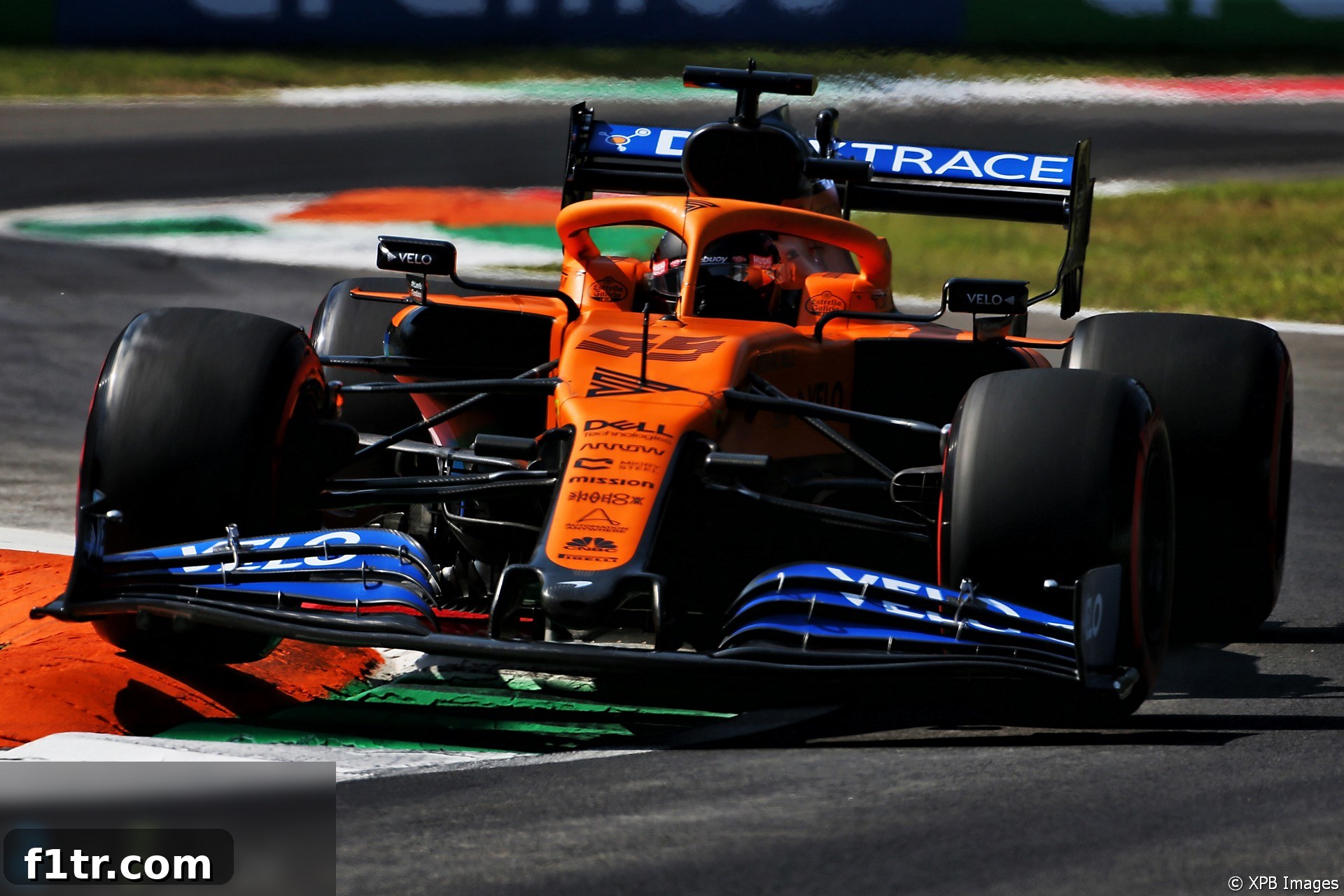
Emerging as the ‘best of the rest’ and the closest challenger to Mercedes on the track was McLaren. The Woking-based squad, showcasing impressive form, topped a tightly contested midfield battle, fending off strong contenders from Racing Point, Red Bull, and Renault. Carlos Sainz Jnr delivered a stellar qualifying performance, expertly planting his MCL35 in third position on the grid. This achievement was a significant morale booster for McLaren, demonstrating the considerable progress they had made in developing their car and extracting maximum performance. Sainz’s ability to split the Mercedes cars, albeit temporarily, was a testament to his driving skill and the team’s strategic execution during qualifying.
While McLaren’s P3 was a highlight, the realistic prospect of them taking the fight directly to Mercedes remained slim. The sheer pace advantage of the Silver Arrows, especially over a full race distance, is simply too great. McLaren’s focus would instead be on consolidating their position as the leading midfield team, maximizing points, and perhaps capitalizing on any unexpected events that might befall the front-runners. The close nature of the midfield battle, involving the likes of Racing Point’s well-balanced car, Red Bull’s strategic aggression, and Renault’s improving chassis, promised an exciting race within the race, with crucial championship points at stake for all involved.
Strategy, Tyres, and the Art of the Pit Stop at Monza
Monza’s unique characteristics, particularly its low tyre degradation, play a significant role in shaping race strategies. Formula 1 regulations mandate at least one pit stop during the race, a rule that often presents teams with a dilemma at tracks where tyres could theoretically last the entire distance. This means the race largely transforms into a finely tuned ballet of timing that crucial pit stop, aiming to either maximize track position gains or minimize potential losses. Given this scenario, teams like McLaren understand the futility of engaging in a protracted on-track battle with a much quicker Mercedes. In the unlikely event they could hold a Mercedes behind with DRS on the long straights, the inevitable pit stop sequence would almost certainly see the quicker car leapfrog them.
McLaren team principal Andreas Seidl articulated this strategic reality, stating, “If you could jump one on Mercedes, for example at the start, then you obviously need to find the right balance. Does it actually make sense to fight these guys or try to keep them behind? Because it could be that you in the end lose more performance by trying to do something which is simply not possible.” This quote encapsulates the delicate balance strategists must strike: weighing the short-term thrill of a track battle against the long-term objective of optimizing race outcome and preserving tyres. Overtaking at Monza, while possible with DRS, can be energy-intensive for the tyres, leading to potential performance drops later in the stint. Therefore, a calculated approach, focusing on clean air and optimal pit stop timing, often yields better results than an aggressive but ultimately fruitless fight.
Go ad-free for just £1 per month>> Find out more and sign up
The top 10 qualifiers, all starting on the soft Pirelli tyres, were expected to adopt a similar strategy: extending their first stints as much as possible before pitting for medium compound tyres to run to the end of the race. This one-stop strategy is typically the fastest route around Monza due to the minimal tyre wear. However, the ever-present threat of an early Safety Car period could dramatically alter these plans. Such an event might tempt teams to switch to the more durable hard compound tyres, allowing them to complete the race without further stops. Unlike the Spa-Francorchamps circuit, where significant tyre drop-off was observed towards the end of the race, Monza’s smoother asphalt and high-speed corners tend to be less punishing on the tyres, making significant degradation management a less pressing concern.
Aggressive Strategies from Red Bull and Renault
With Max Verstappen starting from fifth on the grid, Red Bull Racing was widely expected to employ an aggressive strategy to maximize their chances. Known for their bold and often unconventional tactical calls, it would come as no surprise to see the Austrian team opt for an early pit stop. This ‘undercut’ strategy, designed to gain track position by pitting before rivals, is a high-risk, high-reward move. If successful, an early stop could see Verstappen leapfrog competitors who might be struggling more with their soft tyres. The key to this strategy’s success would be Verstappen’s ability to push hard on fresh tyres in clean air and Red Bull’s precise execution in the pit lane. Their ultimate goal would be to disrupt the strategies of those ahead and climb further up the order.
Renault, with Daniel Ricciardo starting seventh, also showed signs of being emboldened to attempt a short first stint. Their car’s strong performance towards the end of a long second stint at Spa provided valuable data and confidence. This suggested that the Renault R.S.20 could be particularly effective on fresh tyres in the second half of the race. An early pit stop could allow Ricciardo to push hard and gain crucial positions, potentially catching rivals off guard. The midfield battle is so tight that even a small strategic advantage could translate into significant gains in championship points. Renault’s decision would likely hinge on real-time race data and the unfolding dynamics of the first few laps, as they aim to convert their qualifying pace into a strong race finish.
The Battle for the Championship: Bottas vs. Hamilton
Starting three places ahead of Max Verstappen, Valtteri Bottas had a golden opportunity to extend his lead over the Dutchman in the drivers’ championship standings. However, Bottas’s true adversary and primary target remained his formidable team mate, Lewis Hamilton, who held a substantial 50-point advantage in the title fight. For Bottas to maintain any realistic hope of challenging for the championship, he desperately needed to start taking points off Hamilton – a feat he hadn’t achieved since the season’s opening race. Monza presented a crucial juncture for the Finn to rekindle his championship aspirations.
A strong start, something Bottas has occasionally struggled with this season, would be absolutely paramount on the long run down to Turn 1. Gaining positions or at least holding his own against a hard-charging field could set the tone for his entire race. The psychological impact of an immediate advantage over Hamilton would also be invaluable. However, Lewis Hamilton, ever the master strategist and meticulous preparer, was acutely aware of the stakes. It was particularly striking to observe how eager he was to make an extra start from the pits during final practice. This seemingly minor detail underscored Hamilton’s relentless pursuit of perfection, ensuring he had every conceivable piece of information and muscle memory available for the all-important moment when the red lights extinguished and the race officially began. This fierce intra-team rivalry, amplified by the championship implications, promised an intriguing dynamic between the two Mercedes drivers, even if the primary battle for victory appeared to be an internal affair.
Quotes: Dieter Rencken
Advert | Become a RaceFans supporter andgo ad-free
Qualifying Sector Times at Monza
Analyzing sector times provides deeper insight into where drivers gain or lose time on the circuit. Monza’s layout means high speeds and critical braking zones. Lewis Hamilton demonstrated his consistent pace across sectors, while Valtteri Bottas proved slightly faster in the final, technical sector. The midfield drivers showcased their car’s strengths and weaknesses, with some excelling in specific high-speed or cornering sections.
| Driver | Sector 1 | Sector 2 | Sector 3 |
|---|---|---|---|
| Lewis Hamilton | 26.566 (1) | 26.180 (1) | 26.014 (2) |
| Valtteri Bottas | 26.605 (2) | 26.281 (2) | 25.961 (1) |
| Carlos Sainz Jnr | 26.661 (4) | 26.651 (4) | 26.238 (4) |
| Sergio Perez | 26.693 (5) | 26.669 (5) | 26.226 (3) |
| Max Verstappen | 26.743 (6) | 26.632 (3) | 26.303 (7) |
| Lando Norris | 26.773 (9) | 26.712 (7) | 26.296 (6) |
| Daniel Ricciardo | 26.615 (3) | 26.767 (10) | 26.449 (11) |
| Lance Stroll | 26.787 (10) | 26.700 (6) | 26.364 (8) |
| Alexander Albon | 26.759 (7) | 26.802 (11) | 26.394 (9) |
| Pierre Gasly | 26.768 (8) | 26.729 (8) | 26.279 (5) |
| Daniil Kvyat | 26.871 (12) | 26.732 (9) | 26.438 (10) |
| Esteban Ocon | 26.842 (11) | 26.893 (13) | 26.467 (12) |
| Charles Leclerc | 26.873 (13) | 26.875 (12) | 26.525 (13) |
| Kimi Raikkonen | 26.912 (14) | 27.093 (15) | 26.855 (15) |
| Kevin Magnussen | 26.913 (15) | 26.997 (14) | 26.892 (16) |
| Romain Grosjean | 27.004 (16) | 27.126 (16) | 26.985 (19) |
| Sebastian Vettel | 27.116 (18) | 27.257 (19) | 26.778 (14) |
| Antonio Giovinazzi | 27.100 (17) | 27.175 (18) | 26.931 (17) |
| George Russell | 27.240 (19) | 27.367 (20) | 26.980 (18) |
| Nicholas Latifi | 27.333 (20) | 27.135 (17) | 27.241 (20) |
Monza Speed Trap Analysis
The speed trap data at Monza is particularly revealing, given the circuit’s focus on top-end speed. High maximum velocities are crucial for overtaking opportunities into chicanes and defending positions on the long straights. Interestingly, cars with less downforce and older engine specifications often top the speed trap charts as they sacrifice cornering grip for straight-line speed. This data highlights the varying philosophies teams adopt to tackle Monza.
| Pos | Driver | Car | Engine | Speed (kph/mph) | Gap |
|---|---|---|---|---|---|
| 1 | Kimi Raikkonen | Alfa Romeo | Ferrari | 354.5 (220.3) | |
| 2 | Esteban Ocon | Renault | Renault | 349.0 (216.9) | -5.5 |
| 3 | Sergio Perez | Racing Point | Mercedes | 348.4 (216.5) | -6.1 |
| 4 | Lance Stroll | Racing Point | Mercedes | 344.3 (213.9) | -10.2 |
| 5 | Pierre Gasly | Toro Rosso | Honda | 343.9 (213.7) | -10.6 |
| 6 | Daniil Kvyat | Toro Rosso | Honda | 343.5 (213.4) | -11.0 |
| 7 | Daniel Ricciardo | Renault | Renault | 342.9 (213.1) | -11.6 |
| 8 | Alexander Albon | Red Bull | Honda | 342.8 (213.0) | -11.7 |
| 9 | Lewis Hamilton | Mercedes | Mercedes | 341.4 (212.1) | -13.1 |
| 10 | Romain Grosjean | Haas | Ferrari | 341.1 (211.9) | -13.4 |
| 11 | Antonio Giovinazzi | Alfa Romeo | Ferrari | 340.0 (211.3) | -14.5 |
| 12 | Kevin Magnussen | Haas | Ferrari | 339.8 (211.1) | -14.7 |
| 13 | Nicholas Latifi | Williams | Mercedes | 339.4 (210.9) | -15.1 |
| 14 | Charles Leclerc | Ferrari | Ferrari | 339.1 (210.7) | -15.4 |
| 15 | Lando Norris | McLaren | Renault | 339.1 (210.7) | -15.4 |
| 16 | Max Verstappen | Red Bull | Honda | 338.6 (210.4) | -15.9 |
| 17 | Carlos Sainz Jnr | McLaren | Renault | 338.0 (210.0) | -16.5 |
| 18 | Valtteri Bottas | Mercedes | Mercedes | 337.8 (209.9) | -16.7 |
| 19 | George Russell | Williams | Mercedes | 337.3 (209.6) | -17.2 |
| 20 | Sebastian Vettel | Ferrari | Ferrari | 334.5 (207.8) | -20.0 |
Advert | Become a RaceFans supporter andgo ad-free
Over to you: What are your predictions for the Italian Grand Prix?
As the Italian Grand Prix unfolds, the questions on every fan’s mind remain: Can Valtteri Bottas finally break Lewis Hamilton’s stronghold and take vital points in the championship battle? Or will Hamilton continue his relentless march towards another title? Beyond the dominant Mercedes, which team will emerge victorious in the fiercely competitive midfield? Can McLaren cement their ‘best of the rest’ status, or will Red Bull’s strategic gambles pay off? And perhaps most poignantly, can Ferrari, against all odds, find a way to score any points at home and offer their loyal tifosi a glimmer of hope?
Share your views and predictions on the Italian Grand Prix, the strategies, and the key battles in the comments section below. We want to hear your thoughts on who you think will triumph at Monza and what surprises the “Temple of Speed” might have in store.
Related Articles and News from the 2020 Italian Grand Prix
- Grosjean “obviously jealous” but pleased for Gasly after win
- 2020 Italian Grand Prix Star Performers
- Gasly: I’m ready for Red Bull return
- Ban on ‘quali mode’ reduced overtaking at Monza – Hamilton
- Gasly beats Sainz in closest F1 finish for 10 years
Browse all 2020 Italian Grand Prix articles