After a couple of seasons where Ferrari presented a genuine and consistent challenge, Formula 1 finds itself once again firmly under the dominant grip of Mercedes. The Silver Arrows have embarked on a campaign of unparalleled supremacy, demonstrating an engineering prowess and strategic acumen that has left their competitors scrambling to keep pace.
The recent Spanish Grand Prix served as a stark reminder of Mercedes’ overwhelming advantage. Their relative lap time superiority over the rest of the field was the largest observed in any race since the 2016 British Grand Prix, underscoring a significant performance gap that has widened rather than diminished. This commanding display was translated into their fifth consecutive one-two finish of the season, extending a record they had already established in the previous round for the most consecutive one-twos at the start of a Formula 1 season. No team in the sport’s illustrious history has ever achieved more than five consecutive one-two finishes at any stage of a season (with Ferrari managing six in 1952, though this figure often discounts the unique Indianapolis 500 race of that era). This means Mercedes stands on the precipice of setting an unprecedented new record at the upcoming Monaco Grand Prix, a testament to their relentless pursuit of perfection.
Beyond this current streak, Mercedes is also well on its way to eclipsing its own remarkable record from 2015, when the team scored an astonishing 12 one-two finishes across 19 races. Such consistent performance at the very pinnacle of motorsport highlights not just the strength of their chassis and power unit, but also the seamless integration of their driver pairing, strategy team, and pit crew. This holistic excellence has allowed them to amass an almost insurmountable lead in the constructors’ championship in the early stages of the 2019 season.
The implications of this dominance are staggering. So far this season, Mercedes has dropped only three points from a potential 220, all of which were bonus points for fastest laps claimed by rival drivers. With 217 points accumulated, they already boast more points than the combined total of their closest challengers, Ferrari and Red Bull, who together stand at 208 points. This significant gap illustrates the sheer scale of their advantage and poses a serious question mark over the competitive balance of the championship, creating a formidable hurdle for any team hoping to challenge for either the drivers’ or constructors’ titles.
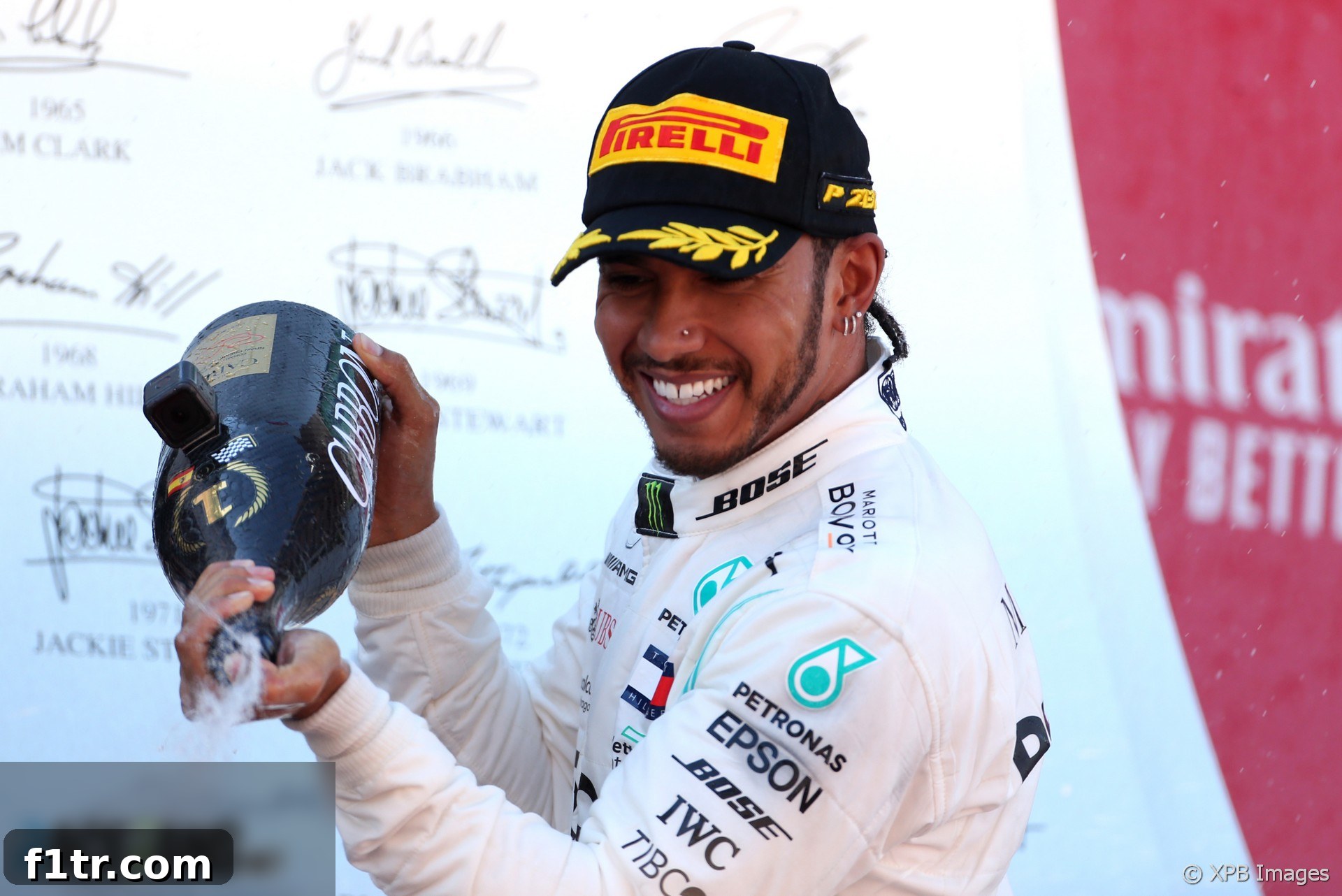
Lewis Hamilton, the reigning world champion, secured his third victory of the season in Spain, elevating his career win tally to an impressive 76. This places him firmly on a trajectory to challenge one of Formula 1’s most revered records: Michael Schumacher’s all-time high of 91 Grand Prix victories. With 16 races still remaining in the current calendar year, Hamilton is expected to further reduce this gap. As previously predicted by many pundits and analysts, he remains firmly on course to equal or even surpass Schumacher’s monumental record by the 2020 season, solidifying his status as one of the greatest drivers in the sport’s history. His relentless drive, combined with the unparalleled performance of his Mercedes machine, makes this a highly realistic prospect, creating an exciting narrative for fans to follow.
The Spanish Grand Prix marked Hamilton’s third consecutive victory at the Circuit de Catalunya and his fourth overall win in this particular race. This achievement places him second only to the legendary Michael Schumacher, who holds the record for the most Spanish Grand Prix wins with six. Hamilton’s mastery of the Circuit de Catalunya, a track known for its challenging layout and demanding conditions, further underscores his versatility and skill behind the wheel. The Briton also claimed the fastest lap of the race for the 42nd time in his career, and notably, this was his first bonus point for doing so under the new 2019 regulations. Furthermore, he led every single lap of the race for the 16th time, a remarkable ‘lights-to-flag’ victory. Only Ayrton Senna, with 19, has more such dominant performances in Formula 1 history, placing Hamilton in truly elite company.
However, it was Valtteri Bottas who prevented his teammate from achieving a rare ‘grand slam’ (pole position, fastest lap, race win, and leading every lap) by securing his third pole position of the season. Bottas’s strong qualifying performance highlights the internal competition within Mercedes and his own significant progress in the 2019 season, ensuring that while Hamilton leads, he is not unchallenged from within his own garage.
Away from the Mercedes procession, Carlos Sainz Jnr continued his impressive streak of never failing to score points in his home grand prix, delivering a strong performance for McLaren. However, it was a less fortunate outing for his teammate Lando Norris, who recorded the first official retirement of his promising Formula 1 career after colliding with Lance Stroll, the 2016 European Formula Three champion who was also Norris’s predecessor. The incident highlighted the fine margins and unforgiving nature of F1 racing, even for the sport’s brightest young talents.
The Spanish Grand Prix also proved to be a challenging weekend for Alfa Romeo. The team failed to score points for the first time since their return to Formula 1 as an independent constructor, ending Kimi Raikkonen’s consistent run of points finishes for the squad. Rookie Antonio Giovinazzi, meanwhile, is still awaiting his maiden points in Formula 1, adding to the team’s frustrations in Barcelona.
Catalunya’s Uncertain Future on the F1 Calendar
The Spanish Grand Prix has been a staple of the Formula 1 calendar, held at the Circuit de Catalunya every year since its construction in 1991. However, a cloud of uncertainty looms over its future. The circuit currently lacks a contract to appear on the 2020 F1 calendar, and the most recent race may well have been its last for the foreseeable future. This potential departure would mark a significant shift for Formula 1, which has often relied on a mix of historic European circuits and newer, purpose-built tracks around the world.
With no obvious alternative venue in Spain emerging as a viable candidate to host the race, Formula 1 faces the prospect of losing one of its most enduring and historically significant events. The Spanish Grand Prix held in 2019 was the 49th edition of the race in the 70-year history of the World Championship. Its roots stretch back to 1951 when F1 first raced on the challenging street circuits of Pedralbes in western Barcelona. Over the decades, the race has visited iconic venues such as Jarama, Montjuïc, and Jerez before finding its long-term home at the Circuit de Catalunya. This rich history makes its potential absence even more poignant.
Spain itself has been a vibrant host for Formula 1, even holding the European Grand Prix on five occasions at a distinctive street circuit in Valencia. As recently as 2012, the country proudly hosted two Grand Prix events. The possibility of Spain having no Formula 1 race on its calendar next year is a concerning prospect for Spanish motorsport enthusiasts and the wider F1 community. It is difficult to ignore the perceived connection between this potential loss and the absence of two-time world champion Fernando Alonso from the Formula 1 grid. Alonso’s immense popularity and success undoubtedly played a role in sustaining the sport’s profile and commercial appeal in Spain, and his departure may have contributed to the challenging negotiations for the future of the Spanish Grand Prix.
The current landscape of Formula 1 sees a growing demand for races in new markets, particularly in Asia, the Middle East, and the Americas. This global expansion often comes at the expense of traditional European venues, which may struggle to meet the escalating hosting fees required by F1’s commercial rights holders. The Circuit de Catalunya’s situation serves as a poignant example of this evolving dynamic, where heritage and fan passion must contend with the commercial realities of a global sport. The potential departure of such a well-established and historic race highlights the ongoing transformation of the Formula 1 calendar, raising questions about the balance between tradition and growth.
The remarkable dominance displayed by Mercedes in the early stages of the 2019 season sets a formidable challenge for their competitors. While Lewis Hamilton chases individual records, the team continues to rewrite the history books with their unparalleled performance. As the season progresses, the F1 world will be watching closely to see if any team can break Mercedes’ stranglehold, or if the Silver Arrows will continue their march towards yet another championship double. The backdrop of this sporting narrative is also a reminder of the ever-changing face of Formula 1, as historic venues like Catalunya face an uncertain future, emphasizing the dynamic nature of the sport both on and off the track.
Review the year so far in statistics here:
- 2019 F1 championship points
- 2019 F1 season records
- 2019 F1 race data
- 2019 F1 qualifying data
- 2019 F1 retirements and penalties
- 2019 F1 strategy and pit stops
Did you uncover any other fascinating statistics or facts from the Spanish Grand Prix? We invite you to share your insights in the comments section below.
2019 Spanish Grand Prix Related Articles
- 2019 Spanish Grand Prix Star Performers
- Top ten pictures from the 2019 Spanish Grand Prix
- Another Mercedes one-two sets up Hamilton vs Bottas title fight
- Paddock Diary: Spanish Grand Prix day four
- Mercedes’ return to dominance makes Schumacher’s wins record realistic for Hamilton
Browse all 2019 Spanish Grand Prix articles