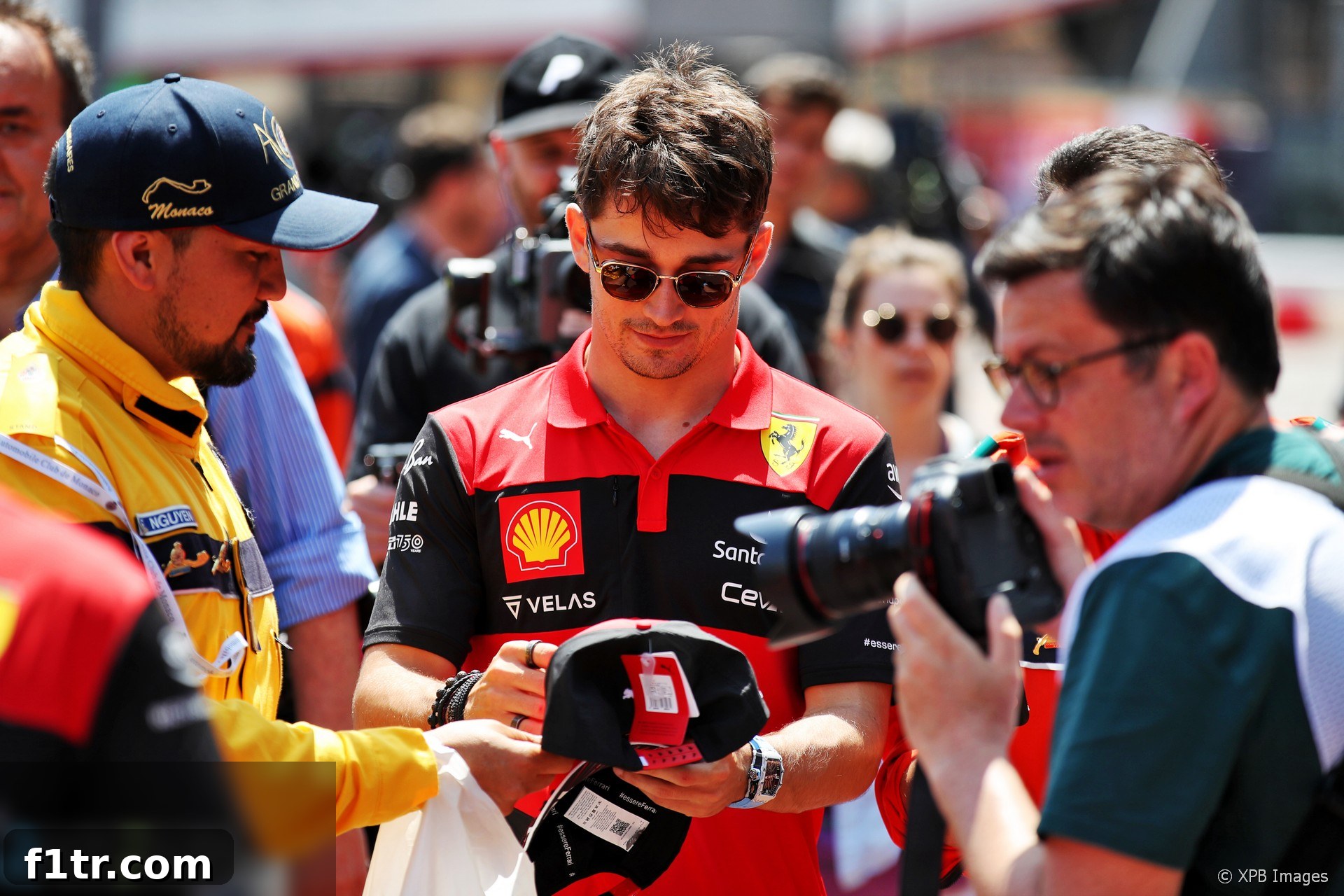
Charles Leclerc, one of Formula 1’s most dynamic talents and a proud Monegasque, has steadfastly championed the enduring significance of the Monaco Grand Prix on the sport’s global calendar. In an era where new venues clamor for a spot and traditional circuits face intense scrutiny, Leclerc’s passionate defense underscores the unique, irreplaceable role this iconic street race plays in the heart of motorsport.
Charles Leclerc Champions Monaco Grand Prix’s Enduring Legacy on the F1 Calendar
The Monaco Grand Prix, a true jewel in Formula 1’s crown, has been an integral fixture since the inception of the World Championship in 1950, hosting its second-ever world championship event. This prestigious race, set against the breathtaking backdrop of Monte Carlo’s opulent streets, prepares to celebrate its 68th round of the world championship and its 79th edition overall. Yet, despite its storied history and unparalleled glamour, the future of the Monaco Grand Prix on the increasingly crowded F1 calendar has become a persistent topic of debate.
The Iconic History and Modern Challenges of the Monaco Grand Prix
Monaco’s legacy is undeniable. It’s a circuit steeped in tradition, where legends are forged and mere milliseconds separate triumph from disaster. For decades, it has represented the ultimate test of driver skill, precision, and courage. The narrow, winding streets, the unforgiving barriers, and the constant threat of a race-ending mistake have contributed to its mythic status. Drivers like Ayrton Senna, Graham Hill, and Michael Schumacher have etched their names into its history, mastering a track that offers no margin for error.
Mounting Criticisms and the Call for Evolution
However, modern Formula 1 has evolved dramatically, and with it, the expectations for grand prix events. Recent years have seen a surge in demand from potential host cities, with multiple new, purpose-built circuits joining the schedule. This expansion has amplified the speculation surrounding Monaco’s long-term viability, as critics increasingly voice concerns that the circuit, while historic, no longer aligns with the demands of contemporary racing.
The primary criticisms leveled against the Monaco Grand Prix often revolve around several key areas:
- Safety Concerns: The incredibly tight layout, coupled with the ever-increasing speeds of modern F1 cars, raises questions about driver safety due to the limited run-off areas and proximity of the barriers. While significant safety improvements have been made over the years, the inherent nature of a street circuit within a bustling city presents unique challenges.
- Lack of Overtaking Opportunities: Perhaps the most frequent criticism is the perceived lack of on-track action. The narrowness of the circuit, combined with the aerodynamic sensitivity and wide dimensions of current F1 cars, makes overtaking notoriously difficult. Races often devolve into strategic processions, with grid position and pit stop timing proving more decisive than daring overtakes.
- Overall Excitement: Consequently, many fans and pundits argue that the race itself can be a subdued affair, lacking the wheel-to-wheel battles and unpredictable drama seen at more modern, flowing circuits. While the spectacle of qualifying remains unparalleled, the race day often fails to deliver the high-octane entertainment expected from Formula 1.
Leclerc’s Vehement Defense: A Driver’s Ultimate Challenge
Despite these valid criticisms, Charles Leclerc, growing up literally on these very streets, offers a powerful counter-argument from the perspective of a Formula 1 driver. He passionately asserts that the unique challenge presented by the tight, twisting street circuit – particularly during the qualifying sessions – more than justifies Monaco’s continued inclusion on the calendar. For Leclerc, Monaco is not just a race; it’s a profound test of skill that few other tracks can replicate.
The Thrill and Precision of Monaco Qualifying
“I really think that Monaco is one of the best race tracks out there,” the Ferrari driver declared, emphasizing the sheer joy he experiences pushing the limits here. He elaborated on the distinctive nature of qualifying at Monaco: “In terms of qualifying, there’s no place where I enjoy as much as I do here and as much as the driver can make a difference because the rails are so close.” This proximity to the unforgiving barriers forces drivers into a state of extreme focus and precision, where every millimeter counts and a tiny error can lead to instant elimination.
The sensation of speed is amplified by the enclosed nature of the circuit. “The danger, you can still feel it because you’ve really got the sensation of speed. And in terms of qualifying, I think it is probably the most exciting qualifying of the year,” Leclerc explained. The blend of high speeds through the tunnel, the rapid-fire changes of direction, and the constant dance with the Armco barriers creates an adrenaline rush that is unparalleled. It’s a true spectacle of raw talent, where human input is paramount, and the car’s ultimate performance is extracted with surgical precision.
Acknowledging Race Day Challenges While Upholding Tradition
Leclerc candidly acknowledges the criticisms regarding race day dynamics. “I agree that in the races that there might be some things that we could change here and there to try and help the overtaking because cars have changed, evolved and it might not be the best track to overtake,” he admitted. This shows a realistic understanding of the circuit’s limitations in the current F1 landscape. However, he quickly pivots back to the fundamental essence of the challenge: “But in terms of challenge for the driver, it is one of the toughest challenges for us throughout the year. I think a track like this should stay on the calendar.” His perspective highlights that while entertainment for spectators is crucial, the core test of a driver’s ability is equally vital for the sport’s integrity and heritage.
Imagining a Modified Monaco: Leclerc’s Thoughts on Circuit Evolution
The discussion around Monaco’s future often includes proposals for circuit modifications to enhance racing. Leclerc himself has pondered how the historic layout could be adapted to facilitate more overtaking, suggesting potential changes to key sections of the track.
“I’ve thought about it sometimes,” Leclerc revealed, considering the feasibility of significant alterations. One specific idea he floated involved re-routing the course at Portier, the corner leading into the famous tunnel section. The aim would be to extend the straight that runs through the tunnel and along the harbor, thereby creating a longer run to a potential braking zone at the chicane, which could offer a better chance for drivers to attempt overtakes.
“Maybe before the tunnel you can go to the left and do a big straight there. But how feasible it is, I’m not sure,” he mused. The practicalities of such a change in a densely populated urban environment are immense, involving complex engineering, significant logistical hurdles, and immense cost. Any major modification would also inevitably spark debate among traditionalists, who argue that the circuit’s unique character should be preserved at all costs. Balancing the desire for improved racing with the preservation of Monaco’s historic identity is a delicate tightrope walk.
Despite the difficulty in proposing viable changes, Leclerc reiterated his core belief: “Of course, overtaking is difficult, but I think what we all love as drivers is the challenge. Especially in qualifying to do that lap, just pushing – there’s no track that comes close to the adrenaline we get in Monaco. For me, it’s part of F1’s history and should stay in Formula 1.” This sentiment resonates with many drivers and fans who view Monaco as a pilgrimage, an irreplaceable pillar of the sport’s heritage.
Home Grand Prix Pressure: Charles Leclerc’s Unique Perspective
For Charles Leclerc, the Monaco Grand Prix is far more than just another race on the calendar; it is his home. Arriving at the circuit as a genuine championship contender for the first time in his Formula 1 career brought a different dimension to his participation. Given the high stakes and the immense local scrutiny, one might expect an added layer of pressure. However, Leclerc asserted that his mindset remained consistent with his previous appearances in the Principality.
“I honestly don’t feel the pressure,” he stated, reflecting a remarkable sense of calm and focus. “I’m just really happy to be here, to be back on this amazing track.” This profound connection to the circuit, having grown up navigating these very streets, appears to instill a sense of comfort rather than anxiety. “I love it here. Obviously it’s a very special event for me, having grown up here with these roads that I know so well since being born. So no, there’s no added pressure.”
Instead of buckling under the weight of expectation, Leclerc embraces the opportunity with confidence in his abilities and his machinery. “I know that the performance is in the car for us to do a great result this weekend and I just have to get into the car, do the job and hopefully the results will be there at the end of the weekend.” This speaks to the mental fortitude required at the pinnacle of motorsport, especially when competing on home turf with the eyes of the world, and specifically his community, fixed upon him. His dream of winning the Monaco Grand Prix, a feat no Monegasque driver has achieved in the World Championship era, remains a powerful motivator, fueling his determination rather than creating debilitating pressure.
Preserving Tradition in a Modern F1 Era
The debate surrounding the Monaco Grand Prix encapsulates a broader challenge facing Formula 1: how to balance its rich history and iconic traditions with the relentless pursuit of innovation, engagement, and commercial viability. While newer circuits offer state-of-the-art facilities, modern designs conducive to overtaking, and often lucrative hosting fees, they frequently lack the unique narrative and historical depth that Monaco provides.
The Monaco Grand Prix is more than just a race; it’s a spectacle, a cultural event that transcends sport. Its unparalleled glamour, the challenging nature of its street circuit, and its deep roots in motorsport history contribute to an identity that is difficult, if not impossible, to replicate. As Charles Leclerc so eloquently argues, the “Crown Jewel” of Formula 1, despite its imperfections, offers a test of driver skill and an experience that remains utterly distinct and essential to the sport’s character.
Ultimately, the future of Monaco on the F1 calendar will likely depend on a continued dialogue between tradition and progress, finding ways to enhance the spectacle without eroding its unique soul. For drivers like Charles Leclerc, its value is unequivocal, representing the ultimate challenge and an enduring symbol of Formula 1’s glorious past and thrilling present.
2022 Monaco Grand Prix Related Articles
- Whatever triggered it, Verstappen’s defiance of his own team makes little sense
- Transcript: How Red Bull seized a win that ‘Ferrari looked like they had in the bag’
- Verstappen now has as many poles as Leclerc – but six times as many wins
- Schumacher’s chassis-splitting crash shows effects of rising car weight – Alonso
- Norris still can’t drive McLaren the way he wants to, despite strong results
Browse all 2022 Monaco Grand Prix articles