Mercedes’ Resurgence: George Russell on Red Bull’s Dip, Upgrades, and Championship Realities
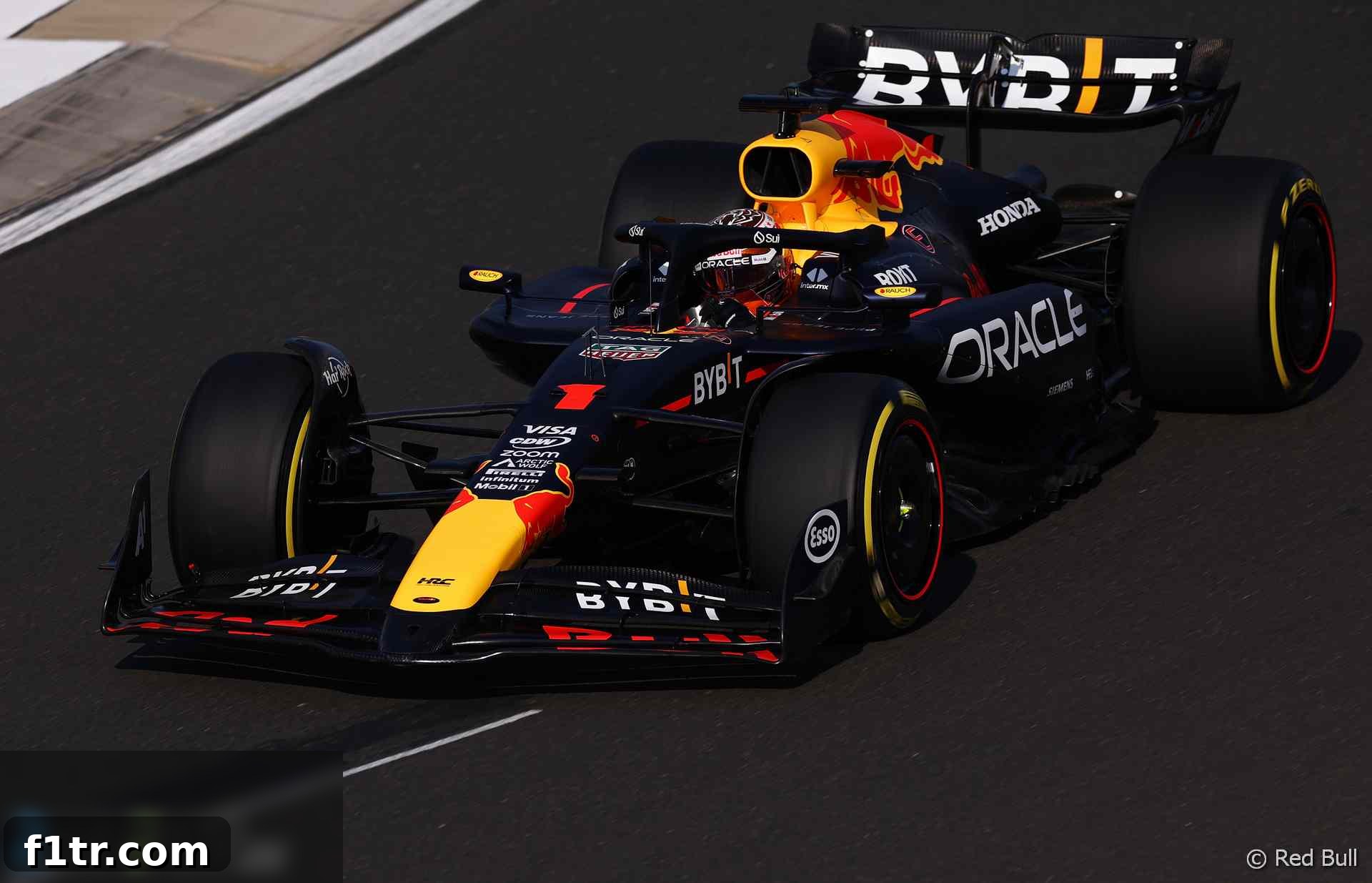
The exhilarating narrative of the current Formula 1 season continues to unfold, with Mercedes-AMG Petronas F1 Team demonstrating a significant uplift in performance over recent races. This surge, according to Mercedes driver George Russell, has been partly facilitated by a surprising backward step from their formidable rivals, Red Bull Racing. After an initial period of seemingly unassailable dominance, Red Bull’s momentum has, by Russell’s observation, faltered, opening the door for Mercedes and other teams to challenge at the front.
Red Bull Racing, led by reigning world champion Max Verstappen, commenced the season with an extraordinary display of engineering prowess, securing seven victories in the first ten rounds. This early run suggested another year of unchallenged supremacy. However, the landscape has subtly shifted, with Red Bull failing to clinch a win in the subsequent four events. During this period, Mercedes capitalized on the opportunity, clinching three of those four races. This shift has ignited discussions across the paddock regarding the evolving competitive order and the effectiveness of ongoing development efforts by all teams.
Russell articulated his team’s perspective on this dynamic shift, emphasizing that Mercedes’ progress is not solely a product of Red Bull’s struggles. “Definitely ourselves and McLaren have moved forward,” remarked the Austrian Grand Prix winner, highlighting the broader competitive gains made by other top-tier teams. He further underscored this point by observing the widening gap to the teams lower down the pecking order, which, he noted, is “definitely very clear.” This indicates that while Red Bull might be facing their own challenges, the front-running pack has genuinely accelerated its development.
Delving deeper into the competitive nuances, Russell pinpointed Red Bull’s recent struggles to a specific development. “Red Bull, I think they’ve made a small step backwards with the upgrade they brought,” he stated. This suggests that even the most dominant teams can sometimes misstep in their relentless pursuit of performance, with new components occasionally disrupting an already finely tuned package. In contrast, Mercedes’ approach to development seems to be yielding more positive results. “But I think the upgrade we have been bringing to the car was a bigger step forward than we’ve seen on any other team. So let’s see what the next upgrades bring, and hopefully it’s more of the same,” Russell added, expressing optimism for Mercedes’ continued trajectory of improvement.
The Critical Role of Upgrades: Mercedes’ New Floor at Spa and Beyond
A prime example of Mercedes’ aggressive development strategy revolves around their pursuit of optimal aerodynamic performance, particularly concerning the car’s floor. At the preceding round in Spa, Mercedes introduced a new floor design for their W15 chassis. However, the initial integration proved problematic. The team encountered unexpected issues during Friday practice sessions, leading to the decision to remove the new component for the remainder of the weekend. This incident underscores the inherent complexities and risks associated with introducing major upgrades in the high-stakes environment of Formula 1.
Despite the initial setback, the Mercedes engineering team remained confident in the potential of the new floor. Russell confirmed that he would be utilizing the updated component during the upcoming morning sessions, with strong anticipation that it would be deployed for the race. His teammate, Lewis Hamilton, would continue to use the floor configuration from the Spa race weekend, allowing for comparative data collection and a prudent approach to integrating new technology. Russell clarified that the team had thoroughly investigated the Spa issues, concluding that the floor was not the sole or primary reason for their struggles during Friday practice.
“This is the challenge when you bring upgrades to the car. There’s thousands of reasons why you may be competitive or you may be uncompetitive,” Russell explained, offering a glimpse into the intricate world of F1 development. He emphasized that while the new floor was one factor, it wasn’t the overriding cause for their lack of performance that particular Friday. This holistic view of car performance highlights the delicate balance teams must maintain across countless variables – from tire degradation and track conditions to engine mapping and suspension settings. The decision to proceed with the new updates on both cars, as Russell indicated, with “99% will be proceeding with the new updates on both cars this weekend,” speaks volumes about the team’s renewed confidence in their latest advancements after thorough analysis and potential modifications.
Chasing Victory: Realistic Ambitions Amidst Intense Competition
While Mercedes’ recent string of strong results, including three wins in four races, certainly paints a positive picture, Russell maintains a pragmatic view of their true performance ceiling. He acknowledged that these impressive outcomes might slightly “exaggerate the performance” of the W15 compared to its immediate rivals. Nevertheless, he firmly believes that the team is now firmly in the hunt for victories in the upcoming races, a testament to their sustained development efforts.
“We’ve got to be setting our sights really high, to be honest, because we were improving drastically in these last couple of races,” Russell stated, reflecting the team’s renewed ambition. He elaborated on the competitive landscape, acknowledging the formidable presence of McLaren, who have also shown remarkable progress. “McLaren have been performing really strong. They were probably slightly more competitive than us in Spa last race,” he conceded, underscoring the relentless competition at the sharp end of the grid. Red Bull, despite their recent dip, remains a potent force: “Red Bull are a little bit up and down at the moment, but you can be sure they’ll be competitive too.” This intricate web of rivalries ensures that any potential victory will be hard-earned.
Russell drew an insightful parallel to his earlier racing days, reflecting on the cutthroat nature of junior formulae like F3 and F2. “But it reminds me a little bit of my junior days in F3, F2, knowing that if you do a great job, there’s a victory on the cards. And if you don’t, you’ll probably be outside the top five.” This analogy perfectly encapsulates the current state of Formula 1, where the margins between success and mediocrity are incredibly fine. It speaks to the importance of flawless execution, optimal strategy, and capitalizing on every opportunity presented during a race weekend. For Mercedes, doing a “great job” now means a genuine shot at standing on the top step of the podium.
Championship Realities: Max Verstappen’s Unassailable Lead
Despite the palpable optimism surrounding Mercedes’ improved performance and the genuine prospect of more race victories, George Russell offered a stark and honest assessment regarding the Formula 1 Drivers’ Championship. He conceded that Mercedes’ resurgence, while welcome, has unfortunately come too late in the season to mount any realistic challenge against Max Verstappen, who currently enjoys a colossal lead in the standings. Russell himself trails the championship leader by a significant 161 points, while his illustrious teammate, Lewis Hamilton, is 127 points adrift. These margins highlight the exceptional dominance Verstappen and Red Bull achieved earlier in the season.
“At the moment there’s only one driver, it’s probably Lando [Norris], who can beat Max in the championship,” Russell mused, acknowledging the hypothetical scenario where a rival like Norris, with a run of extraordinary luck and performance, *might* theoretically close the gap, though it remains a long shot. He further emphasized Red Bull’s early season strength: “They obviously had such an incredible start to the season,” setting a benchmark that proved too high for any competitor to match consistently.
The conversation around the length of the modern F1 season also factored into Russell’s perspective. He recounted a discussion with Lewis Hamilton, who reflected on the shorter seasons of his early career, where perhaps only 17 races comprised a championship. In such a scenario, from the current point, the season would effectively be over, with Max Verstappen’s lead being unassailable much earlier. “So there’s still lots of opportunity,” Russell acknowledged, referring to the current expanded calendar which provides more races. However, his pragmatism ultimately prevailed: “But personally, I don’t see anybody catching up with Max and Red Bull in normal circumstances. They have an exceptional lead. It’s just we’ve been used to crazy dominance in the last two years.” This statement encapsulates the formidable task facing any rival team and driver, a challenge rooted in Red Bull’s sustained excellence and Verstappen’s unparalleled form.
Mercedes’ journey through the 2024 F1 season is a compelling story of resilience, continuous development, and a pragmatic understanding of the championship battle. While the ultimate prize of the drivers’ or constructors’ title may be out of reach, the team’s ability to evolve and challenge for race wins against fierce competition promises an exciting conclusion to the season. The insights from George Russell offer a candid and expert view into the intricate world of Formula 1, where every upgrade, every strategic decision, and every driver’s performance contributes to the ever-changing competitive landscape.
2024 Dutch Grand Prix
- Previous technical hires no obstacle to Newey joining Aston Martin – Krack
- Mercedes still unsure whether Spa floor upgrade is working
- McLaren’s Dutch GP upgrade “nowhere near” as significant as Miami package
- “Very hard to pinpoint” why car has become harder to drive – Verstappen
- Only one F1 driver is making worse starts than Norris in 2024
Browse all 2024 Dutch Grand Prix articles