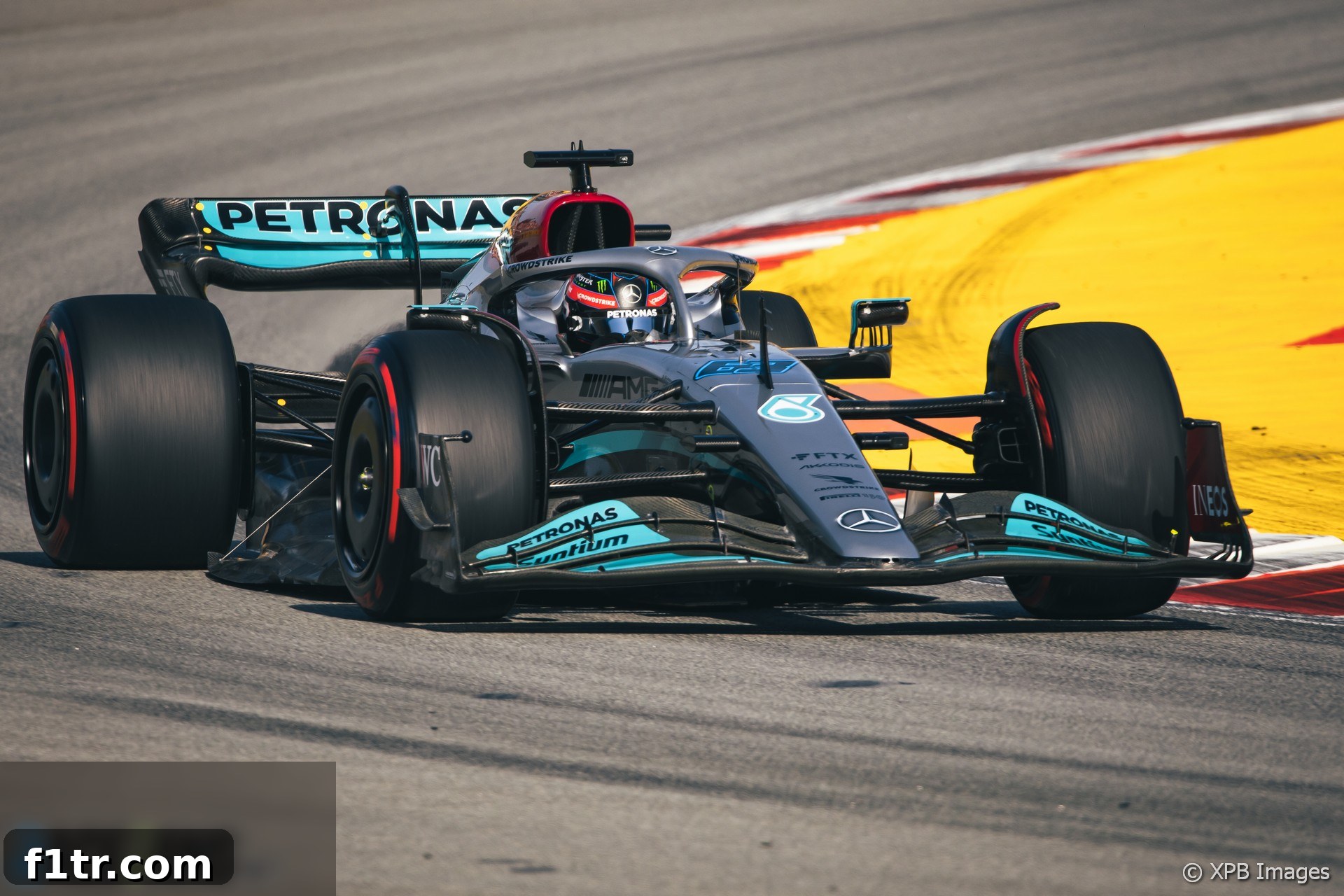
George Russell Hails Mercedes’ Turnaround with Strong Spanish Grand Prix Qualifying Performance
In a significant boost for the Silver Arrows, George Russell secured an impressive fourth place on the grid for the Spanish Grand Prix, declaring it the “best result we’ve had as a team” all season. This performance signals a potential turning point for Mercedes, who have struggled to find their footing in the opening rounds of the 2022 Formula 1 season. The promising qualifying session, held at the Circuit de Barcelona-Catalunya, has injected much-needed optimism into the Mercedes camp, hinting that their extensive upgrade package for the W13 might finally be paying dividends.
Mercedes’ Challenging Start to the 2022 Formula 1 Season
The 2022 Formula 1 campaign has presented unprecedented challenges for the Mercedes-AMG Petronas F1 Team, the reigning constructors’ champions. Following the radical new technical regulations introduced for the season, their W13 challenger has been plagued by significant aerodynamic issues, most notably severe porpoising. This unsettling bouncing phenomenon has not only impacted driver comfort and confidence but has also critically prevented the team from consistently extracting optimal performance from their car.
Throughout the initial five rounds of the championship – Bahrain, Saudi Arabia, Australia, Emilia Romagna, and Miami – Mercedes found themselves notably adrift of the front-running pace set by rivals Ferrari and Red Bull Racing. Their pace deficit was evident in both qualifying and race trim, leading to a series of uncharacteristic struggles and a significant dip in the championship standings. The team, accustomed to an era of unparalleled dominance, faced mounting pressure to address the fundamental issues with their car and reclaim their competitive edge, a task that required meticulous engineering and strategic development.
The Barcelona Upgrade Package: A Crucial Turning Point for the W13
Anticipation was palpable as the Formula 1 paddock arrived at the Circuit de Barcelona-Catalunya for the Spanish Grand Prix. Mercedes had openly communicated their intention to introduce a substantial package of updated parts to their W13 specifically for this event. Barcelona, a familiar testing ground and a circuit renowned for its diverse range of corners that test every aspect of a car’s performance, was deemed the ideal venue to evaluate the effectiveness of these crucial upgrades under race conditions.
The comprehensive upgrade package reportedly focused on critical areas of the car’s aerodynamics, including significant revisions to the floor, sidepods, and potentially elements of the front wing. The primary objective of these modifications was twofold: to mitigate the persistent porpoising that had hampered performance and simultaneously improve overall downforce and stability. The hope was that these structural and aerodynamic changes would allow the W13 to run closer to its intended ride height, thereby unlocking the true performance potential that had been frustratingly elusive in earlier races. Initial indications from practice sessions suggested these changes were indeed moving the team in the right direction.
George Russell’s Stellar Qualifying Performance in Spain
From the moment the cars hit the track for the Spanish Grand Prix weekend, it became increasingly evident that the Mercedes upgrades had, at the very least, a positive impact. While the ultimate pace gap to the absolute front-runners, Ferrari and Red Bull, still existed, Mercedes demonstrated a clear and encouraging step forward in performance. This improvement was brilliantly capitalized on by George Russell during Saturday’s crucial qualifying session, where he showcased his immense talent and ability to adapt quickly to the updated machinery.
Russell delivered a near-flawless performance, pushing the revised W13 to its absolute limits around the challenging Barcelona circuit. His exceptional lap time saw him secure an impressive fourth place on the grid. In doing so, he managed to out-qualify a strong contender in Sergio Perez of Red Bull Racing, a team that has consistently been at the sharp end of the grid. Even more notably, Russell also outpaced his vastly experienced seven-time world champion teammate, Lewis Hamilton, confirming his remarkable form and consistency. His impressive grid position placed him just behind Carlos Sainz Jnr of Ferrari, a truly commendable achievement given the car’s struggles in the preceding rounds.
Reflecting on his Saturday achievement, Russell expressed a clear sense of optimism and profound pride in the collective efforts of the Mercedes team. “I think obviously it’s all based on results and that was the best result we’ve had as a team all season,” Russell stated, underlining the immense significance of securing a second-row start after such a challenging beginning to the year. This strong qualifying performance not only provided a much-needed boost to team morale but also offered tangible, empirical evidence that their development direction was correct and that the W13 possessed untapped potential waiting to be unleashed.
Battling Tyre Temperatures: A Nuanced Challenge for Maximum Performance
Despite the justifiable elation of a strong qualifying result, George Russell candidly admitted that the team hadn’t fully optimized their car’s performance, indicating there was still more pace to be found. A critical factor, as he meticulously explained, was the persistent difficulty in managing the soft tyre temperatures throughout the entire qualifying lap. This is a common yet highly nuanced challenge in modern Formula 1, where tyres need to be precisely brought into a specific operating window to deliver peak grip and maximum performance across all sectors of a circuit.
“I think it offers optimism because, to be honest, I think we didn’t have the tyres in the right window whatsoever,” Russell revealed, highlighting the ongoing intricacies of tyre management. He further elaborated on the specific struggles encountered during his flying laps: “It was always quickest in sector one and we were always struggling in sector three, and we just couldn’t find that right balance to be honest.” This detailed observation indicates a potential issue with either tyre warm-up over the course of the lap, or perhaps excessive degradation and overheating towards the end of it, preventing the car from maintaining consistent grip and optimal speed when it mattered most. The discrepancy between Sector 1 and Sector 3 performance points to a car that perhaps generates heat too quickly or isn’t able to cool its tyres efficiently.
The subtle art of tyre management is paramount in contemporary Formula 1, influencing everything from outright single-lap pace to overall car balance and strategic flexibility. Russell’s insightful observation underscores that even with a significant step forward in overall car performance, there’s still crucial fine-tuning required to extract every last tenth. He genuinely believes that had they truly optimized the tyre performance across all three sectors, a higher grid position, specifically P3, could have been within his grasp. “I think if we really optimised everything we could have maybe have been P3 at a push, but not much higher than that,” he mused, indicating his belief that Carlos Sainz was just marginally ahead in terms of raw pace on Saturday, even with perfect execution from Mercedes.
Optimism for Sunday’s Spanish Grand Prix Race Day
Looking ahead to the main event, the Spanish Grand Prix race on Sunday, George Russell exuded a palpable sense of confidence regarding Mercedes’ prospects. He firmly believes that the updated W13, in its revised guise, will prove to be an even stronger contender during the race compared to its qualifying form. This often holds true for Formula 1 teams that prioritize race pace, consistent performance over long stints, and tyre longevity over ultimate single-lap speed, a characteristic that Mercedes has often demonstrated in its dominant years.
“Ferrari look extremely fast this weekend and I think we’ve got a better race car than we do a qualifying car,” Russell asserted with conviction. This statement strongly suggests that Mercedes might have consciously opted for a setup that is kinder to the tyres over extended runs, or that the inherent characteristics of their new upgrade package naturally lend themselves better to managing degradation during a full race distance. Starting from the second row of the grid, Russell is strategically positioned to challenge the front runners, provided their projected race pace lives up to expectations and allows him to fight for podium positions.
Russell also took the opportunity to commend the relentless efforts of the entire Mercedes team, both trackside engineers and the hundreds of dedicated personnel back at the factory in Brackley and Brixworth. “So I’m really proud of the job everybody has done back at the factory over these past couple of weeks and months, because I think we’ve now got a package that can be our foundation for us to build upon,” he stated. This concept of a “foundation” is a critical element for Mercedes’ long-term development aspirations for the 2022 season. It signifies that they finally have a stable, understandable, and competitive platform from which to further evolve the W13 throughout the remainder of the championship, rather than fighting against inherent flaws.
The Grueling Challenge of Tyre Degradation in Barcelona’s Heat
The Spanish Grand Prix is notoriously demanding on tyres, and the scorching conditions expected around the Circuit de Barcelona-Catalunya this weekend are set to amplify this challenge significantly. High ambient and track temperatures, coupled with the circuit’s unique combination of fast, sweeping corners and its abrasive asphalt surface, are a recipe for substantial tyre wear and degradation. This will undoubtedly make tyre management a crucial, race-defining factor in determining the outcome of the Spanish Grand Prix.
Russell anticipates a truly gruelling race, potentially the most challenging of the season so far for tyre management. “I think this will be the trickiest race of the season so far, even worse than Bahrain in that regard,” he predicted. His comparison to Bahrain, a race also widely known for its high tyre degradation characteristics due to its circuit layout and hot climate, vividly underscores the severity of the expected conditions in Barcelona. The necessity for drivers to carefully manage their Pirelli tyres, making them last for optimal stints, and for strategists to make astute, precise pit stop calls and plan multi-stop strategies will be paramount for success.
“Tyre deg was massive,” Russell noted, likely referring to the extensive data and observations gathered from the free practice sessions earlier in the weekend. “So we’ve got to put our thinking caps on tonight and try and find the best solution.” This proactive approach highlights the intense engineering and strategic work that occurs behind the scenes on a Grand Prix weekend. Teams will be pouring over telemetry, simulating various scenarios, and meticulously planning to optimize race performance, especially under such demanding circumstances. Finding the perfect balance between outright pace and preserving tyre life will undoubtedly be the key to success for Mercedes and all other teams vying for victory in the Spanish Grand Prix.
Broader Implications for Mercedes’ 2022 Season Trajectory
George Russell’s P4 qualifying result in Barcelona, coupled with the apparent effectiveness of the W13 upgrades, carries significant implications for Mercedes’ 2022 season trajectory. After a period of relative struggle, frustration, and intense introspection, this performance offers a much-needed shot of confidence and a clearer, more defined direction for future development. It signifies a potential turning point that could redefine their ambitions for the rest of the championship.
While the gap to the very front of the grid may still require further closing, the fact that Mercedes has seemingly addressed some of the fundamental aerodynamic and balance issues plaguing their car is a monumental step forward. It effectively transforms their objective from merely understanding their problems to actively developing a genuinely competitive challenger. The “foundation” Russell spoke of is vital; it means the team can now focus on refining performance, extracting more speed, and optimizing setups, rather than battling inherent and unpredictable car characteristics that previously limited their potential.
This Spanish Grand Prix weekend could indeed mark a crucial turning point, providing the entire Mercedes team with renewed impetus and a firm belief that they can return to challenging for race wins and, if fortunes align, even have an outside shot at the championship. The tireless hard work of hundreds of engineers, aerodynamicists, and designers back at the factory is finally beginning to bear tangible fruit, and the crucial synergy between precise driver feedback and meticulous technical execution is starting to click into place. As the Formula 1 season progresses, all eyes will be keenly focused on Mercedes to see if they can effectively build on this promising Spanish Grand Prix performance and continue their determined ascent back to the very pinnacle of Formula 1.
2022 Spanish Grand Prix Related Articles
- Q&A: Kubica ‘shocked’ by ‘completely different’ Alfa Romeo in Spain
- How heat and traffic trouble left F1 fans fuming after the Spanish Grand Prix
- Mercedes not yet certain their porpoising problem has “disappeared”
- Sticking to budget cap “pretty much impossible” due to rising costs – McLaren
- Ricciardo hoping to find an explanation for Spanish GP pace deficit to Norris
Browse all 2022 Spanish Grand Prix articles