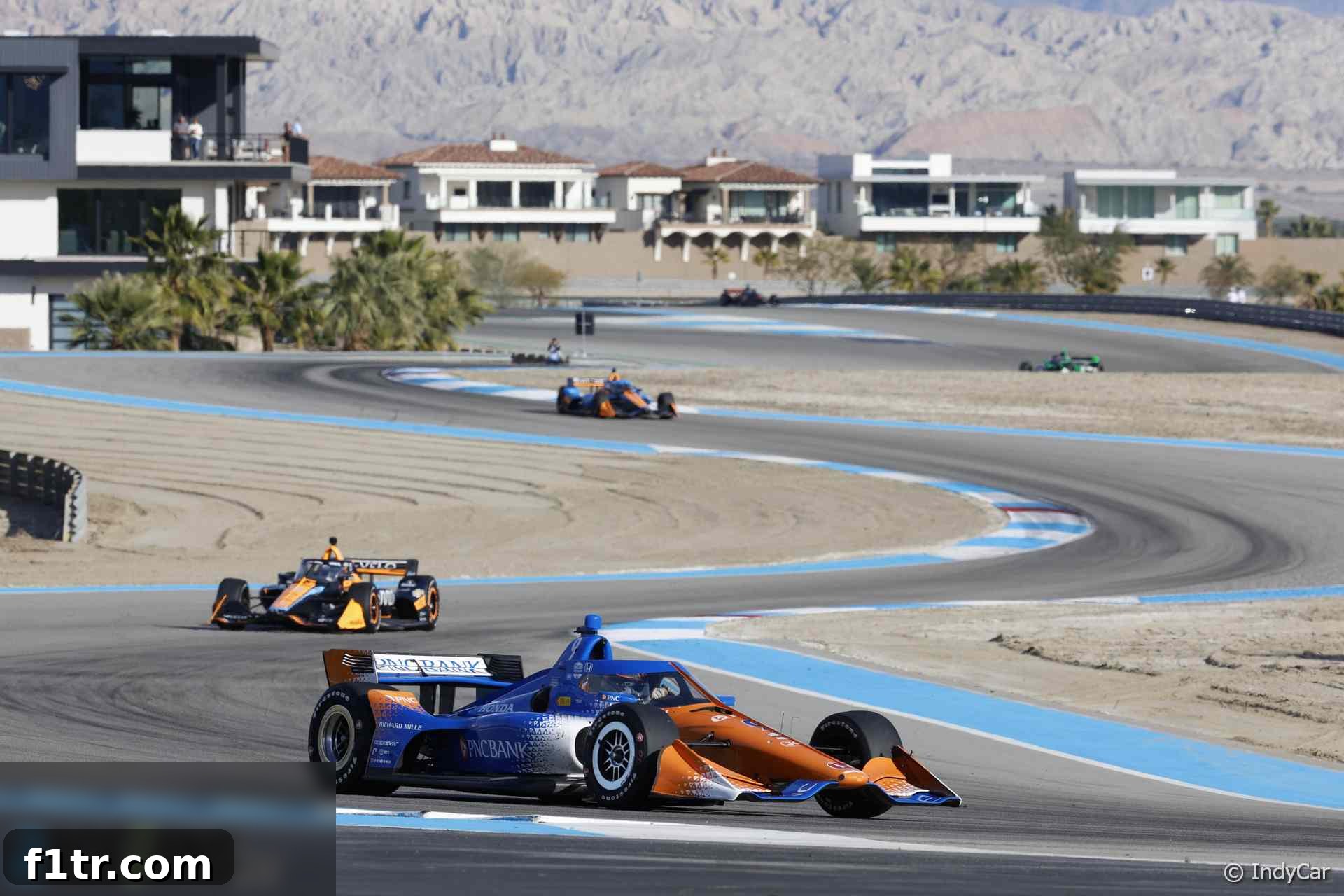
IndyCar’s strategic landscape is undergoing a significant evolution, marked by its inaugural event at The Thermal Club this weekend. This non-championship spectacle in California serves as a critical litmus test, with IndyCar CEO Mark Miles affirming that fan and stakeholder reactions will be the decisive factor in determining its future on the series calendar.
IndyCar Takes Bold Step with Thermal Club Exhibition Race
The exclusive private facility in Palm Springs, California, is poised to host IndyCar’s first non-championship round in 16 years, commencing its high-octane program on Friday. This event is far more than just a race; it’s an ambitious experiment designed to gauge interest in new formats, explore alternative venues, and ultimately, broaden the appeal of America’s premier open-wheel racing series.
Last year, IndyCar utilized the challenging 4.935-kilometer (3.066-mile), 17-turn circuit for a crucial pre-season test, gathering valuable data and driver feedback. Building on that experience, the series has not only committed to a further test session but has significantly upped the ante with a non-points contest boasting an impressive $1.7 million (£1.3 million) prize fund. This high-stakes format includes intense qualifying sessions, two competitive heat races, and culminates in a thrilling ‘all-star’ final, promising a captivating display of talent and speed.
Evolution of a Unique Race Format
The concept for the Thermal Club event originally envisioned a Pro-Am contest, a distinctive partnership where each IndyCar driver would be paired with a club member. Their combined rankings were to be determined by the results of the IndyCar race itself, supplemented by a separate sports car race exclusively for the club members. This unique Pro-Am element aimed to foster deeper engagement between the series and the club’s affluent clientele. However, the sports car race component was eventually streamlined, focusing solely on the IndyCar competition. Despite this modification, the spirit of collaboration remains, as club members will still receive a share of their partnered drivers’ winnings, maintaining a vested interest in the on-track action.
Strategic Imperatives: Why The Thermal Club?
IndyCar CEO Mark Miles articulated the confluence of factors that led to this groundbreaking event. He highlighted the opportune availability of the track, the advantage of convenient television broadcast timings, and critically, a void in IndyCar’s competitive schedule. This gap arose directly from the unfortunate loss of its long-standing race at Texas Motor Speedway, a traditional oval staple that had been a fixture on the calendar for decades. The search for a suitable replacement and innovative new formats became a priority.
“We conducted a two-day open test there in February of last year,” Miles recounted, underscoring the preparatory work. “This type of pre-season testing is standard practice for us. So, in essence, we’ve effectively integrated that testing framework into this weekend’s main event, maximizing our time at the facility.”
Miles further elaborated on the planning, stating, “We identified an open slot on our calendar during the spring season, and The Thermal Club presented an ideal climate that seemed perfectly suited for an event. What’s more, all our teams reported a tremendously positive experience during our initial visit last year. Given these favorable conditions, moving forward with this unique event simply made compelling logistical and strategic sense.” The positive feedback from teams was a significant endorsement, suggesting the facilities and track layout were well-received by those who know racing best.
The Vision Behind The Thermal Club Partnership
The Thermal Club itself, founded by Tim and Twanna Rogers, opened its doors to elite automotive enthusiasts in 2012. Miles expressed profound gratitude for their partnership: “The Rogers family has been absolutely phenomenal in their commitment and their willingness to collaborate, meticulously working through how this collaboration can yield mutually beneficial outcomes – not just for them and the club’s discerning members, but also for IndyCar as a whole, and particularly for our dedicated teams.” This emphasis on a win-win scenario highlights the delicate balance of interests involved in such a bespoke event.
Miles’ personal anticipation for the format is palpable. “I am incredibly excited to witness this innovative format unfold,” he added. “I’ve never before had the opportunity to experience a heat race or an all-star race designed in this specific manner. Honestly, I believe it’s going to be nothing short of sensational to observe the dynamics and outcomes of the competition.” His enthusiasm reflects the series’ hope that this format will deliver unique excitement and unexpected racing narratives, distinguishing it from traditional championship rounds.
A “Made for Television” Spectacle
Due to its nature as a private, exclusive venue, The Thermal Club lacks the extensive spectator facilities typically found at public race tracks, making it unsuitable for accommodating large crowds. Consequently, the event has been meticulously conceived and designed as a quintessential ‘made for television’ spectacle. This approach dictates every aspect of the event, from trackside camera placements to broadcast schedules, ensuring maximum visual impact and narrative clarity for a global audience tuning in from home. The focus shifts from gate receipts to media viewership and engagement metrics.
This strategy allows IndyCar to experiment with new race formats and locations without the immediate pressure of filling grandstands, providing a controlled environment for innovation. It’s a deliberate pivot towards leveraging media reach and digital engagement, recognizing the evolving consumption habits of modern sports fans. The success of this “made for TV” model could open doors for similar events at other non-traditional venues, expanding IndyCar’s footprint beyond conventional racing circuits.
The Ultimate Verdict: Fan Reaction and Stakeholder Satisfaction
Miles unequivocally stated that the series’ long-term commitment to a return to The Thermal Club will be contingent upon the reception from fans and key stakeholders. This multi-faceted evaluation process is crucial for a series looking to innovate while maintaining its core audience.
“We will maintain an acute awareness and diligently gather feedback from all our critical stakeholders,” Miles assured. “Firstly and fundamentally, the Rogers family, as the visionary owners of The Thermal Club, must find the experience to be positive and rewarding. Their continued enthusiasm and endorsement are paramount.” He elaborated on the internal dynamics, stating, “I am confident that the attitudes and sentiments of the club members themselves will be accurately reflected in Tim Rogers’ overall assessment. Therefore, their satisfaction represents a crucially important, foundational prerequisite for any future considerations.”
Beyond the immediate hosts, the broader public’s voice will play a significant role. “We will meticulously observe how fans react,” Miles continued. “We anticipate gaining a comprehensive understanding of the fan response to the racing, particularly through the wealth of information available on social media platforms. Furthermore, several of our valued sponsors will be on-site, along with team personnel and, of course, team owners, all of whom will provide invaluable qualitative feedback.”
The comprehensive nature of this feedback gathering emphasizes IndyCar’s commitment to a holistic assessment. “We plan to take everyone’s ‘temperature’ after the conclusion of the event,” Miles explained. “I can confidently say that the sentiment was overwhelmingly positive after our test session last year. People genuinely enjoyed their time there, even if some questions were raised regarding the specifics of the racing itself. My sincere hope is that we have effectively addressed those concerns with the current format, and we are eagerly anticipating a truly exceptional weekend that everyone will thoroughly enjoy.” This iterative approach, where feedback from a test leads to format adjustments for the race, showcases a responsive and adaptive strategy.
A Glimpse into IndyCar’s Future
The Thermal Club event represents more than just a single race; it’s a window into IndyCar’s strategic vision for growth and relevance. In an ever-evolving sports entertainment landscape, the series is actively exploring how to present its thrilling brand of racing in fresh and exciting ways. The successful integration of non-championship events, particularly those designed for television and offering substantial prize money, could pave the way for a more dynamic and diversified schedule.
The focus on fan engagement, stakeholder satisfaction, and innovative formats positions IndyCar to potentially attract new audiences while rewarding its loyal base. The lessons learned from this weekend will undoubtedly inform future decisions, shaping not only the immediate calendar but also the long-term direction of one of motorsports’ most exhilarating categories.
Related IndyCar Content
- IndyCar driver McLaughlin cleared of injury after crashing through barrier at Barber
- Schumacher says his IndyCar feels like ‘an F2 car, just with better tyres’
- IndyCar “way faster than Formula 1” in some corners, says Grosjean
- FIA to award more F1 superlicence points to IndyCar drivers from 2026
- Schumacher to race full-time in IndyCar with RLL in 2026
Browse all IndyCar articles