The exhilarating world of Formula 1 consistently delivers high drama, unexpected turns, and invaluable learning experiences for drivers and teams alike. The Azerbaijan Grand Prix, a street circuit known for its unforgiving nature and high-speed thrills, proved to be no exception, offering a complex tapestry of challenges, triumphs, and strategic quandaries. From rookie errors to seasoned veteran struggles, Baku laid bare the intricate demands of elite motorsport, providing plenty of talking points and crucial takeaways for the remainder of the season. This comprehensive round-up delves into the key incidents, driver reflections, and wider motorsport news stemming from a captivating race weekend.
Azerbaijan Grand Prix: Key Insights and Driver Reflections
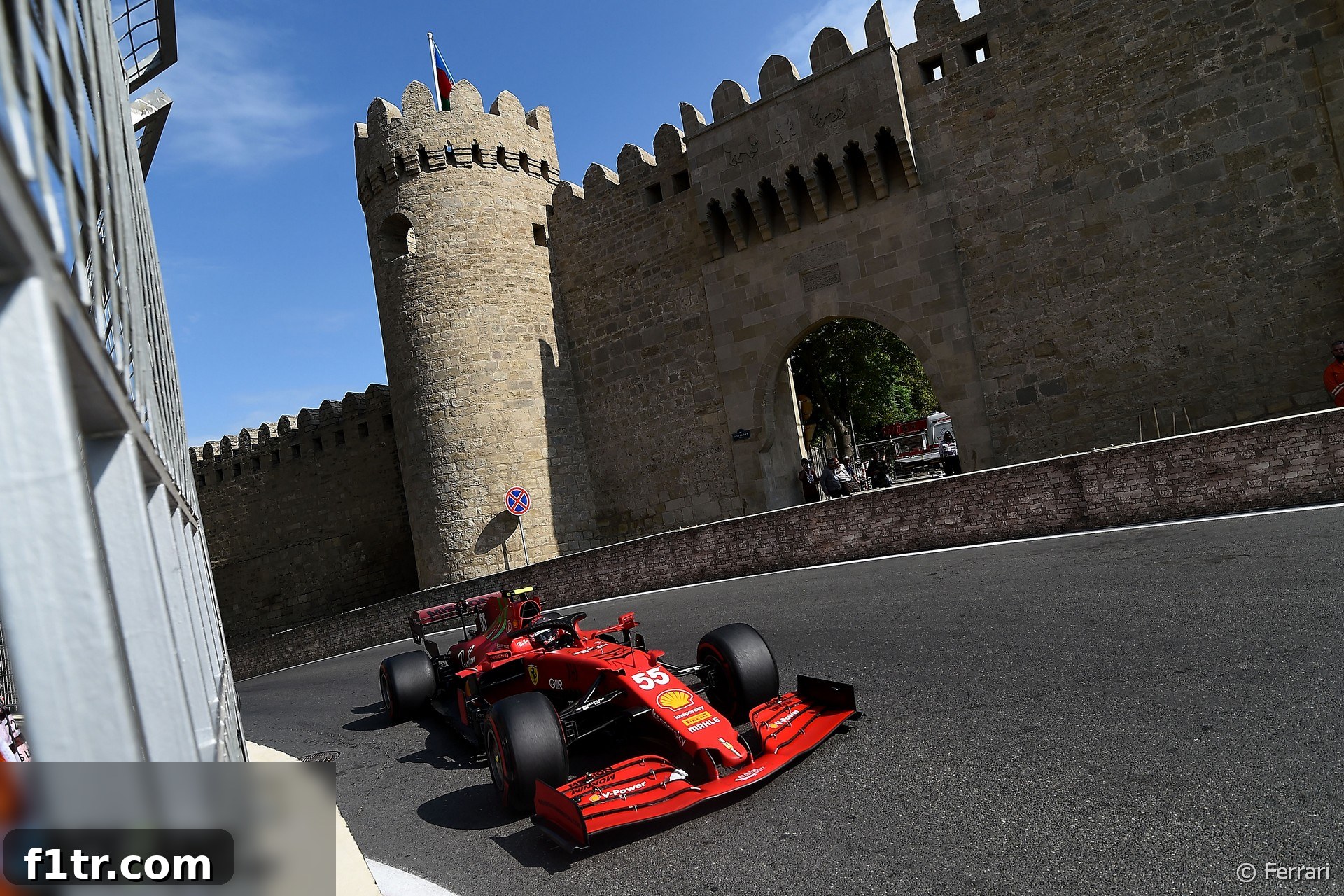
Carlos Sainz Jnr Views Baku Challenges as a Learning Opportunity for Ferrari
For Scuderia Ferrari’s Carlos Sainz Jnr, the Azerbaijan Grand Prix weekend was a stern test of character and skill, ultimately described as a significant learning opportunity. The Spanish driver’s performance was notably hampered by a Q3 qualifying crash and subsequent early excursions into the run-off areas during the race, severely compromising his strategic aspirations and final position. Sainz candidly admitted, “It hasn’t been my greatest of days, to be honest.”
The core of Sainz’s struggles lay in his difficulty managing cold tires, particularly following starts, pit stops, or Safety Car periods. He elaborated on the issue: “Every time I had a cold tyre on the car – at the start or after a pit stop or in the last start or after a Safety Car – I was always struggling with front locking, struggling with the feeling of the brakes, with the front tyre.” This lack of immediate confidence and grip directly translated into costly mistakes on the demanding Baku City Circuit.
The consequences were clear: “It has caused me a mistake, a couple of positions at some of the starts. And in the end it means that the end result of the weekend is not as good as it should be.” However, Sainz’s professional outlook transformed these setbacks into a focused objective. Rather than dwelling on the negative, he emphasized the constructive aspect: “But it gives me an opportunity to focus on something, in trying to improve something, which is the feeling with the car and the front tyres and the brakes in those first laps when the tyre is cold and something that I will put some focus on to try and get better in the next few races.” This commitment to self-improvement highlights the relentless pursuit of perfection required at the pinnacle of motorsport and underscores Ferrari’s ongoing development trajectory with its new driver.
Esteban Ocon’s Promising Race Cut Short by Boost Failure in Baku
Alpine’s Esteban Ocon experienced the bitter taste of mechanical retirement at the Azerbaijan Grand Prix, bringing an abrupt end to what he believed was a promising points-scoring opportunity. The French driver, who has often shown resilience and strong race craft, revealed that his exit was due to a critical turbocharger failure. “I can’t seem to catch a break here,” a frustrated Ocon stated, reflecting on his unfortunate luck at the Baku circuit. “It’s very tricky, obviously, we had a boost pressure loss, so we had to retire the car and unfortunately it was not our weekend. That’s clear.”
Ocon’s disappointment was particularly acute because he had high hopes of capitalizing on what proved to be a chaotic and “messy” race. Despite a challenging qualifying session that didn’t go his way, Ocon was confident in the Alpine car’s pace for a top-10 finish. He recounted his strong start: “Qualifying didn’t go our way but we had the pace for the top 10. We did a good start, we were in front of both McLarens, I was fighting, I was doing my race and it was going well. So it’s a shame.” His early race performance demonstrated his ability to navigate the unique difficulties of the Baku track, making his eventual retirement even more disheartening. The DNF cost Alpine valuable championship points and added to the list of ‘what ifs’ from a race that saw many frontrunners falter, potentially opening doors for midfield teams.

Lando Norris Reflects on High Stakes of Azerbaijan’s Two-Lap Sprint Finale
The dramatic conclusion to the Azerbaijan Grand Prix, featuring a two-lap sprint race from a standing start after a late red flag, left many drivers contemplating the extreme risk and reward inherent in such scenarios. McLaren’s Lando Norris, who ultimately secured a commendable P5 finish, admitted to feeling “fifty-fifty” about the high-pressure restart format. Norris managed to climb two places during this frenetic final dash, partly benefiting from a crucial error made by Mercedes’ Lewis Hamilton ahead of him.
Norris perfectly encapsulated the delicate balance between ambition and caution: “I’m sure Lewis was like, ‘I can get a win here’ and then went straight on.” He continued, emphasizing the precariousness of the moment: “So it’s so easy just to make a mistake and for it all to go so easily wrong. On the other hand, it can go right and you can gain two places.” Drivers faced an agonizing choice: push to the absolute limit for glory or adopt a more conservative approach to secure an existing position. The fine margins on a challenging street circuit like Baku amplified this dilemma significantly.
For Norris, the calculated risk paid off. “It’s always difficult to judge how aggressive you want to be, how many risks you want to take, but I thought I took a decent amount of risk versus reward ratio and it paid off.” His satisfaction with P5 was evident, especially considering the hurdles faced earlier in the weekend, including a grid penalty and a less-than-ideal first lap. “So I’m pleased with P5. Even with this weekend, with the penalty yesterday and starting P9 and the bad first lap and everything I was happy with that.” Norris’s performance underscored his growing maturity and ability to extract maximum performance even under extreme pressure, further solidifying McLaren’s strong position in the Constructors’ Championship.

Oscar Piastri’s F2 Learning Curve: Penalty for Unsafe Pit Lane Release
In the fiercely competitive realm of Formula 2, rookie Oscar Piastri showcased his potential by securing second place in the feature race, despite being handed a penalty for an unsafe release from his pit box. The young Australian driver, known for his calm demeanor, readily accepted responsibility for the infringement, acknowledging it was a direct result of his own overeagerness. This incident served as a stark reminder of the precision and discipline required at every stage of a motorsport event.
Piastri elaborated on the incident: “The team decides when I leave, but I was too excited to get out of the pit box and went while the light was still red.” He explained that it was a novel experience for him: “It was the first time where I’ve had that sort of situation, where I’ve had to wait for someone in the pit lane and I just wasn’t thinking about it.” Typically, a red light in the pit lane signals an issue with the car itself, such as a wheel still being fitted. However, on this occasion, the delay was due to traffic, a scenario Piastri hadn’t encountered before. “Normally the only reason the light wouldn’t turn green is if a wheel was still getting put on, but all four wheels were on and I was on the ground, so it was just a mistake on my part.”
Fortunately for Piastri, the impact of the penalty was mitigated by the race circumstances. “Thankfully, it wasn’t worse, and thankfully there wasn’t a Safety Car so the penalty didn’t make much difference in the end.” Had a Safety Car period occurred, the drive-through penalty could have been far more detrimental to his race position. This incident, while costing him time, ultimately provided a valuable lesson in managing race pressure and adhering to strict pit lane protocols, crucial for any aspiring Formula 1 driver.
Social Media Highlights from the Motorsport World
Social media platforms continue to be a vital pulse point for real-time reactions and tributes within motorsport. Here are some notable posts that captured the essence of the Baku weekend and surrounding news:
Red Bull dedicated their victory to Mansour Ojjeh, who passed away earlier today. #F1 #AzerbaijanGP pic.twitter.com/gOiudkSbVn
— RaceFans (@racefansdotnet) June 6, 2021
The motorsport community collectively mourned the passing of Mansour Ojjeh, a towering figure in Formula 1 and a significant shareholder in the McLaren Group. Red Bull’s dedication of their Azerbaijan Grand Prix victory to his memory underscored the deep respect and impact he had across the paddock, transcending team rivalries. Ojjeh’s contributions to F1 spanned decades, playing a pivotal role in McLaren’s success, and his loss was keenly felt throughout the sport.
- For more insights and to follow official F1 accounts, explore the F1 Twitter Directory.
Further Motorsport Developments and Insights
Beyond the immediate action of Formula 1 and Formula 2, the motorsport landscape is constantly evolving with fascinating stories and technical discussions. Here are some interesting links that provide deeper dives into various aspects of racing:
Gegen Rennrichtung zu teuer (Auto Motor und Sport – German)
Helmut Marko, a key figure at Red Bull Racing, revealed ambitious but ultimately unfeasible plans for the Red Bull Ring. The team considered the possibility of running an extra race this year in reverse track direction to host an additional event. However, this innovative idea proved to be too costly to implement. Furthermore, concerns regarding noise pollution also rendered plans to extend the circuit between turns one and three unfeasible. This highlights the complex logistical and financial challenges involved in adapting established circuits for new racing formats.
Drugovich on the trial and error that led to his inspired feature race comeback (Formula 2)
Felipe Drugovich’s remarkable comeback in the Formula 2 feature race is a testament to perseverance and strategic driving. Starting from a lowly 11th position after a poor qualifying session on Friday, the Brazilian driver demonstrated exceptional race craft. He impressively gained four positions during a chaotic opening lap, then continued to climb, securing a further three places throughout the race. While narrowly missing out on a podium finish to Robert Shwartzman, Drugovich’s performance was a masterclass in overcoming adversity and extracting the maximum from his package.
Bearman extends Italian F4 lead with back-to-back Misano wins (FormulaScout)
In the junior categories, Oliver Bearman continued his dominant run in Italian Formula 4, clinching the final race of the weekend at Misano. His victory further extended his championship lead, showcasing his consistent pace and talent. The race was not without its drama, however, as Van Amersfoort Racing team-mates Nikita Bedrin and Bence Valint were involved in a dramatic collision, underscoring the fierce competition even at this foundational level of single-seater racing.
Italian F4 round 6: Misano (Italian F4 via YouTube)
For those who missed the action, a video recap of the Italian F4 round 6 at Misano offers highlights and key moments from the weekend’s racing. It provides a visual insight into the intense battles and burgeoning talents in one of motorsport’s crucial feeder series.
We consistently strive to credit original sources for all information presented. If you have any tips for links relating to single-seater motorsport that you believe would be valuable for inclusion in future RaceFans round-ups, please submit them via our contact form.
Comment of the Day: The Pit Lane Rule Debate
The post-race discussions often extend beyond the track action to the interpretation and application of regulations. A notable point of contention arose following Nicholas Latifi’s penalty for seemingly following his team’s instructions after Max Verstappen’s crash, prompting a spirited debate among fans and experts. Bleu, a discerning commenter, highlighted the need for flexibility when drivers are asked to follow race control’s instructions, particularly at a high-speed and challenging venue like Baku.
Remembering last year’s Italian Grand Prix where Hamilton and Giovinazzi were penalised for doing the opposite infraction. I remember a lot of debate where the pit being closed signal should be.
But it’s the same lights used in both cases (pit lane being closed or pit lane must be used) so they have to be early enough so every driver can react and not reverse the decision too late.
@bleu
This comment underscores a recurring challenge in motorsport: balancing clear, enforceable rules with the dynamic and often unpredictable nature of racing. The precise timing and communication of pit lane closures or mandatory pit entry instructions are critical, especially when the same signaling mechanisms are used for different scenarios. Ensuring that drivers have ample time to react without compromising safety or unfairly penalizing them for following instructions remains a delicate act of regulatory stewardship within Formula 1.
Happy Birthday to Our Motorsport Enthusiasts!
A very happy birthday goes out to Owen, Timtoo, Dot_Com, and Dawnj86! We hope you all have a fantastic day celebrating. Your passion for motorsport helps fuel our community.
If you’d like to receive a birthday shout-out in a future round-up, please let us know your birth date via our contact form or by adding it to our community list here.
On This Day in Motorsport History
- Exactly 40 years ago today, the legendary Mike Mosley secured victory in the second round of the CART IndyCar season, triumphing at the challenging Milwaukee Mile oval. Mosley’s win marked a significant moment in American open-wheel racing history, showcasing his skill and contributing to a memorable era of competition.