F1’s Fiery Future: FIA Mandates Skid Block Changes to Combat Trackside Blazes
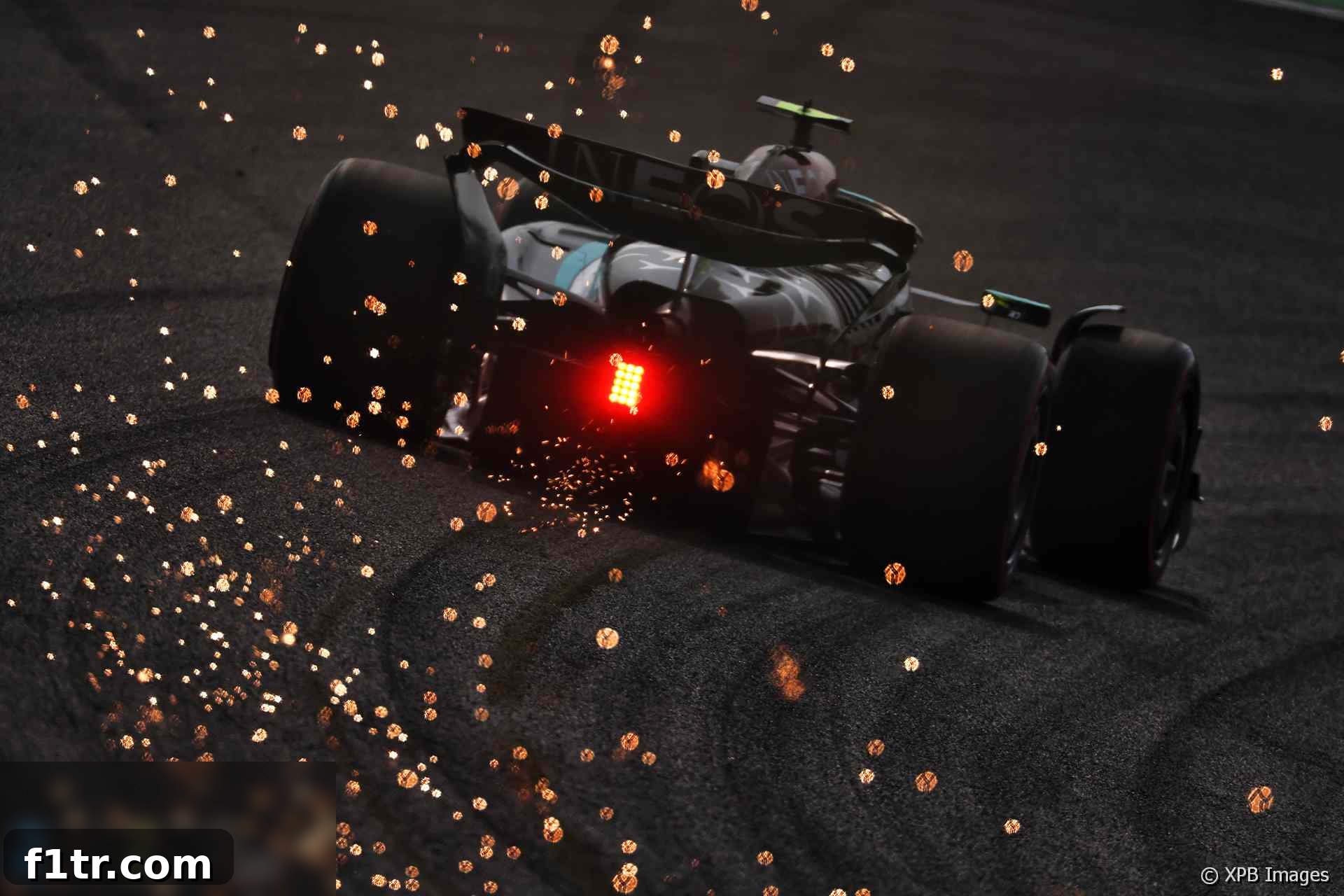
Formula 1, a sport renowned for its blistering speeds and technological marvels, recently faced an unexpected challenge: trackside fires caused by sparks from its cutting-edge cars. The FIA, the sport’s governing body, has now intervened, communicating a significant new directive to all F1 teams. This move comes as a direct response to a series of incidents where sparks from titanium skid blocks ignited dry grass, particularly during practice sessions, raising serious safety concerns and disrupting crucial track time.
The Spark of a Problem: Unforeseen Fires in F1
The 2024 season brought an alarming trend into focus during the Japanese Grand Prix at Suzuka and the Chinese Grand Prix in Shanghai. Both events saw practice sessions repeatedly interrupted by small but persistent trackside fires. These blazes, though quickly extinguished by marshals, were unequivocally linked to the titanium skid blocks fitted to the underside of the F1 cars. As cars navigated the circuits, especially over kerbs and bumps, these blocks would contact the track surface, generating intense, high-temperature sparks. While these sparks have long been a visually spectacular element of Formula 1, adding to the drama and perception of speed, their interaction with dry trackside vegetation created an unforeseen and hazardous fire risk.
The FIA’s prompt investigation confirmed that the titanium material, chosen for its strength and lightweight properties, was indeed the culprit. The inherent nature of titanium to produce brilliant, hot sparks upon impact made it a double-edged sword: a fan favorite for aesthetics but a new challenge for track safety. The repeated nature of these incidents underscored the urgency of addressing the issue before a more serious event could occur, potentially impacting race outcomes or, more critically, the safety of drivers, marshals, and spectators.
FIA’s Immediate Response: Balancing Spectacle with Safety
Following the alarming incidents, the FIA did not delay in taking action. During the Spanish Grand Prix, comprehensive tests were conducted on alternative skid block materials. These tests were crucial in understanding how different materials would perform under race conditions, specifically focusing on their sparking characteristics and durability. The outcome of these evaluations directly informed the new directive issued to Formula 1 teams.
The governing body has confirmed that, for the remainder of the current season, teams are permitted to continue using titanium skid blocks. This decision reflects a careful consideration of the immediate logistical challenges teams would face in a sudden, mid-season material change, and perhaps also an acknowledgement of the visual appeal titanium sparks offer. However, this allowance comes with a significant caveat: teams have been explicitly instructed to have stainless steel skid blocks readily available at all upcoming events. Should there be any further instances of trackside fires caused by car sparks, the FIA reserves the right to immediately mandate the switch to stainless steel for all competitors.
“Titanium skid blocks will remain the mandated material for the remainder of the season,” an FIA spokesperson stated. “However, teams are requested to have stainless steel skid blocks available at all events, as they may become mandatory if similar grass fire incidents occur as seen at Suzuka earlier this year.”
This proactive stance by the FIA demonstrates a commitment to safety without entirely sacrificing the elements that contribute to Formula 1’s unique spectacle, at least for now. It places the onus on teams to be prepared for a potential change, highlighting the dynamic nature of technical regulations in motorsport.
The Material Debate: Titanium vs. Stainless Steel in F1 Skid Blocks
The choice of material for Formula 1 skid blocks is a complex balance of performance, durability, weight, and now, safety. Titanium has been the preferred material for several compelling reasons. Its exceptional strength-to-weight ratio allows teams to minimize unsprung mass, which is crucial for handling and responsiveness. Furthermore, titanium boasts superior durability, withstanding the extreme forces and abrasive contact with the track surface far better than many other metals. This longevity reduces the frequency of replacements and contributes to consistent car performance over a race weekend. Crucially, from a spectator’s perspective, titanium produces those iconic, bright orange and white sparks that have become synonymous with Formula 1 cars pushing the limits.
However, the recent fire incidents have exposed titanium’s critical drawback: its high ignitability when combined with dry flammable materials. Stainless steel, while a viable alternative, presents a different set of characteristics. It is significantly heavier than titanium, which would add precious kilograms to the cars and potentially impact performance. While stainless steel is also highly durable, its wear characteristics and overall performance under F1’s extreme conditions differ from titanium. Most importantly, stainless steel sparks are generally less intense and visually less spectacular, which might be a minor but noticeable change for fans.
The FIA’s decision to conduct “additional testing of stainless steel skid blocks at selected events throughout the season” underscores the need for thorough evaluation. This testing will likely assess not only the material’s fire safety but also its impact on car performance, wear rates, and overall reliability. Teams and the FIA must ensure that any mandated change does not inadvertently compromise other critical aspects of vehicle safety or competitive balance.
Past Mitigation Efforts and Their Limited Success
Prior to the FIA’s new mandate, attempts were made at the affected circuits to mitigate the fire risk using more immediate, localized solutions. These efforts primarily involved cutting the grass shorter in vulnerable trackside areas and dampening those areas with water. The logic was simple: remove or wet the flammable material to prevent ignition. However, the success of these measures proved to be limited.
Cutting grass shorter, while reducing the amount of fuel for a fire, doesn’t eliminate it entirely, especially if the underlying stubble remains dry. Dampening, while effective in the short term, is a continuous battle against evaporation, particularly under direct sunlight and high temperatures. Moreover, the dynamic nature of Formula 1 racing, with cars frequently pushing beyond track limits and sparks being generated unpredictably, made it nearly impossible to consistently protect every potential ignition point. These ad-hoc solutions highlighted the need for a more systemic, material-based approach, confirming that the root cause lay with the cars themselves rather than just trackside conditions.
The Grand Prix Anomaly: Why Races Were Spared
One notable aspect of the trackside fire incidents is that they predominantly occurred during practice sessions, not the main Grand Prix races. This distinction is crucial and largely attributable to fundamental differences in how Formula 1 cars are set up and driven during various parts of a race weekend.
During practice sessions, teams often experiment with aggressive car setups. Drivers might run with minimum fuel levels to achieve a single fast flying lap, pushing the car’s limits for qualifying simulations. This often involves running the car significantly lower to the ground to maximize aerodynamic performance from the underfloor (ground effect). A lower ride height increases the likelihood of the skid blocks making contact with the track surface, particularly over kerbs, bumps, and undulations, thereby generating more sparks.
In contrast, for the Grand Prix race itself, cars are fueled up to their maximum limit of 100 kilograms. This substantial weight addition naturally increases the car’s ride height. Furthermore, during a race, drivers adopt a more conservative approach, especially in the fastest corners, to preserve their tyres over long stints. This often involves reducing the car’s attack angle and speed slightly, which further reduces the chances of extreme contact between the skid blocks and the track. The combination of higher fuel loads, increased ride height, and a more measured driving style during the race significantly reduces the frequency and intensity of sparking, thus mitigating the fire risk. This difference, rather than sheer luck, is likely why Formula 1 has so far avoided the potential embarrassment and safety implications of a race being stopped due due to a car-induced trackside fire.
Looking Ahead: The Future of Safety in F1
The trackside fire incidents serve as a potent reminder that safety in Formula 1 is an ever-evolving challenge. As technology advances and cars become faster and more aerodynamically sophisticated, new unforeseen risks can emerge. The FIA’s swift and decisive action regarding skid blocks demonstrates its commitment to constantly evaluating and enhancing safety standards across the sport.
Beyond the immediate mandate, this incident could spark further discussions within the FIA and among teams about long-term solutions. This might include exploring entirely new composite materials for skid blocks that offer the best of both worlds – performance and fire safety – or even re-evaluating certain aerodynamic regulations that dictate ride height. The balance between maintaining the spectacle that fans love, such as the dramatic sparks, and ensuring an absolutely safe environment for all participants, remains a core tenet of Formula 1’s regulatory philosophy.
Ultimately, the saga of the sparking skid blocks highlights Formula 1’s proactive approach to safety. It’s a sport that constantly innovates, not just for speed, but also for the well-being of its global community. The temporary solution of having steel blocks ready, coupled with ongoing testing, is a testament to this commitment, ensuring that the spectacle of F1 remains captivating yet safe.
Further Reading on Formula 1
- The ‘throwback weekend’ is back in fashion. But it’s a flawed concept – especially for F1
- Is Formula 1’s double race cancellation a blessing in disguise?
- Todt admits Schumacher crashed on purpose – but did it really cost him two titles?
- 25 of the most memorable radio exchanges from the ‘Max and GP show’
- FIA explains next steps after first meeting to discuss fixes for 2026 F1 rules
Browse all Formula 1 articles