F1’s Proactive Stance on Rule Loopholes: Christian Horner Emphasizes Need for Immediate Action
Formula 1 is set to implement significant changes to its governing process, a move strongly advocated by Red Bull team principal Christian Horner. These upcoming adjustments aim to grant the sport the capability to respond swiftly and decisively to innovations introduced by teams that could potentially undermine competitive balance and escalate costs. Horner specifically pointed to Mercedes’ controversial Dual Axis Steering (DAS) system as a prime example of why such a proactive approach is not just beneficial, but absolutely essential for the health of the sport.
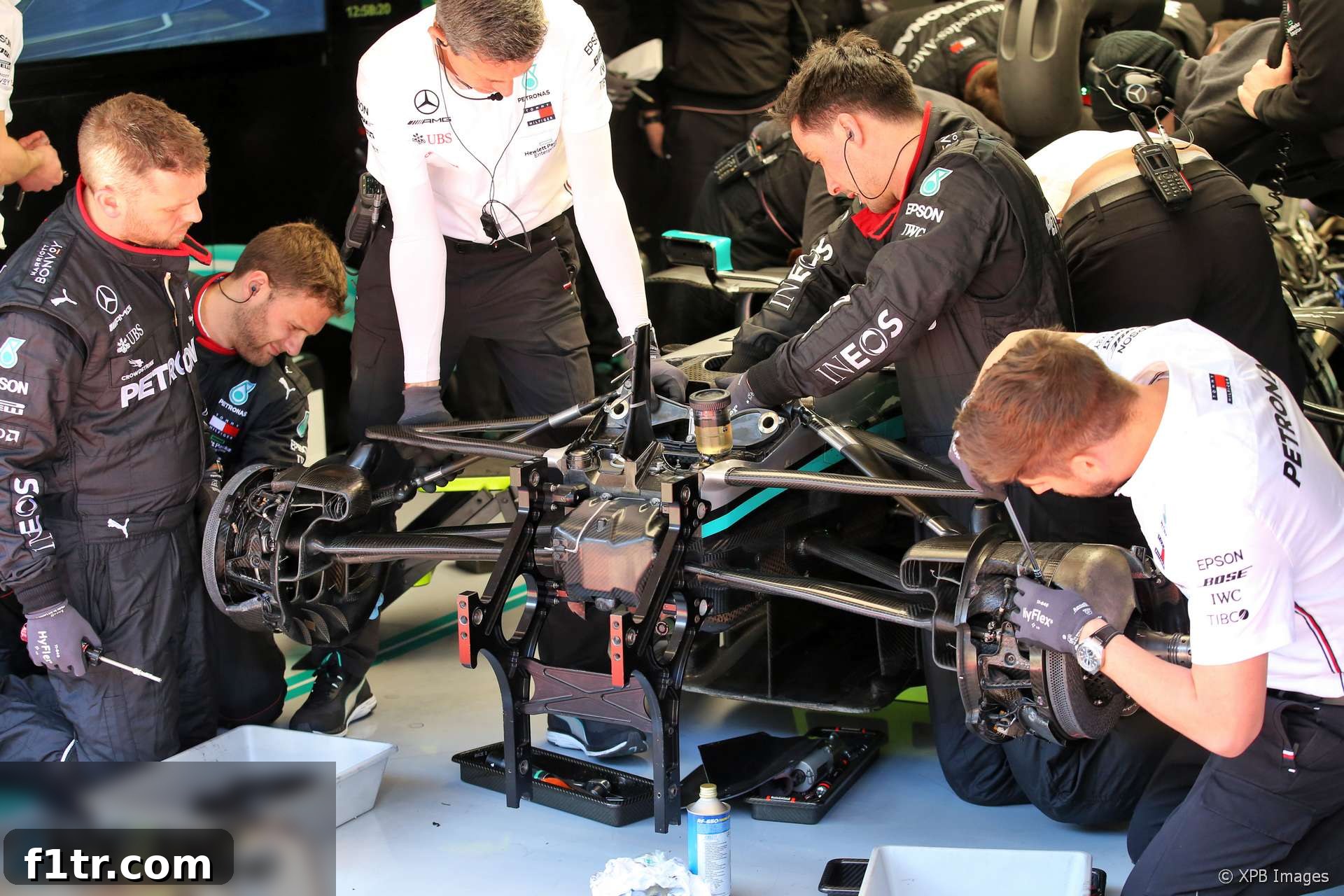
The DAS system, a highly ingenious and technically complex innovation introduced by Mercedes, allowed drivers to adjust the toe angle of the front wheels by pushing or pulling the steering wheel. While deemed legal for the 2020 season, its very existence sparked intense debate and highlighted a critical challenge within Formula 1: the constant tension between engineering brilliance and the spirit of the regulations. Horner articulated the dilemma, stating, “I think so, because I think the problem is, if you take DAS for example, it’s an innovative and clever system, there are arguments to and for, you can probably argue it both ways. The consequence of it is that inevitably it will drive costs for the teams that choose to exploit that kind of technology.”
The Costly Pursuit of Innovation: A Barrier to Entry for Some
The financial implications of such sophisticated technologies are a major concern for many teams, particularly those with more modest budgets. Developing a system akin to DAS would require substantial investment in research, design, and manufacturing – resources that are not equally available across the paddock. Indeed, several teams openly admitted they had already ruled out developing their own versions of DAS, not because of a lack of engineering ambition, but purely due to the prohibitive cost and immense complexity involved in replicating Mercedes’ intricate design. This disparity in resources risks creating a two-tier championship, where only the wealthiest teams can afford to chase every technical advantage, further widening the competitive gap.
Horner believes that the forthcoming rule changes, slated for the 2021 season, will not stifle the inherent spirit of innovation that is so central to Formula 1’s identity. Instead, he sees them as a mechanism to ensure that innovation occurs within responsible and sustainable parameters. “I think so long as it’s done responsibly, that’s fine,” Horner remarked. His comments underscore a desire for innovation that enhances the spectacle without destabilizing the economic landscape of the sport. The challenge lies in drafting regulations that are robust enough to guide technical development without being overly restrictive.
Navigating the Labyrinth of Regulations: Interpretation and Intent
One of the persistent difficulties Formula 1 faces is the inherent complexity of its rulebook. The regulations are often dense and intricate, leading to ambiguities and scope for differing interpretations among engineering teams and the governing body, the FIA. Horner highlighted this ongoing issue: “The problem we’ve got is the regulations are quite complex and not particularly transparent in the way that they are written. And of course, it all comes down to interpretation, which is often quite difficult.” This lack of transparency and the subjective nature of interpretation frequently lead to heated debates, protests, and occasionally, protracted legal battles, distracting from the on-track action.
While the new rules aim to provide the FIA with more agility in addressing potential loopholes, Horner suggests that they might not entirely eliminate the drive for groundbreaking innovations such as DAS. The inherent competitive nature of Formula 1 means teams will always seek an advantage, however marginal. “It depends what performance it yields,” said Horner, acknowledging the irresistible allure of even a small performance gain. “So you may well develop something for even a 12-month period if it has benefit.” This candid admission reflects the relentless pursuit of speed that defines Formula 1 engineering, where even a temporary advantage can be crucial in a championship fight.
A Rich History of Ingenious Loopholes and Technical Battles
Formula 1 has a long and storied history of teams pushing the boundaries of the rulebook, uncovering and exploiting grey areas to gain a competitive edge. Horner himself drew parallels to past innovations that became highly controversial and eventually led to rule clarifications or outright bans. He cited examples such as the F-duct, double diffusers, and various sophisticated suspension systems. Each of these innovations, while brilliantly engineered, ignited significant debate and ultimately reshaped the sport’s technical landscape.
- F-duct (2010): Introduced by McLaren, this system allowed drivers to stall the rear wing on straights, increasing top speed. It was initially deemed legal but banned for 2011 due to safety concerns and its “passive aerodynamic device” classification.
- Double Diffusers (2009): Pioneered by Brawn GP, Williams, and Toyota, these highly effective diffusers exploited a loophole to generate significantly more downforce. After initial protests, they were declared legal, giving these teams a massive advantage early in the season and helping Brawn GP win both championships.
- Active Suspension (early 1990s): Though not strictly a “loophole” in the same sense, systems like those developed by Williams were incredibly sophisticated, optimizing handling and aerodynamics. They were eventually banned for making cars too fast and complex.
- Mass Dampers (2006): Renault’s innovative mass damper system used a sprung weight to reduce vibrations and improve tire contact, enhancing grip. It was initially allowed but later banned mid-season by the FIA, deeming it a “moveable aerodynamic device.”
These historical precedents illustrate the ongoing cycle of innovation, interpretation, and regulation that has characterized Formula 1 for decades. Teams invest millions in R&D, constantly seeking that elusive technical breakthrough, knowing full well that their ingenuity might be short-lived if the governing body decides it contravenes the spirit, if not the letter, of the rules. The new governance process aims to shorten this cycle, providing quicker resolution to such contentious issues.
Balancing the Scales: Innovation, Competition, and the Future of F1
Despite the challenges posed by rule exploitation, Horner remains a staunch advocate for innovation as a cornerstone of Formula 1. He firmly believes that the sport thrives on the relentless pursuit of technological advancement and engineering excellence. “I think innovation has to be a fundamental part of Formula 1,” he asserted. This sentiment resonates with the core identity of F1 as the pinnacle of motorsport, a platform where cutting-edge technology is not just tolerated, but celebrated.
The Mercedes DAS system, while controversial, perfectly exemplifies this spirit. “I mean, here we are talking about the DAS system, it’s very clever, some bright engineers have come up with it, and I think innovation is absolutely part of Formula 1,” Horner acknowledged. The recognition of the brilliance behind such designs, even when they pose regulatory headaches, highlights the complex relationship between teams, engineers, and the sport’s governing body.
The forthcoming changes to F1’s governance represent a critical step towards creating a more responsive and adaptable regulatory environment. By enabling the FIA to address contentious innovations immediately, the sport aims to mitigate the runaway costs associated with developing counter-solutions and to preserve a more level playing field. This proactive stance is not about stifling creativity, but about channelling it in a direction that benefits all stakeholders – teams, fans, and the long-term sustainability of the championship.
Ultimately, Formula 1’s future success hinges on its ability to strike a delicate balance: fostering an environment where engineers are empowered to innovate, while simultaneously ensuring that such advancements contribute positively to the competitive spectacle and financial viability of every team. The commitment to a more transparent and responsive regulatory framework, as championed by figures like Christian Horner, is crucial in navigating this intricate path forward.
As the sport evolves, the saga of innovation versus regulation will undoubtedly continue. What these new rules promise, however, is a swifter, clearer response, hopefully leading to fewer prolonged disputes and more focus on the thrilling competition on track.
2020 F1 Season Insights and Related News
- Grosjean to make F1 test return tomorrow for first time since Bahrain horror crash
- Pictures: Wrecked chassis from Grosjean’s Bahrain fireball crash to go on display
- Bottas vs Rosberg: Hamilton’s Mercedes team mates compared after 78 races each
- F1 revenues fell by $877 million in Covid-struck 2020 season
- Hamilton and Mercedes finally announce new deal for 2021 season
Browse all 2020 F1 season articles