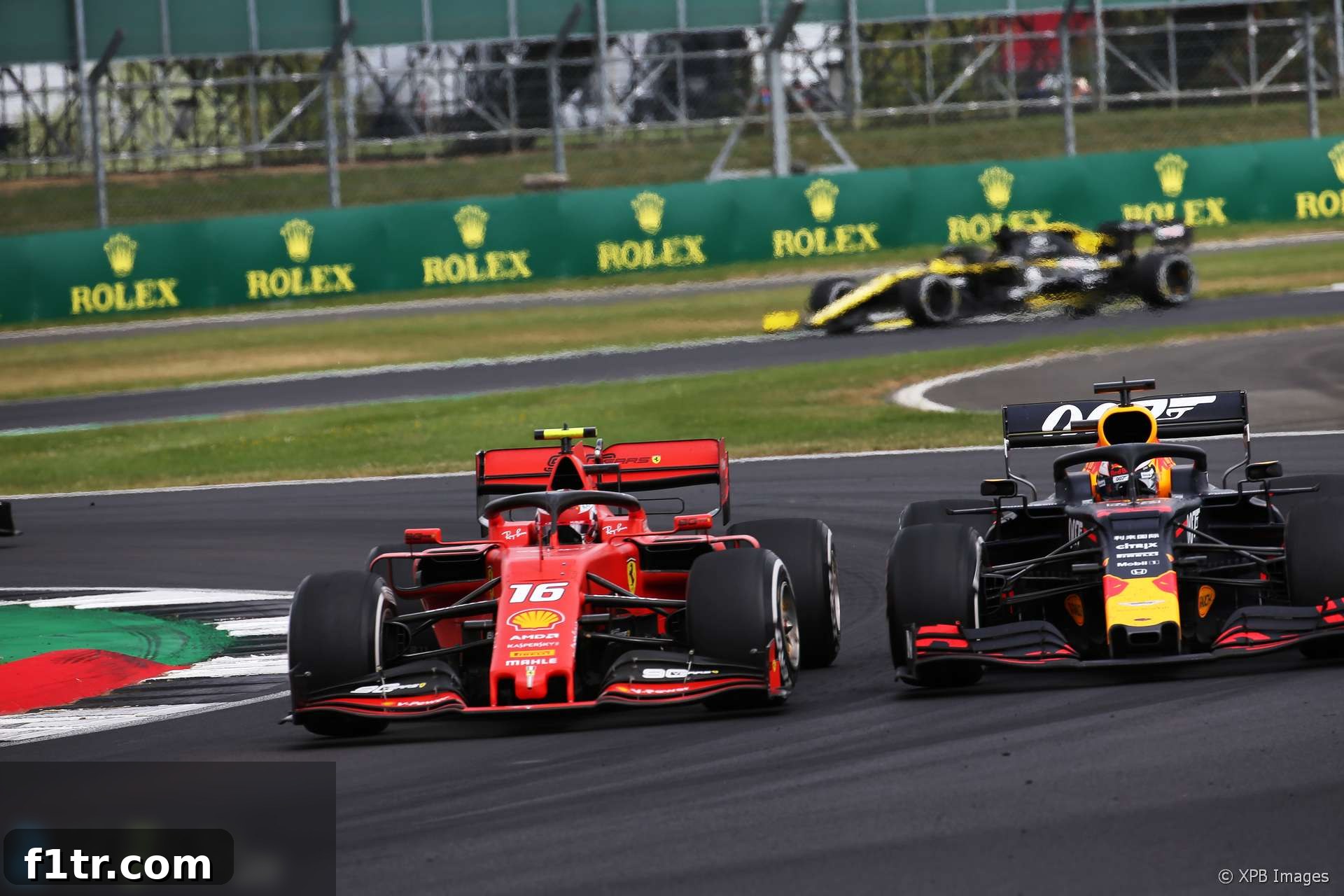
The 2019 Formula 1 season delivered a captivating blend of seasoned champions and emerging talents, with few rivalries as electrifying as the burgeoning on-track battles between Charles Leclerc of Ferrari and Max Verstappen of Red Bull Racing. Their encounters were consistently fraught with tension and daring overtakes, pushing the boundaries of what was considered acceptable ‘hard racing’. One such memorable confrontation unfolded at the iconic Silverstone Circuit during the British Grand Prix, a race that followed closely on the heels of a contentious finish in Austria. Leclerc, reflecting on their fierce duel at Silverstone, asserted that while he raced with an intensified vigor, his actions were devoid of any personal animosity, a direct consequence of the racing precedent set in their previous encounter at the Red Bull Ring.
The Precedent Set: Aftermath of the Austrian Grand Prix
The stage for their Silverstone clash was undeniably set by the dramatic conclusion of the Austrian Grand Prix, just two weeks prior. At the Red Bull Ring, Charles Leclerc had been agonizingly close to securing his maiden Formula 1 victory, leading the race in its final stages. However, in a thrilling yet controversial move, Max Verstappen executed a decisive overtake, muscling his way past the Monegasque driver. The maneuver involved significant wheel-to-wheel contact, forcing Leclerc wide and ultimately allowing Verstappen to claim a dramatic victory on his team’s home turf. The race stewards, after a lengthy post-race investigation, deemed Verstappen’s aggressive maneuver legal. This pivotal decision by the FIA effectively signaled a shift in the sport’s interpretation of on-track aggression, indicating that more robust, wheel-banging action would be tolerated, provided it didn’t cross the line into dangerous driving. This ruling became a crucial reference point for drivers, and particularly for Leclerc, in how they would approach future wheel-to-wheel battles.
Silverstone Showdown: A Test of Resolve and Racing Philosophy
With the memory of Austria fresh in their minds, the British Grand Prix at Silverstone provided the perfect arena for the two young titans to resume their intense rivalry. As Charles Leclerc and Max Verstappen once again found themselves locked in a high-stakes battle for position, the echoes of the previous race resonated throughout the circuit. The Silverstone showdown was a spectacular display of daring overtakes, relentless defense, and unwavering determination from both drivers. During their prolonged and electrifying fight, Verstappen, through his team radio, voiced his frustrations, explicitly accusing Leclerc of employing late defensive moves – a tactic often deemed questionable and potentially dangerous if not executed with extreme precision. It was evident that Verstappen perceived Leclerc’s heightened aggression as a direct response to the Austrian incident, leading him to comment that Leclerc might still be “sore from Austria.” This perception added a compelling psychological dimension to an already thrilling on-track spectacle, captivating motorsport enthusiasts and commentators alike.
Leclerc’s Stance: “Nothing Personal, Just Harder Racing”
However, Charles Leclerc was quick to dismiss any suggestions of personal vendetta or lingering resentment. Post-race, the Ferrari driver adamantly insisted that his aggressive approach to racing Verstappen at Silverstone was purely professional and tactical, devoid of any emotional response. He clarified his stance with remarkable candor, explaining, “After Austria I think if the stewards accept us to race that way then I’m more than happy to race like this, and that’s what I did this weekend.” This statement served as a clear declaration of his pragmatic philosophy: the stewards’ decision at the Red Bull Ring had established a new benchmark for on-track aggression, and he was simply adapting his driving style to align with these newly interpreted regulations. Leclerc saw it as a straightforward response to the sport’s evolving rules of engagement, an opportunity to race precisely how the governing body appeared to be encouraging its competitors – with greater ferocity and less conventional restraint.
Leclerc elaborated further on his evolving racing philosophy, stating, “So nothing special, I just raced harder than normal because I feel like in the last two races or maybe a bit before Formula 1 wants hard racing. I think we are pushing as drivers to have hard racing, that’s where we enjoy the most to be racing like that and that’s what I did today.” His words succinctly captured a broader sentiment emerging within the upper echelons of Formula 1: a collective desire from both the sport’s administrators and the drivers themselves to promote more spectacular, wheel-to-wheel combat. This shift towards a more permissive approach to on-track contact was widely welcomed by fans, who yearned for less sterile racing and more genuine, gladiatorial duels. Leclerc’s unwavering commitment to pushing the limits, while always striving to remain within the letter of the law, showcased his inherent racing instinct and his readiness to engage in the most demanding forms of competition. This period marked a subtle but significant change in the sport’s ethos, moving away from overly strict interpretations of racing incidents and towards a more lenient view of aggressive maneuvers, provided they didn’t compromise safety.
The Thrill of Competition: A Driver’s Unforgettable Experience
The Silverstone Grand Prix, particularly the enthralling duel between Leclerc and Verstappen, stood out as a prime example of this new era of Formula 1 racing. It was a profound testament to the extraordinary skill, bravery, and composure required from both drivers, as they navigated their powerful machines at incredible speeds, often mere inches apart, making split-second decisions that could dramatically alter the outcome of their race. The fine line between aggressive, fair racing and exceeding the limits of acceptable conduct was constantly tested, yet both drivers managed to stay on the right side of it, delivering a pure and unadulterated spectacle for motorsport enthusiasts globally. Leclerc’s profound joy stemmed not from any personal victory over Verstappen, but from the sheer exhilaration of engaging in such a demanding, intense, and fundamentally fair fight. His post-race reflections underscored his deep passion for the sport and his fiercely competitive spirit, which thrives under the most intense pressure cooker environments.
Despite ultimately not winning the race – Leclerc crossed the finish line in a commendable third place – the experience clearly left an indelible mark on him. He described the grand prix with an almost euphoric tone, unequivocally declaring it “probably the most fun race I’ve had since I started in Formula 1.” This was a significant and telling statement from a young driver who had already experienced the thrill of podium finishes and battled at the sharp end of the grid. His profound enjoyment stemmed from the unparalleled intensity and the perceived fairness of the competition. He further elaborated, stating, “It was very enjoyable, very hard racing, always borderline but always stayed within the rules. I really enjoyed that fight.” This reflection highlights his immense appreciation for a clean, albeit fiercely contested, battle, where both competitors pushed each other to their absolute physical and mental limits without resorting to unfair tactics. For Leclerc, such epic encounters represented the very essence of Formula 1 racing, a pure and ultimate test of skill, courage, and strategic acumen under the most immense global scrutiny and pressure.
A Defining Moment in a Budding Rivalry
The Silverstone battle between Charles Leclerc and Max Verstappen transcended a mere fight for track position; it was a foundational moment in what would swiftly become one of Formula 1’s most compelling and enduring rivalries. It powerfully demonstrated that two young, incredibly ambitious drivers were not afraid to go wheel-to-wheel, fearlessly challenge each other, and adapt their driving styles to the evolving interpretations of the sport’s intricate regulations. The ‘nothing personal’ aspect, as articulated by Leclerc, was absolutely crucial to this narrative. It signified that while the on-track action was undeniably brutal and uncompromising, it was fundamentally driven by pure competitive spirit and an unyielding desire to win, rather than by personal animosity. This distinction was vital in paving the way for more spectacular, respected, and clean duels between them in the future. Such an approach fosters a healthier, albeit intensely competitive, environment where drivers can develop a mutual respect, trusting each other to race hard but fair, ultimately elevating the quality and excitement of the spectacle for the global audience.
The 2019 F1 Season: A Catalyst for New Rivalries and Racing Dynamics
The 2019 Formula 1 season proved to be a pivotal year in many respects, not least for solidifying the reputations of emerging superstars like Charles Leclerc and Max Verstappen. Their dynamic and often explosive battles, particularly at high-profile events like the Austrian and British Grand Prix, were instrumental in shaping the narrative of a season that increasingly celebrated aggressive yet clean racing. The precedent set by the FIA in allowing more robust wheel-to-wheel action fundamentally altered how drivers approached their competitors, effectively encouraging them to exploit every inch of the track and every available opportunity to gain an advantage. This philosophy, championed wholeheartedly by drivers like Leclerc, contributed significantly to making races more unpredictable, thrilling, and engaging for fans, moving away from predictable processions and towards genuine, hard-fought contests that delighted enthusiasts worldwide. It was a season where the courage to execute daring overtakes and the skill to defend under extreme pressure were showcased repeatedly, ultimately defining a new and exciting era for the pinnacle of motorsport.
This particular period of Formula 1 was not merely about individual battles; it was fundamentally about the evolution of the sport itself and its burgeoning identity. The drivers’ collective willingness to push technical and ethical boundaries, coupled with the stewards’ more permissive stance on racing incidents, created a high-octane environment where every overtake and defensive move was meticulously scrutinized and enthusiastically celebrated. Leclerc’s remarkable performance at Silverstone, securing a hard-fought third place after such an exhilarating duel, wasn’t just a point-scoring exercise; it was a powerful declaration of intent. It showcased that he was a driver who absolutely relished the immense challenge, thrived under immense pressure, and was undeniably eager to etch his name into the illustrious annals of Formula 1 history through sheer force of will, raw talent, and unparalleled driving prowess. The 2019 season, through unforgettable encounters like these, laid crucial groundwork for future epic contests, solidifying the idea that Formula 1 was, at its very heart, a gladiatorial arena where only the bravest, most skilled, and most strategically astute would ultimately prevail.
The intensity of the Charles Leclerc and Max Verstappen rivalry, ignited with such fervor in 2019, continues to be a cornerstone of modern Formula 1. Their Silverstone battle, following the contentious Austrian Grand Prix, perfectly encapsulated this fierce and unyielding competition. Leclerc’s insightful explanation of his driving—emphasizing “nothing personal” but simply adapting to F1’s clear embrace of “hard racing”—provided crucial insight into the evolving mindset of elite drivers and the determined direction of the sport. It was a race that not only entertained millions but also served as a significant and defining chapter in the developmental journey of two of the sport’s most formidable and exciting talents, promising many more thrilling and memorable encounters in the years to come.
Related Articles from the 2019 F1 Season
- Crying in the Melbourne car park at 2019 grand prix was my career low – Ocon
- McLaren Racing reports reduced £71 million loss in 2019
- Kvyat: Hockenheim podium last year was “my biggest achievement” so far
- How the FIA’s new encrypted fuel flow meter targets Ferrari’s suspected ‘aliasing’ trick
- “He smashed my office door”: 23 must-see moments from ‘Drive to Survive’ season two
Browse all 2019 F1 season articles