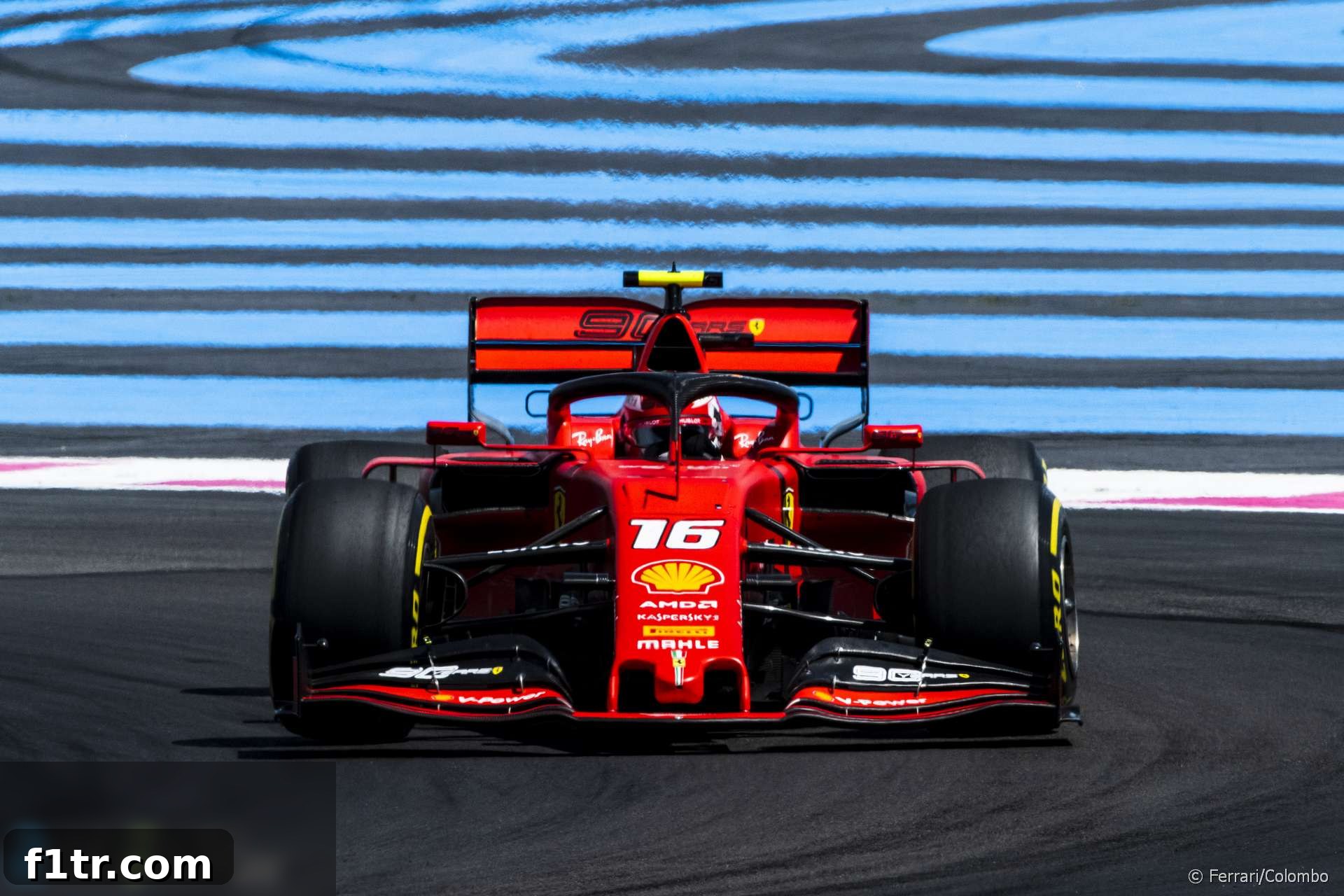
Ferrari’s French Grand Prix Woes: Binotto on Floor Upgrade Failure and Aerodynamic Challenges
The 2019 Formula 1 season presented a formidable challenge for Scuderia Ferrari, as the Italian giants wrestled with their car’s performance against the dominant Mercedes-AMG Petronas F1 Team. A crucial moment came at the French Grand Prix, where team principal Mattia Binotto candidly addressed the team’s struggles, particularly concerning a floor upgrade that failed to deliver as expected and was ultimately removed from the car.
Ferrari arrived at the Circuit Paul Ricard with cautious optimism, hoping to make inroads into Mercedes’ significant lead. However, the weekend quickly highlighted the deep-seated aerodynamic issues that plagued the SF90 chassis. Mattia Binotto, speaking after the race, expressed a clear disappointment that a key development had not met expectations, underscoring the complexities of Formula 1 car development.
The Unexpected Setback: Floor Upgrade Scrapped
One of the most telling admissions from Binotto concerned a significant floor upgrade. Designed to enhance the car’s aerodynamic efficiency and increase downforce, this new component was a focal point of Ferrari’s development push. However, following extensive testing during Friday practice sessions at Paul Ricard, the team concluded that the upgrade was not performing as intended. In a drastic but necessary move, it was removed from both Sebastian Vettel’s and Charles Leclerc’s cars before qualifying.
“We brought some upgrades, some of them work well, others not,” Binotto stated, confirming the mixed results of their development package. He continued, “We removed the floor from the car after Friday practice. It’s always a shame when something is not working, so we’ve got some homework to do in that respect.” This decision not only represented a setback in terms of immediate performance but also signaled a deeper issue within Ferrari’s understanding of their car’s aerodynamic characteristics and their development tools.
Paul Ricard: A Predictably Difficult Venue
Ferrari’s expectations for Paul Ricard were already tempered by the circuit’s characteristics. Known for its smooth tarmac, long straights, and a mix of high-speed and technical corners, the French track often exposed cars with inherent aerodynamic weaknesses. Binotto drew a direct comparison to the Spanish Grand Prix earlier in the season, where Ferrari had also struggled significantly.
“We were expecting a difficult race weekend here in Paul Ricard,” said Binotto. “We said it’s a circuit that could be very similar to Barcelona in some respects, and if you look at last year we were as poor in Ricard as we were in Barcelona. So, I think in that respect, we improved a bit, not yet sufficiently, but we were not expecting to close the gap at all here in Ricard.” Despite the challenges, Charles Leclerc managed a commendable third-place finish, with Sebastian Vettel securing fifth, a result that, while not a victory, offered a degree of solace given the pre-race expectations and the development setbacks.
A Glimmer of Hope: Other Upgrades Show Promise
While the floor upgrade proved to be a disappointment, not all of Ferrari’s new components failed. Binotto confirmed that other revised parts, including a newly designed front wing and updated front and rear brake ducts, did perform as anticipated. The front wing, a crucial element for initial airflow management and overall aerodynamic balance, and the brake ducts, important for cooling and managing turbulent air around the wheels, demonstrated progress.
Ferrari did run its revised front wing, rear, and front brake ducts. Binotto also hinted at the existence of “other upgrades not visible on the car’s surface,” indicating the continuous and often subtle nature of F1 development. However, the comprehensive understanding of the entire package remained elusive due to the floor’s failure. “I don’t think we got all the answers from this weekend because the floor not working properly is a lack of answers,” Binotto admitted. “So we will still work on that one. I think we’ll have some test items again in Austria, try to better understand. I think we will fully understand only when all the parts properly work as expected.” This highlighted the iterative process of F1 engineering and the importance of accurate data correlation between simulation and real-world track performance.
The Downforce vs. Straight-Line Speed Conundrum
The core of Ferrari’s 2019 car concept was its remarkable straight-line speed, often achieved at the expense of maximum downforce in corners. While this strategy offered advantages on certain tracks, it proved to be a significant hindrance on circuits demanding high aerodynamic grip and efficient tire management. The French Grand Prix further underscored this fundamental trade-off.
Binotto articulated a clear strategic shift: the team would prioritize downforce generation, even if it meant sacrificing some of their coveted straight-line speed. “We are looking for eventually more downforce to the detriment of the speed,” he explained. “I believe the car will not be too efficient but giving more downforce to get the tyres working. That will be the direction to go.” This decision was driven by the persistent challenge of making the Pirelli tires work effectively, especially on smooth surfaces like Paul Ricard, where generating and maintaining optimal tire temperature and grip was paramount.
The difficulty in bringing the tires into their operating window was particularly evident during qualifying and the race, affecting both drivers. A car with higher downforce can generate more energy through corners, heating the tires more effectively and allowing them to perform at their peak. Ferrari’s historical tendency to run a lower downforce setup meant they often struggled with tire warm-up and degradation compared to rivals like Mercedes, who generally had a more aerodynamically efficient package. This strategic pivot towards downforce was a recognition of a critical imbalance in the SF90’s design philosophy, aiming to unlock the full potential of the tires and improve overall cornering performance.
Moving Forward: Homework and Austrian Hopes
Despite the challenges, Binotto remained pragmatic. The failed upgrade, though disappointing, offered valuable lessons and highlighted areas where the team could still find significant performance. “But that’s ensuring that we’ve got some margin to improve the car, so at least the direction that we are starting to set is the right one. [There’s] still much to do but overall I think that you cannot say [it was] a positive weekend but I think not too bad as well considering initial expectations,” he concluded.
The “homework” mentioned by Binotto involved a thorough analysis of why the floor upgrade failed, aiming to understand the discrepancies between simulation data and track performance. The team’s immediate focus then shifted to the upcoming Austrian Grand Prix, where further test items and a renewed understanding of their car’s aerodynamics would be crucial. The quest for more downforce and better tire management would define Ferrari’s development path for the remainder of the 2019 season and beyond, as they sought to bridge the gap to their rivals and regain their competitive edge at the pinnacle of motorsport.
2019 F1 Season Insights
- Crying in the Melbourne car park at 2019 grand prix was my career low – Ocon
- McLaren Racing reports reduced £71 million loss in 2019
- Kvyat: Hockenheim podium last year was “my biggest achievement” so far
- How the FIA’s new encrypted fuel flow meter targets Ferrari’s suspected ‘aliasing’ trick
- “He smashed my office door”: 23 must-see moments from ‘Drive to Survive’ season two
Browse all 2019 F1 season articles