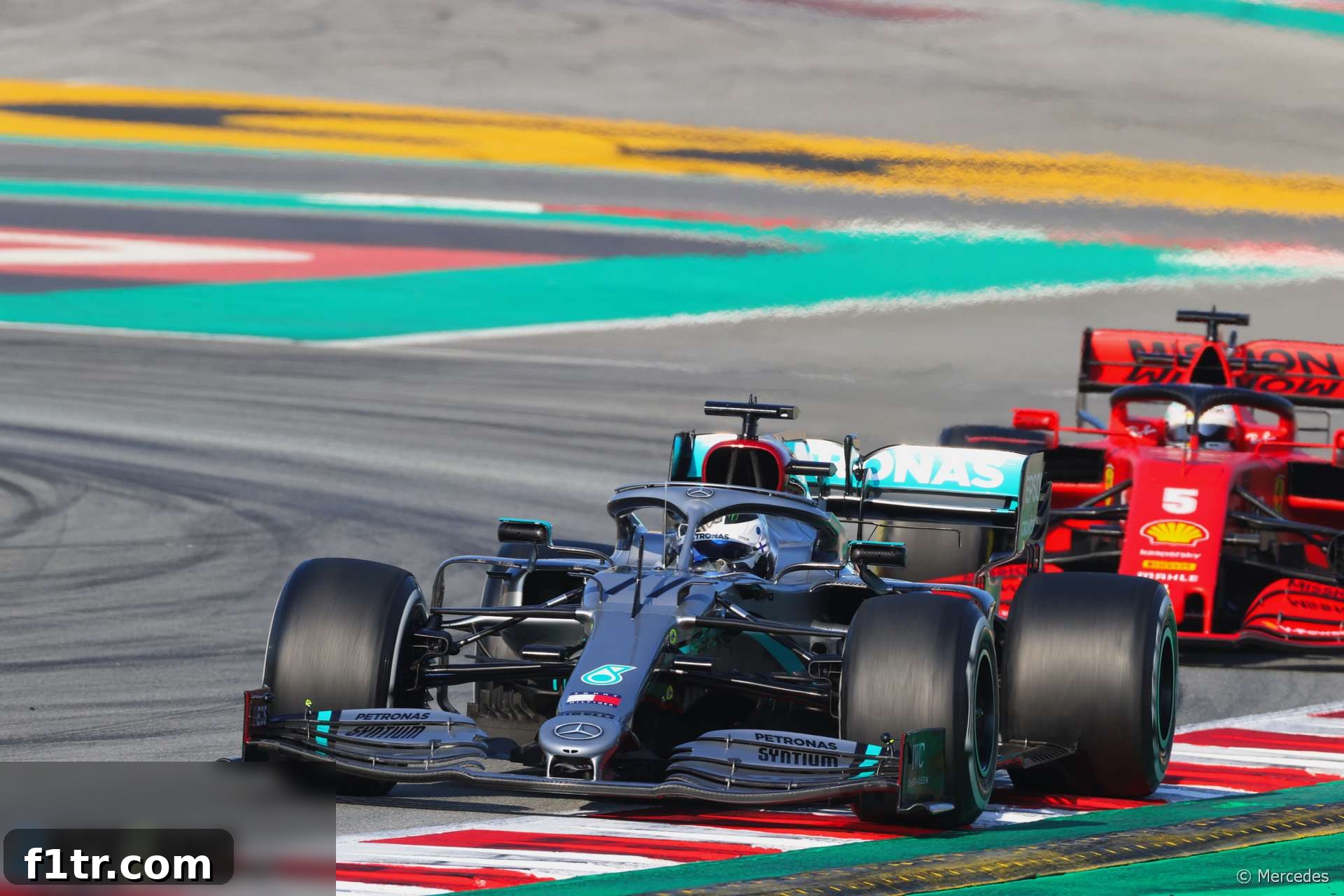
The dawn of a new Formula 1 season always brings with it a unique blend of anticipation and speculation, largely fueled by the limited glimpses of performance offered during pre-season testing. The initial days of the 2020 pre-season test in Barcelona provided exactly that, with Mercedes immediately making a profound statement. On the first Friday, the reigning champions showcased the formidable potential of their new W11 challenger by significantly improving on their previous year’s pre-season best. They shaved a remarkable half-second off their fastest time from the equivalent test last season, a clear indication that the Brackley squad was not resting on its laurels but pushing the boundaries of engineering once again.
This early display of pace immediately set tongues wagging across the paddock. Mercedes wasn’t just fast; they appeared to be in a league of their own. The substantial 1.3-second gap between their quickest lap and that of Alfa Romeo, for instance, was particularly striking. This very same margin, in fact, encompassed the entire remaining field of nine cars, underscoring the apparent dominance. However, as seasoned observers of Formula 1 testing often caution, these early numbers are rarely a true reflection of the definitive performance advantage. Teams typically operate on varied test programs, employing different fuel loads, engine mappings, and tire compounds, making direct comparisons treacherous. It’s widely anticipated that competitors will unlock similar gains in performance as the testing progresses, closing the perceived chasm over the coming days and weeks.
One compelling factor often cited in Mercedes’ consistent early showing is their unparalleled commitment to comprehensive testing. Their approach to pre-season running often involves covering an immense amount of mileage, more than any other team on the grid. This methodical strategy allows them to meticulously gather vast quantities of data, refine their development programs, and iron out any potential issues with their new machinery. Such mammoth mileages have become a testing trademark for Mercedes over the years, signifying a relentless pursuit of reliability and performance optimization. It’s this deep dive into understanding their car that often places them further down the development road at this early stage, irrespective of outright speed.
Unraveling the True Pace: Beyond the Stopwatch
Pre-season testing is a intricate dance between outright speed and diligent data collection. While headlines often focus on the fastest lap times, the true value lies in the volume and quality of information gathered. Teams arrive at circuits like Barcelona with extensive checklists, aiming to validate aerodynamic models, test new components, understand tire degradation across different compounds, and ensure system reliability. A rapid lap time on a low fuel load with the softest tires might grab attention, but it doesn’t necessarily reveal a car’s potential for consistent race pace over a full Grand Prix distance. Understanding these variables is critical to interpreting the early pecking order and avoiding premature conclusions about who will truly contend for the championship.
Many teams engage in ‘sandbagging’ – intentionally not revealing their full performance potential – to avoid giving rivals an early advantage or to test components without the pressure of direct comparison. They cycle through various engine modes, from conservative settings for reliability runs to more aggressive ones for short bursts of speed. Fuel loads can vary dramatically, from minimal quantities simulating qualifying runs to heavy tanks for long-run race simulations. These factors make a direct comparison of lap times notoriously difficult, urging patience and deeper analysis before declaring any team as the definitive front-runner. The real picture only begins to emerge as the final days of testing approach, and certainly not until the first qualifying session of the season.
Reliability and Mileage: The Unsung Heroes of Testing
While speed captures the imagination, reliability and accumulated mileage are often considered the backbone of a successful pre-season. Mercedes’ consistent high mileage underscores their confidence in the W11’s fundamental design and engineering. Every lap completed translates into valuable data points, allowing engineers to correlate simulator models with real-world performance, fine-tune setups, and identify potential weak points before the competitive season begins. A car that can run consistently without major issues provides its drivers and engineers with maximum track time, which is an invaluable commodity in the limited pre-season schedule.
In contrast, teams that suffer from significant downtime due to mechanical failures or accidents face a steep uphill battle. Lost track time means lost data, an inability to test planned components, and a compromised understanding of their car’s characteristics. This can severely hamper their preparations for the opening races, putting them at a disadvantage from the outset. For a sport where every millisecond and every data point counts, robust reliability during testing is almost as crucial as outright pace, as it lays the groundwork for consistent performance throughout the long F1 calendar.
Team Performances: A Mixed Bag of Fortunes
The first few days of testing revealed a varied picture across the grid, with some teams enjoying smooth sailing and others encountering early hurdles. Renault, for instance, managed a significantly better day in terms of mileage on the first Friday, signaling progress in their own reliability and development program. Completing a high number of laps allows them to thoroughly evaluate their RS20 and work through their planned test schedule, which is vital for a manufacturer team looking to climb up the constructors’ standings.
However, not all teams had such an untroubled start. Haas suffered a particularly challenging period, with their absence from almost all of their afternoon running translating into the fewest laps completed by any team at that point. Such significant downtime can be catastrophic, especially for a smaller team with fewer resources. It limits their ability to collect crucial data on their new car, understand its behavior, and optimize its setup, potentially leading to a slower start to the season. Whether this was due to a minor isolated issue or a more fundamental problem remains a key concern.
Adding to the list of early woes, Ferrari, last year’s lap count leaders in testing, also faced a significant setback. A power unit problem on the same day saw their lap count fall to eighth place among the teams. A power unit issue, particularly at the beginning of testing, is a worrying sign for a factory team and engine supplier. It not only affects their own car’s testing schedule but also has potential implications for their customer teams, Haas and Alfa Romeo, who rely on Ferrari power units. Addressing such critical component failures swiftly and effectively is paramount to regaining lost ground and ensuring a competitive package for the season ahead.
2020 pre-season lap times so far by team
2020 pre-season lap times compared to last year
Advert | Become a RaceFans supporter andgo ad-free
2020 pre-season mileages compared to last year
Advert | Become a RaceFans supporter andgo ad-free
Anticipation Builds for the Next Phase of Testing
As the first week of pre-season testing drew to a close, the focus quickly shifted to the subsequent phase. The initial runs typically prioritize shakedowns, system checks, and basic setup work. However, as teams gain confidence in their new machines, the intensity invariably ramps up. The expectation is that in the following week, more aggressive performance runs will become commonplace. Teams will likely start experimenting with lower fuel loads and softer tire compounds to gauge their true one-lap pace, offering a clearer indication of the competitive order. Additionally, comprehensive race simulations will be conducted, allowing teams to understand tire degradation over longer stints and validate their strategic options.
The journey from the drawing board to the grid is a complex one, and pre-season testing serves as the critical bridge. It is where theories are put to the test, where engineering brilliance meets on-track reality, and where the first hints of championship potential begin to surface. While Mercedes undoubtedly laid down an early marker, the unpredictable nature of Formula 1 and the strategic depth of pre-season testing mean that nothing is truly certain until the lights go out for the first Grand Prix of the season. The stage is set for an enthralling year, with the remaining test days promising to unveil more of the hidden strengths and weaknesses of the 2020 contenders.
2020 F1 season
- Grosjean to make F1 test return tomorrow for first time since Bahrain horror crash
- Pictures: Wrecked chassis from Grosjean’s Bahrain fireball crash to go on display
- Bottas vs Rosberg: Hamilton’s Mercedes team mates compared after 78 races each
- F1 revenues fell by $877 million in Covid-struck 2020 season
- Hamilton and Mercedes finally announce new deal for 2021 season
Browse all 2020 F1 season articles