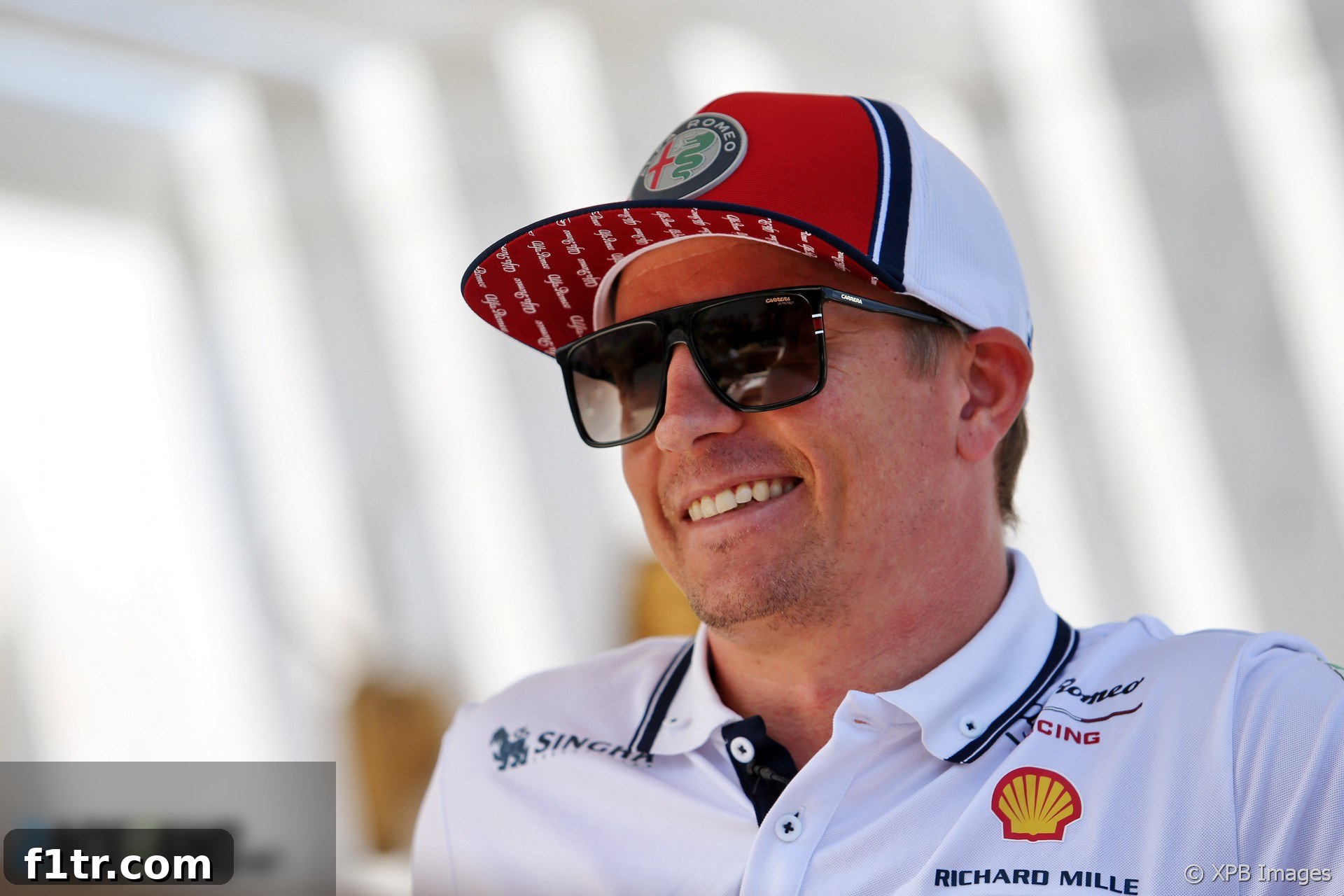
Kimi Raikkonen’s Rediscovered Joy: Unpacking F1 Driver Freedom and Motorsport’s Latest Headlines
In a refreshing revelation for Formula 1 fans, the sport’s enigmatic “Iceman,” Kimi Raikkonen, has publicly shared his enhanced contentment since making the pivotal move to Alfa Romeo Racing. The Finnish veteran, known for his no-nonsense approach to racing, attributes his newfound happiness to a significant reduction in off-track obligations, allowing him to concentrate almost exclusively on his primary passion: driving the race car.
Kimi’s New Chapter: Embracing Freedom at Alfa Romeo
Raikkonen’s career transition from the illustrious Ferrari to the more understated Alfa Romeo team (formerly Sauber) marked a distinctive moment in his enduring journey in Formula 1. Often perceived as a driver who prefers the raw mechanics of racing over media spotlight, his reflections on his current environment offer valuable insight into the personal dimensions of life as an elite racing driver. When directly asked about his contentment after departing Ferrari, Raikkonen’s candid response highlighted a clear shift in his professional life.
“Obviously, in the big picture, we want to be faster and have better results,” Raikkonen began, articulating the core competitive ambition shared by every team and driver in Formula 1. “But if you take that away, when it comes to working, it’s been very nice.” This statement immediately draws a line between the on-track results and the daily working atmosphere, suggesting a significant positive change in the latter.
He elaborated on the operational differences: “There aren’t as many people as, let’s say, Ferrari or other teams. There might be some places you lack a bit on that side [in terms of resources], but that’s what I knew would be a difference. That’s what makes a difference between big teams and smaller teams.” This acknowledgement underscores the inherent disparities between F1 outfits and how these affect a driver’s daily experience.
Crucially, Raikkonen emphasized the personal gains: “Apart from that, it’s given me more freedom to do what I want outside of racing. I don’t need to run all kinds of promotions all the time. I appreciate that much more than maybe people even think about. For me, my own time is priceless. It’s definitely been much better.” This powerful declaration reveals the profound value he places on personal time and autonomy, a luxury often scarce for top-tier F1 athletes.
Quotes courtesy of Dieter Rencken
The Unseen Pressures: Why “Freedom” Matters for F1 Drivers
Kimi Raikkonen’s comments illuminate a less talked-about aspect of Formula 1 life: the sheer volume of responsibilities that extend far beyond the race track. For drivers at high-profile teams like Ferrari, the schedule is not just about driving and testing; it’s a relentless carousel of media interviews, sponsor engagements, corporate events, travel, and public relations duties. While these commitments are vital for a team’s commercial success and brand visibility, they can extract a considerable toll on a driver’s mental and physical energy, especially for veterans who have been in the sport for decades.
The move to a team like Alfa Romeo, which operates with a leaner structure and potentially a less demanding commercial calendar, appears to have offered Raikkonen a much-needed respite. This “more freedom to do what I want outside of racing” translates into more personal time, more opportunities for genuine rest, and a reduced mental load. For a driver of Kimi’s temperament, who has always favored straightforward racing over elaborate media narratives, this shift is not just a preference but a significant enhancement to his overall job satisfaction. It allows him to channel his focus and energy predominantly into his performance, potentially even prolonging his highly successful career in motorsport.
This perspective provides invaluable insight into the diverse experiences across the Formula 1 grid. While the allure of top teams comes with competitive machinery and higher profiles, it also brings an unparalleled intensity of off-track duties. For some drivers, particularly those who have seen it all, the ability to balance professional demands with a fulfilling personal life becomes a paramount factor in their ongoing passion and commitment to the sport.
The Digital Pit Wall: Social Media in Motorsport
In an era dominated by digital communication, social media has become an indispensable tool for Formula 1 and the wider motorsport world. These platforms offer fans an unprecedented level of access to drivers, teams, and the adrenaline-fueled universe of racing, bridging the gap between the circuit and the global audience. From candid behind-the-scenes content to breaking news, social media channels provide a dynamic, real-time pulse of the sport.
Connecting Through Content: Notable Posts and Resources
Platforms such as Instagram are particularly effective in delivering visually rich content that captures the essence of motorsport. Drivers and teams frequently share glimpses into their lives, offering everything from intensive training regimes and garage preparations to jubilant podium celebrations and intimate personal moments. These posts collectively paint a vivid picture of the sport’s multifaceted nature, keeping fans engaged and connected year-round.
An illustrative example of engaging social content can be seen at: https://www.instagram.com/p/BzrtxyWgYrk/ (This particular link would provide a snapshot of a moment in the F1 world, showcasing how drivers and teams interact with their fanbase virtually.)
- To further enhance your engagement with the F1 community, our dedicated F1 Twitter Directory serves as an invaluable resource. It compiles a comprehensive list of official F1 accounts, enabling you to effortlessly follow your favorite drivers, teams, and personalities for the latest news, expert opinions, and real-time updates from the paddock.
Global Motorsport Dispatch: Key News and Insights
Beyond the immediate world of Formula 1, the broader landscape of motor racing continues to produce compelling stories, strategic developments, and intense competition across various championships. This curated round-up highlights some of the most impactful news items, offering a glimpse into the ongoing narratives and challenges shaping global motorsport.
Red Bull’s Driver Strategy: Gasly Adopts Verstappen’s Set-Ups
The intricate art of car setup is paramount in Formula 1, profoundly influencing a driver’s confidence and ultimate performance. Recent reports from Autosport brought to light Pierre Gasly’s strategic decision to align his Red Bull Racing car’s setup more closely with that of his highly successful teammate, Max Verstappen. This move was a clear indication of the team’s efforts to help Gasly extract maximum performance from the machinery.
Gasly now using Verstappen’s set-ups – Marko (Autosport)
Helmut Marko, Red Bull’s motorsport advisor, commented on the situation: “Within this given set-up he is allowed to play around so that it fits his driving style, but he’s not supposed to dramatically move away from that.” This directive highlights the delicate balance between a driver’s personal feel and the team’s optimized parameters. Adapting to a teammate’s setup can be a double-edged sword; while it potentially offers a proven path to speed, it also demands significant adjustment from the driver. Gasly’s struggle to consistently match Verstappen’s pace often centered on his comfort with the car’s balance, making this setup alignment a critical step in his development within the team. Such internal dynamics are a constant feature of F1’s highly competitive environment.
Formula E Regulatory Action: FIA Curbs Traction Control Exploitation
Formula E, the pioneering all-electric racing series, frequently finds itself at the intersection of cutting-edge technology and stringent regulation. A significant development reported by E-racing365 detailed the FIA’s proactive measures to address the exploitation of traction control systems, a crucial area for maintaining competitive fairness and emphasizing driver skill.
FIA Acts to End Traction Control Exploitation (Formula E)
“E-racing365 understands that all but two teams were using a form of control system which managed power to the wheels on exits of corners by the time of the damp Hong Kong race.” This revelation underscores the constant push-and-pull between engineering innovation and regulatory oversight. Traction control, designed to manage wheelspin and optimize power delivery, is strictly controlled in most top-tier motorsport categories to ensure that driver input remains the primary determinant of performance. Any system that provides an undue advantage in corner exits could skew race results significantly, making the FIA’s swift intervention essential for preserving the integrity and spirit of fair competition within Formula E.
Silverstone’s Enduring Legacy: Murray Walker’s Joy at Grand Prix Deal
Silverstone Circuit, often hailed as the spiritual heart of British motor racing, has been a cornerstone of the Formula 1 calendar for decades. The news of its long-term Grand Prix deal was met with widespread jubilation, particularly from the legendary voice of Formula 1, Murray Walker, as reported by Motorsport Magazine.
Murray Walker ‘thrilled’ by news of Silverstone’s Grand Prix deal (Motorsport magazine)
Walker’s quintessential reaction captured the sentiment of many: “I am delighted the race is being preserved and delighted it will still be at Silverstone. I really didn’t fancy the idea of going to watch a race in the Docklands.” His iconic quote perfectly encapsulates the deep historical and emotional connection that both fans and figures like Walker hold for Silverstone. The circuit’s demanding layout, rich history of unforgettable races, and passionate spectator base make it an indispensable part of Formula 1’s heritage. Securing its future ensures that the tradition of Grand Prix racing continues at a venue that embodies the very essence of the sport, safeguarding it against the allure of alternative, potentially less historically significant, urban locations.
IndyCar’s Relentless Pursuit: Alexander Rossi’s Drive for Victory
In the fiercely competitive landscape of IndyCar racing, where margins are often razor-thin, a podium finish can sometimes feel like a missed opportunity for the most ambitious drivers. Alexander Rossi, a prominent and highly competitive figure in the series, has openly articulated an intensified focus on winning, declaring that finishing second is “no longer good enough” for his championship aspirations.
Finishing second no longer good enough for Alexander Rossi (IndyCar)
Rossi’s strong statement vividly illustrates the relentless nature of IndyCar championship battles. “Dixon is still in it; you can’t count him out. There are so many guys now that are capable of winning races, week in and week out. There’s no sense picking and choosing who you are trying to beat. You have to beat everyone. Every mistake at this point is magnified. You’ve got to make sure you’re not making mistakes and maximizing every possible position each race weekend.” This quote perfectly encapsulates the mindset required for success in modern IndyCar, where every point, every position, and every tiny error can have colossal implications for the championship standings. Rossi’s unwavering drive embodies the absolute winning mentality crucial for prevailing in such a demanding and tightly contested series.
Formula 2 Grid Changes: Boccolacci Returns with Trident
Formula 2 serves as the primary stepping stone for aspiring talents aiming to reach Formula 1, and the competition within this feeder series is consistently fierce, with driver lineup changes often significantly impacting the season’s narrative. The recent announcement of Dorian Boccolacci’s return to the F2 grid, joining the Trident team, marks a noteworthy development in the championship.
Boccolacci returns to F2 with Trident (Formula 2)
“Boccolacci will partner compatriot Giuliano Alesi at Trident, replacing Swiss driver Ralph Boschung.” Such mid-season driver changes are a common feature in junior categories, as teams and drivers continually seek to optimize their performance and seize opportunities for advancement. Boccolacci’s comeback highlights the fluid and highly competitive nature of F2, where consistency and impressive performances are essential for capturing the attention of Formula 1 scouts. His new partnership with Alesi at Trident will be closely observed as they navigate the remainder of the challenging F2 season, striving for results that could shape their future motorsport careers.
Immersive Racing Excitement: Previewing the GRID Game
For motorsport enthusiasts who revel in the thrill of virtual racing, video games offer a uniquely immersive and captivating experience. The release of a new trailer for the popular racing title GRID consistently generates considerable excitement and anticipation within the global gaming community.
Grid trailer (Grid via YouTube)
Modern racing games like GRID are meticulously crafted to capture the authentic essence of motorsport, offering players the opportunity to control iconic vehicles on renowned tracks from around the world. Game trailers often showcase breathtaking graphics, dynamic gameplay mechanics, and the intense competitive atmosphere of virtual racing, effectively building hype for the full game release. Such titles play a crucial role in engaging fans, fostering a deeper appreciation for racing strategy, and allowing many to fulfill their dreams of experiencing the speed and precision of professional motorsport firsthand.
We are committed to crediting all original sources and value community contributions. If you have a noteworthy link or tip you believe should be featured in a future motorsport round-up, please do not hesitate to send it to us via our contact form.
The F1 Dominance Debate: Is This Era Truly Unprecedented?
One of the most fervent and enduring discussions among Formula 1 aficionados centers on the current competitive landscape, particularly the sustained dominance observed in recent seasons. The long-standing reign of the Mercedes-AMG Petronas F1 Team has consistently sparked comparisons to previous eras of F1 history, prompting a deep dive into whether this period of supremacy is truly unique.
Fan Insights: Examining Mercedes’ Unrivaled Run
A particularly incisive comment from a dedicated fan, identified as @Hobo, powerfully encapsulates the core arguments within this debate. The analysis highlights how Mercedes’ period of sustained success, both in drivers’ and constructors’ championships, appears to stand apart from the dominant teams of earlier F1 generations, challenging the notion that such extended, unchallenged reigns are typical.
“The big deal is that there is no other era of F1 like this. This is not par for the course. McLaren in the eighties fell off after their two years of dominance, as did Williams in the nineties. Ferrari in the 2000s and Red Bull in the 2010s had years interspersed in their runs where they did not dominate and their championships were barely won. Mercedes has faced no such year since 2014. In Red Bull’s four-year streak, two drivers’ championships were won by single digits. The closest non-Mercedes driver to a Mercedes drivers’ championship was 2017 and the gap was 46pts.”
“We’re not on year two. We’re on year six, and with a guaranteed Mercedes drivers and constructors championship double, and a very very possible seventh year in 2020. Think of any other sport where a team dominated, without hiccup, for six to seven years. If you can find one in the past 50 years, please look at whether the regulations were left undisturbed. I dare say you won’t find such a run, but if so, I imagine rules were shook up.”
“No one is blaming Mercedes for achieving success. But not everyone wants to watch it for a decade straight.”
Historical Context, Regulations, and Fan Engagement
This comprehensive comment brilliantly articulates the nuanced distinction between Mercedes’ current era of dominance and the periods of supremacy enjoyed by teams like McLaren-Honda, Williams, Ferrari (under Schumacher), and Red Bull (with Vettel). While these previous champions certainly achieved monumental success, their reigns often featured more internal team rivalries, stronger external challenges, or periods where championships were won with significantly tighter margins. Mercedes, however, since the introduction of the V6 turbo-hybrid regulations in 2014, has maintained an almost unparalleled lead, consistently clinching both drivers’ and constructors’ titles with remarkable and often overwhelming superiority.
The stability of technical regulations undoubtedly plays a pivotal role in enabling such prolonged dominance. When the rules remain largely unchanged for several seasons, teams that establish a significant initial performance advantage can systematically consolidate and extend their lead. This allows them to refine their existing package incrementally, making it exceptionally difficult for rival teams to bridge the performance gap, even with substantial investment and effort. This dynamic can lead to a perception among a segment of the fanbase that the sport lacks competitive variety and unpredictability, even as they acknowledge the immense engineering prowess and driving talent that underpin Mercedes’ achievements.
Ultimately, the debate surrounding competitive dominance in F1 is not an indictment of a winning team’s accomplishments but rather a reflection of the broader concerns for the sport’s health and excitement. As Formula 1 continues its quest to balance cutting-edge technological innovation with captivating on-track action, discussions like this underscore the ongoing tension between celebrating peak performance and ensuring a vibrant, engaging spectacle that appeals to its vast global fanbase.
Community Corner: Celebrating Birthdays and Milestones
Happy Birthday to Our Fellow RaceFans!
We extend our warmest wishes to the valued members of our passionate motorsport community who are celebrating their birthdays today. A hearty happy birthday goes out to Dougy_D, Joaqo, Pabs1, Tomd11, and Pawel! May your day be filled with joy, celebration, and perhaps a touch of racing excitement.
If you’d like to receive a special birthday shout-out in our upcoming round-ups, we invite you to share your special day with us. You can easily let us know when your birthday is via our convenient contact form or by simply adding your name to our growing community birthday list here.
On This Day in F1 History: Brands Hatch’s Grand Debut
Taking a moment to delve into the rich and storied history of Formula 1, today marks a particularly significant anniversary:
- 55 years ago today, on July 11th, 1964, the legendary Brands Hatch circuit proudly hosted the British Grand Prix for the very first time. This momentous event witnessed an iconic victory claimed by the incomparable Jim Clark, further solidifying his illustrious career and firmly embedding Brands Hatch into the annals of Formula 1 history. The circuit, renowned for its challenging undulating layout and fast, sweeping corners, quickly became a beloved venue among drivers and fans alike, synonymous with thrilling wheel-to-wheel racing and countless memorable moments in Grand Prix folklore.